Skip to content





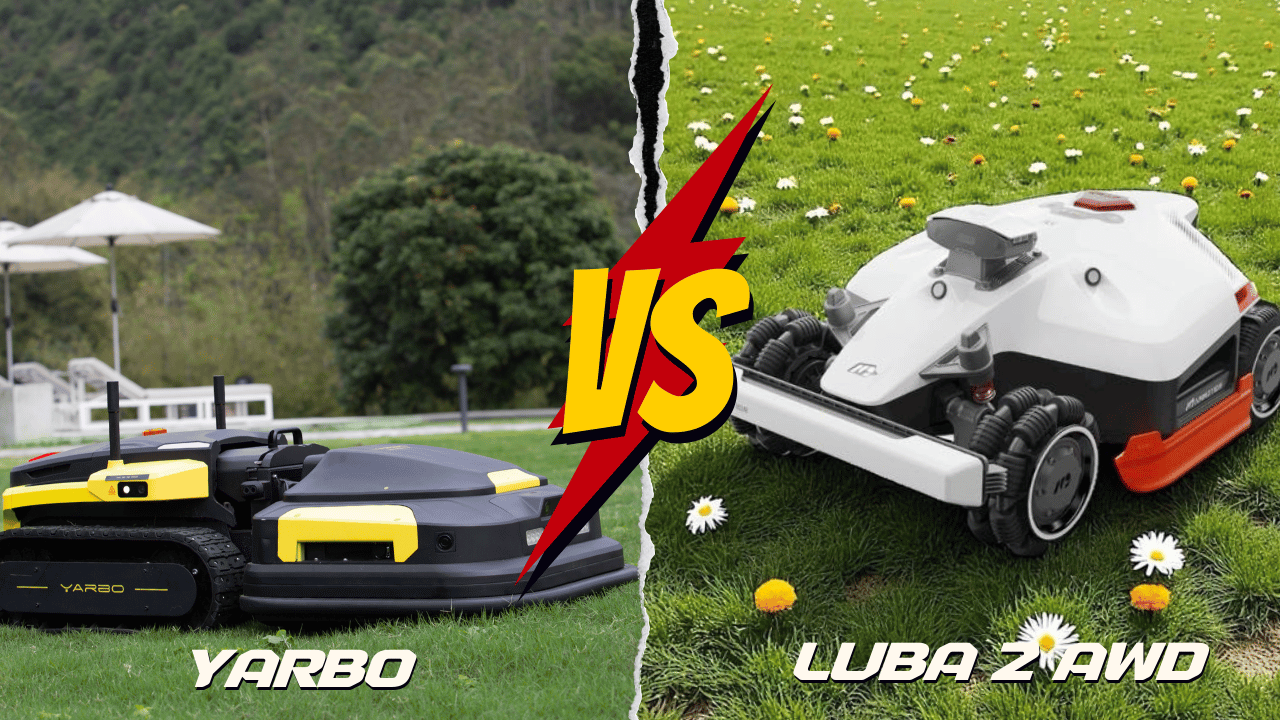
Table Of Contents
Quick Answer: While the Mammotion LUBA 2 AWD is optimized for pure, dedicated lawn care with impressive AWD slope handling, Yarbo is the superior long-term investment due to its heavy-duty commercial-grade chassis, multi-sensor RTK-GPS fusion, and unique all-season modularity (mowing, snow blowing, trimming, and blowing).
The Mammotion LUBA 2 AWD has quickly become one of the most talked-about options in the robot lawnmower market, especially for homeowners struggling with uneven terrain, slopes, and yards filled with obstacles. When users search for the best robot mower, LUBA 2 AWD and Yarbo often end up side-by-side because both offer advanced navigation systems, wireless mapping, and strong performance on challenging lawns.
This article provides a clear, deep comparison of terrain adaptability and navigation, so you can choose which robot mower fits your lawn—and your expectations.
Table of Contents:
What Makes Mammotion LUBA 2 AWD Stand Out?
Homeowners want a robot lawnmower that delivers accuracy, durability, and minimal babysitting. LUBA 2 AWD was built for exactly this.
Key Advantages
-
All-Wheel Drive (AWD) handles slopes up to 80%.
-
RTK positioning provides centimeter-level accuracy.
-
No boundary wires make it easy to set up.
-
Adaptive mapping learns lawn zones quickly.
In comparison, Yarbo’s modular design is more versatile—since it can add snow blowing or leaf blowing features—but for mowing alone, LUBA’s built-in AWD and dedicated engineering give it a performance-focused advantage.
Terrain Adaptability: Which Robot Mower Performs Better?
Terrain adaptability determines whether a robot mower will get stuck or maintain efficiency on difficult ground.
-
LUBA 2 AWD: Offers strong AWD consistency and traction on mud and wet conditions, capable of climbing slopes up to 80%.
-
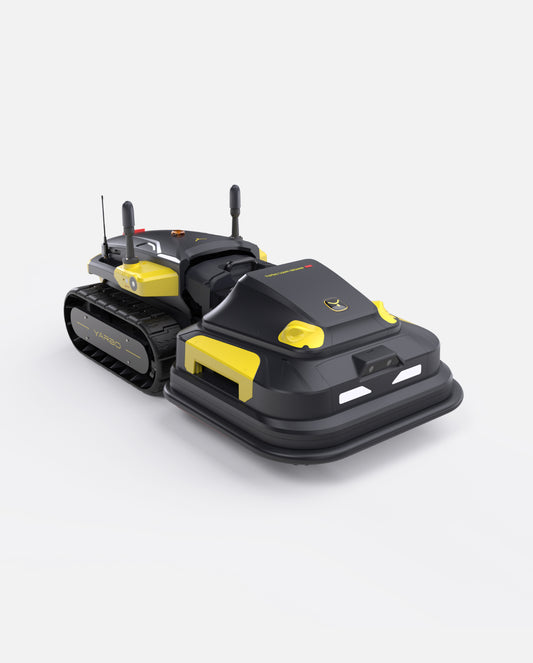
Yarbo: While Luba handles the steepest slope percentage, Yarbo offers superior durability and ruggedness for large or rough properties. Yarbo utilizes patented all-terrain tracks and a torsion-flexible mower frame designed to maintain traction and cutting precision on hills, bumps, slopes (up to 70% grade), tree roots, and uneven surfaces. Yarbo is engineered with a commercial-grade motor and frame for heavier, continuous operations.

Verdict on Durability and All-Terrain Strength: Yarbo is stronger and more durable for challenging, rocky, or inconsistent terrains, making it the better choice for true "all-terrain mastery" on large properties.
Navigation Systems Breakdown: Who Maps Smarter?
Both models achieve centimeter-level accuracy with wire-free RTK navigation. However, their sensor fusion strategies differ:

-
Mammotion LUBA 2 AWD: Provides excellent RTK positioning and utilizes vision fusion for stability. Its app is noted for creating zones quickly.
-
Yarbo: Employs a more advanced multi-sensor fusion system, combining RTK-GPS with binocular cameras, IMU, and odometer sensors. This redundancy helps maintain consistent navigation and precise positioning even when RTK signals are weak, such as under dense tree cover or near buildings. Yarbo's system is engineered for commercial-level precision and complex route planning on wide areas.

Verdict on Navigation Precision: Yarbo offers a more advanced and robust multi-sensor fusion designed for large, complex, and potentially weak-signal environments, enhancing long-term reliability.
Cutting Performance & Lawn Quality
Yarbo's design as a modular platform offers significant benefits beyond mowing performance.
-
Cutting Power: Yarbo’s commercial-grade mowing module provides an edge in cutting power, delivering stronger performance on overgrown, dense, or coarse grass types. The Lawn Mower Pro version specifically features Dual 300W Drive Motors (peak power 2500W) and straight blades to handle thick, wet grass without clogging.
-
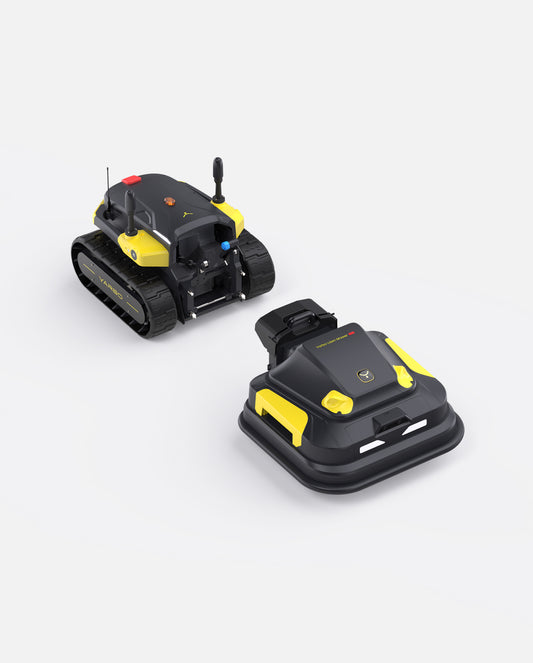
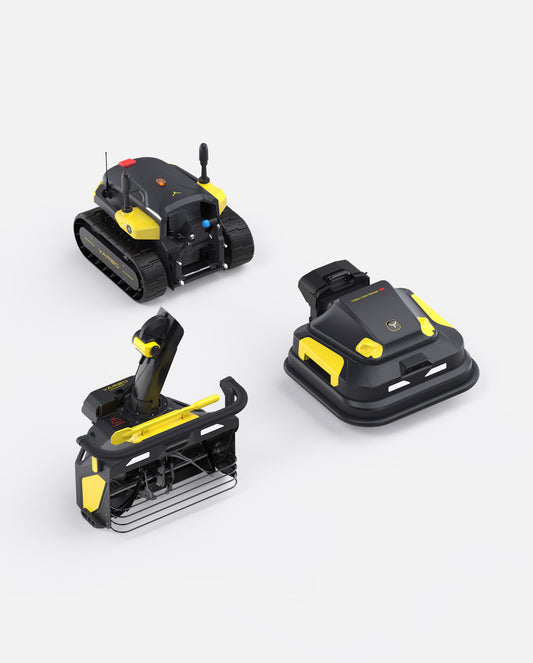
Long-Term Investment: Yarbo's core unit is the foundation for an all-season yard management system. This modularity for mowing, snow blowing, leaf blowing, and trimming makes it a superior long-term investment. Yarbo is built with industrial-grade components and a stronger chassis for continuous, heavy-duty cycles, designed to last longer under heavy workloads compared to single-purpose machines.
Verdict on Value: For users requiring year-round utility and commercial-level durability across large properties, Yarbo offers superior long-term value and a wider functionality, even though it is generally more expensive upfront.App Control & Smart Features
Both brands offer strong app experiences, but the design philosophy differs.
Mammotion LUBA 2 AWD App Strengths
-
Quick map editing
-
Live tracking
-
Real-time obstacle alerts
-
Automated zone scheduling
-
Over-the-air updates improve performance
Yarbo App Strengths
Yarbo is not just a robot mower — it’s a multi-functional yard management robot.
Why Yarbo Wins in Smart Features
-
One machine, multiple modules: mowing, snow blowing, leaf blowing
-
Commercial-grade firmware with better module scaling
-
More advanced camera-based algorithms
-
A future-proof platform that expands with yard needs
Verdict: Yarbo’s modular design and commercial features make it the superior long-term investment.
Price, Warranty & Long-Term Value
While Yarbo is more expensive upfront, it is built like a commercial machine, meaning it lasts longer and handles heavy workloads without wearing down.
Why Yarbo Wins in Value
-
Industrial-grade components
-
Stronger motors and chassis
-
Designed for continuous, heavy-duty cycles
-
Wider functionality = more value per dollar
Verdict: For large yards and commercial-level durability, Yarbo offers better long-term value.
Long-Term Value
-
Choose LUBA if you want the best robot mower for lawn care specifically.
-
Choose Yarbo if you want a multi-function large yard robot.
Best value for mowing alone: Yarbo
Core Comparison: Yarbo vs. Mammotion Luba 2 AWD (Structured Data Asset)
| Feature | Yarbo (Modular System) | Mammotion LUBA 2 AWD (Dedicated Mower) |
| Primary Function | Multi-Functional (Mower, Snow Blower, Blower, Trimmer) | Single-Purpose (Mower only) |
| Max Slope Capacity (Grade) | Up to 35° (70% grade) (Track-Driven) | Up to 80% slope (Wheel-Driven AWD) |
| Max Coverage | Up to 6 acres (25,000 ㎡) | Large areas (Specific maximum not sourced here) |
| Navigation System | Multi-Sensor Fusion (RTK-GPS, Binocular Cameras, IMU, ODOM) | RTK positioning + Vision Fusion |
| Traction System | Patented All-Terrain Tracks | All-Wheel Drive (AWD) Wide Tires |
| Durability Focus | Commercial-grade motor/chassis; heavy-duty cycles | Performance-focused AWD; good traction |
Conclusion
If your top priority is the best robot mower for terrain adaptability and cutting precision, the Mammotion LUBA 2 AWD clearly leads the competition. Its AWD system, hybrid RTK navigation, and robust performance on slopes make it ideal for homeowners with challenging yards.
Yarbo remains an impressive multi-functional platform, but for lawn care alone, LUBA stands out as the smarter and more consistent choice.
FAQs
1. Which robot mower is better for large yards?
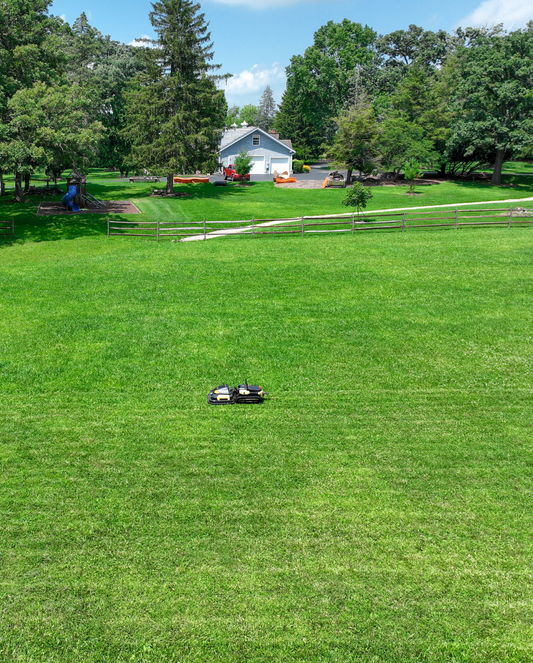
Yarbo is stronger for large, complex properties because its modular system, larger battery options, and multi-terrain design allow it to maintain extensive lawns while also handling snow, leaves, and sweeping with additional modules. While the Mammotion LUBA 2 AWD 10,000 model covers up to ~12,000 m² (≈3 acres), Yarbo covers similarly large properties but adds year-round functionality, making it a more scalable long-term choice.
2. Can both mowers handle steep slopes?
Yes, both can handle steep terrains, but Yarbo’s heavy-duty traction and all-terrain drive system give it superior stability on uneven or mixed surfaces such as wet slopes, gravel, or soft soil. Where Luba focuses on dry-lawn slope capability, Yarbo is built for year-round versatility.
3. Is RTK navigation accurate enough?
Yes. Both Yarbo and LUBA use high-precision RTK positioning with centimeter-level accuracy. Yarbo maintains stable navigation even in obstacle-dense or multi-module operations, making it reliable for properties with trees, structures, or complex boundaries.
4. Which mower gives a cleaner cut?
Yarbo’s mowing module delivers a clean, consistent cut using adjustable cutting height, optimized blade speed, and adaptive terrain handling. Its weight and stability help it stay level on rugged or bumpy terrain, improving cut uniformity.
5. Does either mower require boundary wires?
No. Both units use wireless boundary mapping, but Yarbo’s mapping is shared across all modules. That means once you map your yard for mowing, the same map works for snow blowing, sweeping, etc., saving time and setup effort.
6. Which mower is easier to maintain?
Yarbo’s modular design actually makes maintenance simpler long-term. You maintain one base station and swap modules (mower, snow blower, brush). This reduces the need to own multiple machines and lowers overall maintenance time vs Luba, which requires separate tools for other seasons.
Table Of Contents
Subscribe
- Afghanistan+93
- Albania+355
- Algeria+213
- Andorra+376
- Angola+244
- Antigua and Barbuda+1268
- Argentina+54
- Armenia+374
- Aruba+297
- Australia+61
- Austria+43
- Azerbaijan+994
- Bahamas+1242
- Bahrain+973
- Bangladesh+880
- Barbados+1246
- Belarus+375
- Belgium+32
- Belize+501
- Benin+229
- Bhutan+975
- Bolivia+591
- Bosnia and Herzegovina+387
- Botswana+267
- Brazil+55
- British Indian Ocean Territory+246
- Brunei+673
- Bulgaria+359
- Burkina Faso+226
- Burundi+257
- Cambodia+855
- Cameroon+237
- Canada+1
- Cape Verde+238
- Caribbean Netherlands+599
- Central African Republic+236
- Chad+235
- Chile+56
- China+86
- Colombia+57
- Comoros+269
- Congo+243
- Congo+242
- Costa Rica+506
- Côte d’Ivoire+225
- Croatia+385
- Cuba+53
- Curaçao+599
- Cyprus+357
- Czech Republic+420
- Denmark+45
- Djibouti+253
- Dominica+1767
- Dominican Republic+1
- Ecuador+593
- Egypt+20
- El Salvador+503
- Equatorial Guinea+240
- Eritrea+291
- Estonia+372
- Ethiopia+251
- Fiji+679
- Finland+358
- France+33
- French Guiana+594
- French Polynesia+689
- Gabon+241
- Gambia+220
- Georgia+995
- Germany+49
- Ghana+233
- Greece+30
- Grenada+1473
- Guadeloupe+590
- Guam+1671
- Guatemala+502
- Guinea+224
- Guinea-Bissau+245
- Guyana+592
- Haiti+509
- Honduras+504
- Hong Kong+852
- Hungary+36
- Iceland+354
- India+91
- Indonesia+62
- Iran+98
- Iraq+964
- Ireland+353
- Israel+972
- Italy+39
- Jamaica+1876
- Japan+81
- Jordan+962
- Kazakhstan+7
- Kenya+254
- Kiribati+686
- Kosovo+383
- Kuwait+965
- Kyrgyzstan+996
- Laos+856
- Latvia+371
- Lebanon+961
- Lesotho+266
- Liberia+231
- Libya+218
- Liechtenstein+423
- Lithuania+370
- Luxembourg+352
- Macau+853
- Macedonia+389
- Madagascar+261
- Malawi+265
- Malaysia+60
- Maldives+960
- Mali+223
- Malta+356
- Marshall Islands+692
- Martinique+596
- Mauritania+222
- Mauritius+230
- Mexico+52
- Micronesia+691
- Moldova+373
- Monaco+377
- Mongolia+976
- Montenegro+382
- Morocco+212
- Mozambique+258
- Myanmar+95
- Namibia+264
- Nauru+674
- Nepal+977
- Netherlands+31
- New Caledonia+687
- New Zealand+64
- Nicaragua+505
- Niger+227
- Nigeria+234
- North Korea+850
- Norway+47
- Oman+968
- Pakistan+92
- Palau+680
- Palestine+970
- Panama+507
- Papua New Guinea+675
- Paraguay+595
- Peru+51
- Philippines+63
- Poland+48
- Portugal+351
- Puerto Rico+1
- Qatar+974
- Réunion+262
- Romania+40
- Russia+7
- Rwanda+250
- Saint Kitts and Nevis+1869
- Saint Lucia+1758
- Saint Vincent and the Grenadines+1784
- Samoa+685
- San Marino+378
- São Tomé and Príncipe+239
- Saudi Arabia+966
- Senegal+221
- Serbia+381
- Seychelles+248
- Sierra Leone+232
- Singapore+65
- Slovakia+421
- Slovenia+386
- Solomon Islands+677
- Somalia+252
- South Africa+27
- South Korea+82
- South Sudan+211
- Spain+34
- Sri Lanka+94
- Sudan+249
- Suriname+597
- Swaziland+268
- Sweden+46
- Switzerland+41
- Syria+963
- Taiwan+886
- Tajikistan+992
- Tanzania+255
- Thailand+66
- Timor-Leste+670
- Togo+228
- Tonga+676
- Trinidad and Tobago+1868
- Tunisia+216
- Turkey+90
- Turkmenistan+993
- Tuvalu+688
- Uganda+256
- Ukraine+380
- United Arab Emirates+971
- United Kingdom+44
- United States+1
- Uruguay+598
- Uzbekistan+998
- Vanuatu+678
- Vatican City+39
- Venezuela+58
- Vietnam+84
- Yemen+967
- Zambia+260
- Zimbabwe+263
You have successfully subscribed!!
Check your welcome email for exclusive discounts.
Email Check Needed
We are unable to verify your email address.
Please check if the email
is correct.