Cart
0


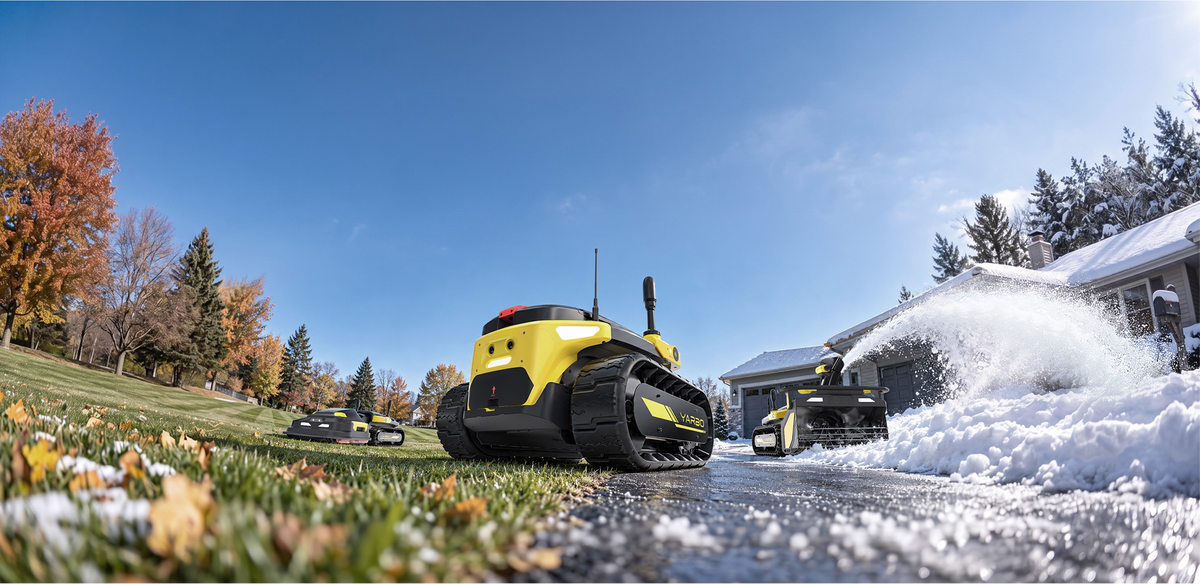
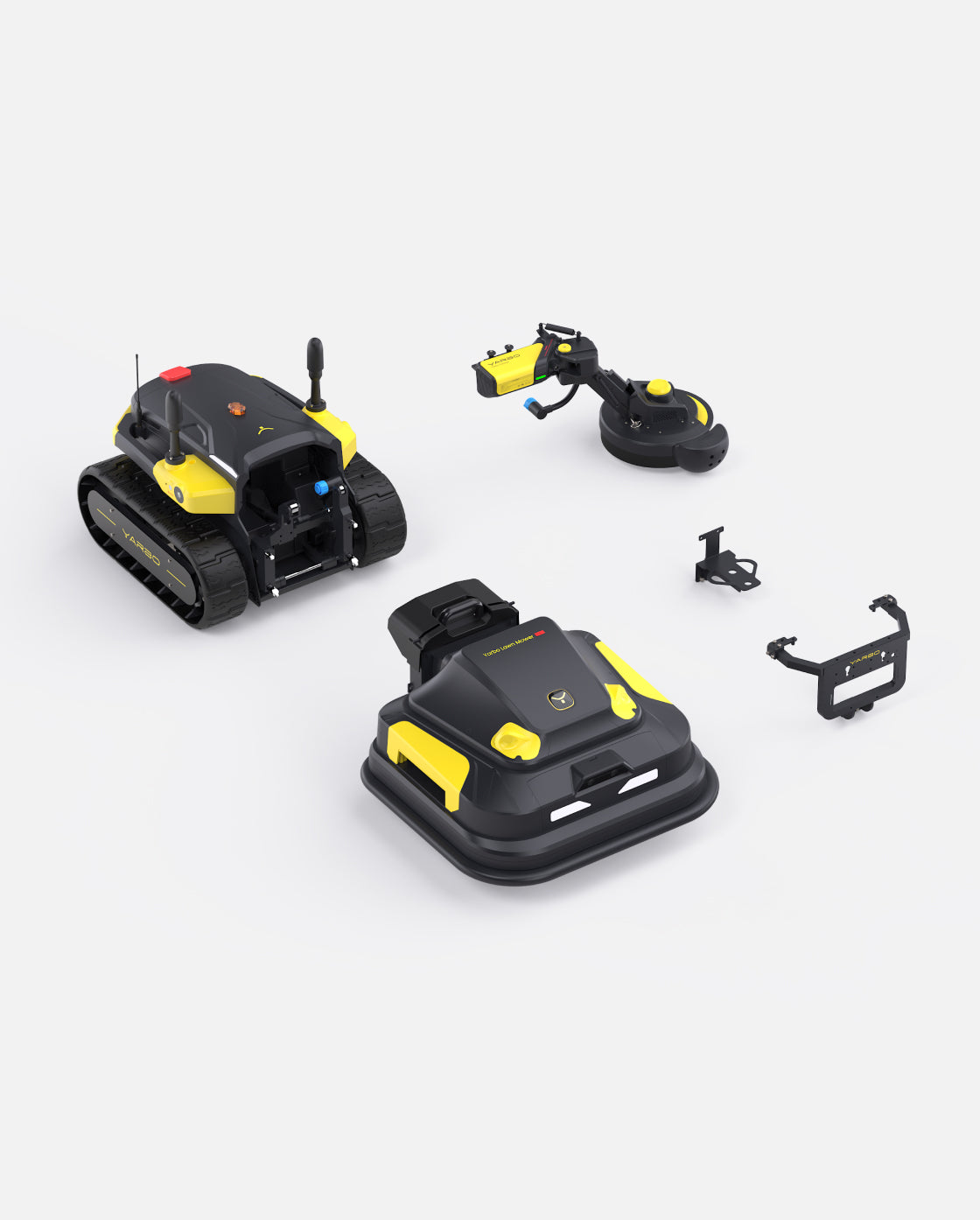



Table Of Contents
Snow Thrower vs. Snow Blower: Which Works Best for Your Home?
When winter storms hit hard, your driveway, walkway, and yard can quickly become buried under inches—or even feet—of snow. That's when the snow thrower vs. snow blower debate becomes important.
Choosing the right snow removal machine affects how quickly and efficiently you can clear snow from your property. With advances in snow removal technology, including Yarbo's autonomous modular snow blower, there's now more to consider than ever before.
Whether you're dealing with light powder or dense, wet snow, understanding the differences between these machines can help you choose the right equipment for your needs, budget, and property.
Understanding the Basics: Snow Thrower or Snow Blower?
Are Snow Throwers and Snow Blowers the Same Thing?
In everyday use, mostly yes. Manufacturers, retailers, and homeowners use both names for the same machines. Some shoppers use "snow thrower" for single-stage models and "snow blower" for two-stage models, but that distinction isn't a fixed rule:
-
The U.S. safety standard ANSI/OPEI B71.3 is titled Snow Throwers – Safety Specifications and covers several types of powered snow-removal equipment.
-
Consumer Reports refers to single-stage, two-stage, and three-stage machines as snow blowers, while also recognizing snow thrower as an alternative name.
What really separates these machines is how many stages they use to move snow, so that's how this guide compares them.
Single-Stage: What Many People Call a Snow Thrower
A single-stage machine, sold as both a single-stage snow thrower and a single-stage snow blower, uses an auger to scoop up snow and throw it through a chute in one motion.
It's generally lighter, easier to maneuver, and suitable for smaller paved driveways or lighter snowfall. According to Consumer Reports, single-stage gas models are typically suited to snow depths up to about 9 inches, while many corded and battery models work best with around 6 inches or less.
Two- and Three-Stage: What Many People Call a Snow Blower
Two-stage and three-stage machines are sold under both names, too.
In a two-stage machine, the auger collects snow, and a separate impeller throws it through the chute. A three-stage machine adds an accelerator to help move collected snow toward the impeller more quickly.

These designs are generally better suited to deeper snow, heavier accumulation, and wider clearing paths, making them worth considering for larger properties or frequent winter storms.
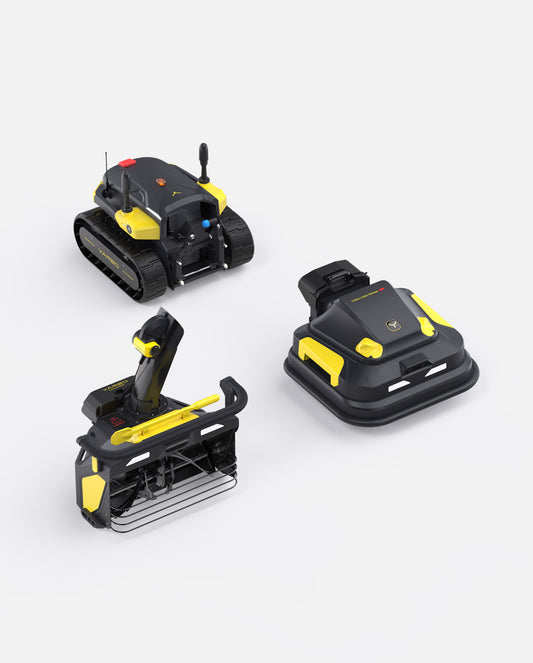
Yarbo's Snow Blower Module Gen 2 is a two-stage design with a 12-inch intake height and a 24-inch clearing width. Paired with a compatible Yarbo Core, it supports autonomous snow clearing after the system is properly configured.
Check the Specs, Not the Name
Because both names are used for different designs, the product name alone won't tell you how a machine performs. Check these specifications instead:
-
Number of stages: A two-stage machine has a separate impeller behind the auger; a three-stage design adds an accelerator.
-
Clearing width and intake height: These indicate how wide a path the machine clears and the size of its snow intake opening.
-
Power source: Corded electric, battery, or gas. See our electric vs. gas snow blower guide.
-
Drive system: Push-operated, self-propelled wheels, or tracks. Traction depends on the machine and surface conditions.
-
Surface compatibility: Most single-stage models are best suited to paved surfaces, while suitable two-stage machines with adjustable clearance can be used on gravel.
Not sure whether you need one stage or two? See our single-stage vs. two-stage snow blower comparison.
Key Differences Between Snow Thrower and Snow Blower
In this section and the next, "snow thrower" refers to a single-stage machine and "snow blower" refers to a two- or three-stage machine, following a common informal distinction.
Power and Performance
-
Snow Thrower: Usually powered by a smaller electric motor or gas engine and suited to lighter snow-clearing tasks.
-
Snow Blower: Uses an auger and separate impeller to move deeper, heavier snow. Performance depends on the machine's size, power source, and design.
Clearing Capacity
Single-stage snow throwers typically clear narrower paths, often up to around 21–22 inches. Two-stage snow blowers are available with clearing widths up to about 30 inches, while some three-stage models clear 30 inches or more, according to Consumer Reports.
Exact clearing width and snow-handling capacity vary by model.
Maneuverability and Ease of Use
Single-stage snow throwers are generally lighter and easier to store or move around tight spaces.
Two- and three-stage snow blowers are usually larger, but many offer self-propelled drive systems that reduce the effort required to move through deeper snow.
Maintenance and Durability
Multi-stage snow blowers have more moving components and may require additional mechanical maintenance, but they're designed to handle more demanding clearing tasks.
Maintenance also depends on the power source. Gas models require engine care, while electric models eliminate fuel-system maintenance but still need routine inspections.
Pros and Cons of Snow Blower vs. Snow Thrower
Snow Throwers
| Pros | Cons |
|---|---|
| Generally lightweight | Less suited to deep or heavy snow |
| Often lower in cost | Usually shorter throwing distance |
| Easy to store | Can struggle with dense, compacted accumulation |
| Compact electric options available | Most single-stage designs are unsuitable for loose gravel |
Snow Blowers
| Pros | Cons |
|---|---|
| Better suited to deep and wet snow | Generally more expensive |
| Often longer throwing distance | Usually require more storage space |
| Available with wider clearing paths | More moving components to maintain |
| Suitable for larger residential driveways | Larger models can be harder to maneuver |
| Some models work on gravel with proper clearance | Stone pickup remains possible on loose surfaces |
Which Is Better for Different Snow Conditions?
Light Snowfalls
Snow throwers are practical for clearing around 2–6 inches of snow on flat, paved surfaces, particularly when the area is relatively small.
However, an autonomous snow blower such as Yarbo can also begin clearing as snowfall starts, helping prevent light accumulation from building into deeper layers.
Heavy and Wet Snow
Snow blowers, especially capable two-stage models, generally handle thick, wet accumulation better than smaller single-stage machines.
Even so, heavy, sticky snow can reduce discharge efficiency or clog the chute.
Yarbo's Snow Blower Module Gen 2 can handle suitable dry, wet, and packed snow conditions. For particularly heavy, wet accumulation, Yarbo recommends appropriate operating settings or the optional Snow Plow Blade, which attaches to the compatible Snow Blower Module.
Large Driveways and Slopes
Yarbo's robotic snow blower is designed for residential driveways and mapped clearing areas, with published coverage of up to 6,000 ft² (Y40) or 7,000 ft² (Y40P) per charge in 1 inch of snow. It can return to recharge and resume configured tasks.
Its tracked platform has a published snow-removal slope rating of up to 36% (approximately 20°). Actual traction depends on snow, ice, and ground conditions, so this rating isn't a guarantee of safe operation on every slope.
For suitable gravel driveways, Yarbo recommends raising the intake by approximately 2 inches to reduce the risk of picking up loose stones. This adjustment does not eliminate the possibility of gravel entering the snow-clearing mechanism or being thrown.
Cost Comparison: Snow Thrower vs. Snow Blower
Prices vary widely by the number of stages, power source, size, and features.
Snow blowers in Consumer Reports' ratings range from about $200 to more than $3,000, with single-stage models generally costing less than larger two- and three-stage machines.
Yarbo's Y40 Core with Snow Blower Module Gen 2 has a regular U.S. list price of $6,199 as of November 2026. Promotional pricing may be lower.
Environmental Impact and Energy Efficiency
Electric snow throwers produce no direct exhaust emissions during operation. The same applies to battery-powered two-stage machines, including robotic snow blowers such as Yarbo.
However, overall environmental impact also depends on electricity generation, battery production, equipment lifespan, and maintenance.
Safety Considerations for Both Machines
Always follow the manufacturer's safety instructions, keep people and pets away from the clearing area, and remove visible debris before starting.
Never reach into an auger housing or discharge chute to clear a blockage. Shut down the equipment completely and follow the manufacturer's recommended clearing procedure.
For autonomous equipment, follow the applicable operating and supervision guidance and make sure the work area remains suitable for the configured task.
Yarbo's Advanced Snow Blower: The Heavy-Duty Choice
Modular Design for Year-Round Use
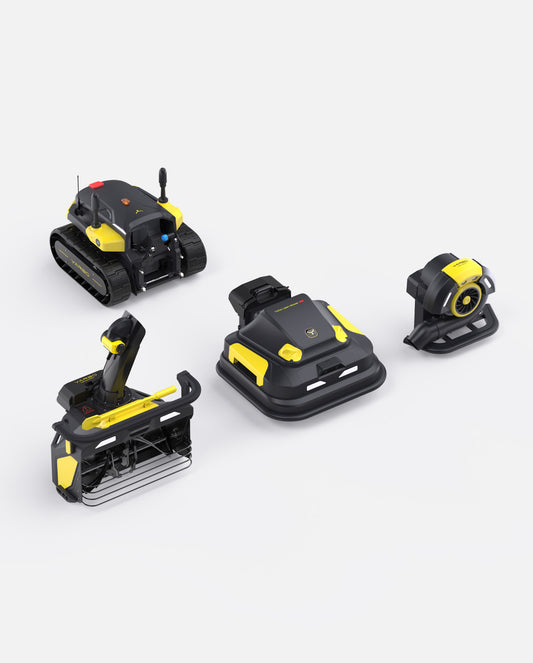
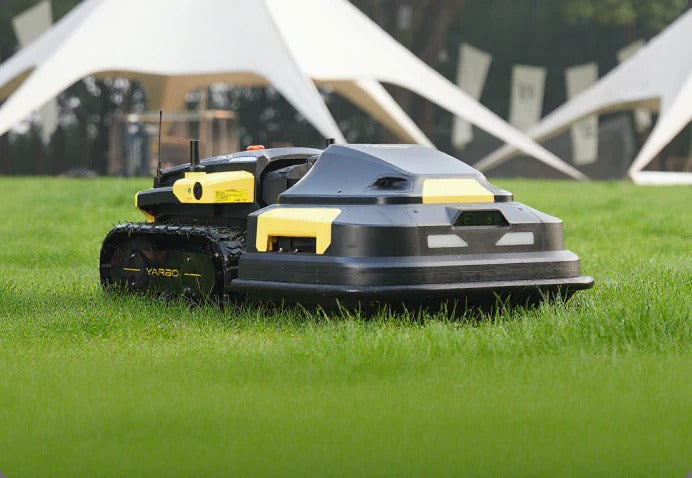
Yarbo's snow blower isn't limited to winter. The same compatible Yarbo Core can support lawn mowing, leaf cleanup, and trimming with the appropriate modules, sold separately.
Instead of purchasing a separate powered platform for each task, you can use one Core with different working modules throughout the year. Each module still requires its own storage space, setup, and maintenance, and availability may vary.

High-Powered Performance for Different Snow Conditions
The Yarbo Y40 Core with Snow Blower Module Gen 2 uses a two-stage design to handle suitable dry, wet, and packed snow.
It has a 12-inch intake height and a 24-inch clearing width, throwing snow up to 40 feet away.
The intake height describes the snow opening, not a guarantee that every 12-inch accumulation can be cleared completely in one pass. Particularly dense or compacted snow may require slower or repeated passes.
Environmental Adaptability and Slope Performance
Yarbo has a published operating temperature range of -13°F to 113°F, allowing it to operate in a range of winter conditions.
Its tracked design supports snow removal on slopes up to 36% (approximately 20°), subject to suitable traction and operating conditions. For long driveways and larger properties, the Y40P version offers higher published coverage per charge.
For suitable gravel driveways, the adjustable intake height can help reduce accidental stone pickup. However, loose gravel may still enter the intake, so proper clearance and surface conditions remain important.
Smart Features for Autonomous Snow Removal
Once your work zones are mapped in the Yarbo App, Yarbo can begin clearing when snowfall starts.
You can schedule suitable snow-clearing tasks and allow the robot to follow configured routes without continuous manual steering. It also supports automatic docking, charging, and task resumption.
Yarbo's positioning system uses supported RTK or NetRTK configurations, depending on the Core and available network coverage, without requiring perimeter wires.
As with any outdoor power equipment, follow the operating instructions and supervision requirements. Compacted snowbanks or unexpected obstacles may still require intervention.
Quieter Electric Operation
As a battery-powered machine without a gas engine, Yarbo generally produces less engine noise than conventional gas-powered snow blowers.
However, its auger, impeller, tracks, and snow discharge still generate sound. Follow local noise regulations and consider nearby homes when scheduling clearing tasks, particularly during early or late hours.
Expert Tips for Choosing Between a Snow Thrower and Snow Blower
Whether you choose a snow thrower or a snow blower, focus on how you'll use it:
-
Check the number of stages, clearing width, and intake height rather than relying on the product name.
-
Measure your driveway and narrowest walkway before buying.
-
Consider your typical snowfall depth and whether the snow is usually dry, wet, or compacted.
-
Factor in storage space, maintenance needs, and budget.
-
If you want year-round flexibility, consider a modular system such as Yarbo.
Conclusion
When weighing snow thrower vs. snow blower, think about your property size, snowfall conditions, and convenience needs, and judge each machine by its specifications rather than its name.
For light-duty, affordable snow clearing on a small paved driveway, a single-stage machine may be enough.
For deeper snow and longer driveways, a suitable two- or three-stage machine is worth considering. If you also want to reduce the time spent manually operating snow-removal equipment, a two-stage robotic system such as Yarbo offers another option, with compatible modules for other seasonal yard care tasks.
Learn more about Yarbo's robotic snow blower and find a configuration that fits your property.
FAQs
What's the Difference Between a 1-Stage and 2-Stage Snow Blower?
A single-stage snow blower uses an auger to collect and discharge snow in one motion. A two-stage machine uses an auger plus a separate impeller, generally allowing it to handle deeper snow and throw it farther.
For a full comparison, see our single-stage vs. two-stage snow blower guide.
Can a Snow Thrower Handle Wet Snow?
Yes, some single-stage machines can handle manageable wet snow, but their clearing performance may decrease as snow becomes heavier or stickier.
A capable two-stage snow blower is generally a better choice for frequent heavy, wet snowfall, although it can still experience chute blockages.
Is a Snow Thrower the Same as a Snow Blower?
Often, yes. The two names are commonly used interchangeably, and both can refer to single-stage or multi-stage machines.
Check the number of stages, clearing width, intake height, and power source to understand the machine's capabilities.
Is Yarbo's Snow Blower Suitable for Steep Driveways?
Yarbo's Y40 and Y40P snow-removal configurations have a published slope rating of up to 36% (approximately 20°).
Actual traction depends on the surface, snow depth, ice conditions, and operating settings. The published rating does not guarantee that every driveway within that slope limit can be cleared safely.
Which Is Safer for Beginners: A Snow Thrower or Snow Blower?
A smaller single-stage machine may be easier for some homeowners to maneuver, but safe operation depends on the equipment, conditions, and whether the operator follows the manufacturer's instructions.
A robotic snow blower such as Yarbo reduces the need for manual steering, but it still requires correct setup, supervision according to the manufacturer's guidance, and occasional intervention. No machine is automatically safer simply because it is smaller or autonomous.
What About the Long-Term Cost and Value of Yarbo?
Yarbo has a higher upfront price than many conventional snow blowers, but its modular design allows a compatible Core to work with snow removal, mowing, leaf cleanup, and trimming modules, sold separately.
To assess its long-term value, compare the purchase price, additional modules, electricity, maintenance, and the time or services it could replace on your property. Savings depend on your actual use rather than the number of modules alone.
Sources
Table Of Contents
Subscribe
- Afghanistan+93
- Albania+355
- Algeria+213
- Andorra+376
- Angola+244
- Antigua and Barbuda+1268
- Argentina+54
- Armenia+374
- Aruba+297
- Australia+61
- Austria+43
- Azerbaijan+994
- Bahamas+1242
- Bahrain+973
- Bangladesh+880
- Barbados+1246
- Belarus+375
- Belgium+32
- Belize+501
- Benin+229
- Bhutan+975
- Bolivia+591
- Bosnia and Herzegovina+387
- Botswana+267
- Brazil+55
- British Indian Ocean Territory+246
- Brunei+673
- Bulgaria+359
- Burkina Faso+226
- Burundi+257
- Cambodia+855
- Cameroon+237
- Canada+1
- Cape Verde+238
- Caribbean Netherlands+599
- Central African Republic+236
- Chad+235
- Chile+56
- China+86
- Colombia+57
- Comoros+269
- Congo+243
- Congo+242
- Costa Rica+506
- Côte d’Ivoire+225
- Croatia+385
- Cuba+53
- Curaçao+599
- Cyprus+357
- Czech Republic+420
- Denmark+45
- Djibouti+253
- Dominica+1767
- Dominican Republic+1
- Ecuador+593
- Egypt+20
- El Salvador+503
- Equatorial Guinea+240
- Eritrea+291
- Estonia+372
- Ethiopia+251
- Fiji+679
- Finland+358
- France+33
- French Guiana+594
- French Polynesia+689
- Gabon+241
- Gambia+220
- Georgia+995
- Germany+49
- Ghana+233
- Greece+30
- Grenada+1473
- Guadeloupe+590
- Guam+1671
- Guatemala+502
- Guinea+224
- Guinea-Bissau+245
- Guyana+592
- Haiti+509
- Honduras+504
- Hong Kong+852
- Hungary+36
- Iceland+354
- India+91
- Indonesia+62
- Iran+98
- Iraq+964
- Ireland+353
- Israel+972
- Italy+39
- Jamaica+1876
- Japan+81
- Jordan+962
- Kazakhstan+7
- Kenya+254
- Kiribati+686
- Kosovo+383
- Kuwait+965
- Kyrgyzstan+996
- Laos+856
- Latvia+371
- Lebanon+961
- Lesotho+266
- Liberia+231
- Libya+218
- Liechtenstein+423
- Lithuania+370
- Luxembourg+352
- Macau+853
- Macedonia+389
- Madagascar+261
- Malawi+265
- Malaysia+60
- Maldives+960
- Mali+223
- Malta+356
- Marshall Islands+692
- Martinique+596
- Mauritania+222
- Mauritius+230
- Mexico+52
- Micronesia+691
- Moldova+373
- Monaco+377
- Mongolia+976
- Montenegro+382
- Morocco+212
- Mozambique+258
- Myanmar+95
- Namibia+264
- Nauru+674
- Nepal+977
- Netherlands+31
- New Caledonia+687
- New Zealand+64
- Nicaragua+505
- Niger+227
- Nigeria+234
- North Korea+850
- Norway+47
- Oman+968
- Pakistan+92
- Palau+680
- Palestine+970
- Panama+507
- Papua New Guinea+675
- Paraguay+595
- Peru+51
- Philippines+63
- Poland+48
- Portugal+351
- Puerto Rico+1
- Qatar+974
- Réunion+262
- Romania+40
- Russia+7
- Rwanda+250
- Saint Kitts and Nevis+1869
- Saint Lucia+1758
- Saint Vincent and the Grenadines+1784
- Samoa+685
- San Marino+378
- São Tomé and Príncipe+239
- Saudi Arabia+966
- Senegal+221
- Serbia+381
- Seychelles+248
- Sierra Leone+232
- Singapore+65
- Slovakia+421
- Slovenia+386
- Solomon Islands+677
- Somalia+252
- South Africa+27
- South Korea+82
- South Sudan+211
- Spain+34
- Sri Lanka+94
- Sudan+249
- Suriname+597
- Swaziland+268
- Sweden+46
- Switzerland+41
- Syria+963
- Taiwan+886
- Tajikistan+992
- Tanzania+255
- Thailand+66
- Timor-Leste+670
- Togo+228
- Tonga+676
- Trinidad and Tobago+1868
- Tunisia+216
- Turkey+90
- Turkmenistan+993
- Tuvalu+688
- Uganda+256
- Ukraine+380
- United Arab Emirates+971
- United Kingdom+44
- United States+1
- Uruguay+598
- Uzbekistan+998
- Vanuatu+678
- Vatican City+39
- Venezuela+58
- Vietnam+84
- Yemen+967
- Zambia+260
- Zimbabwe+263
You have successfully subscribed!!
Check your welcome email for exclusive discounts.
Email Check Needed
We are unable to verify your email address.
Please check if the email
is correct.