Cart
0


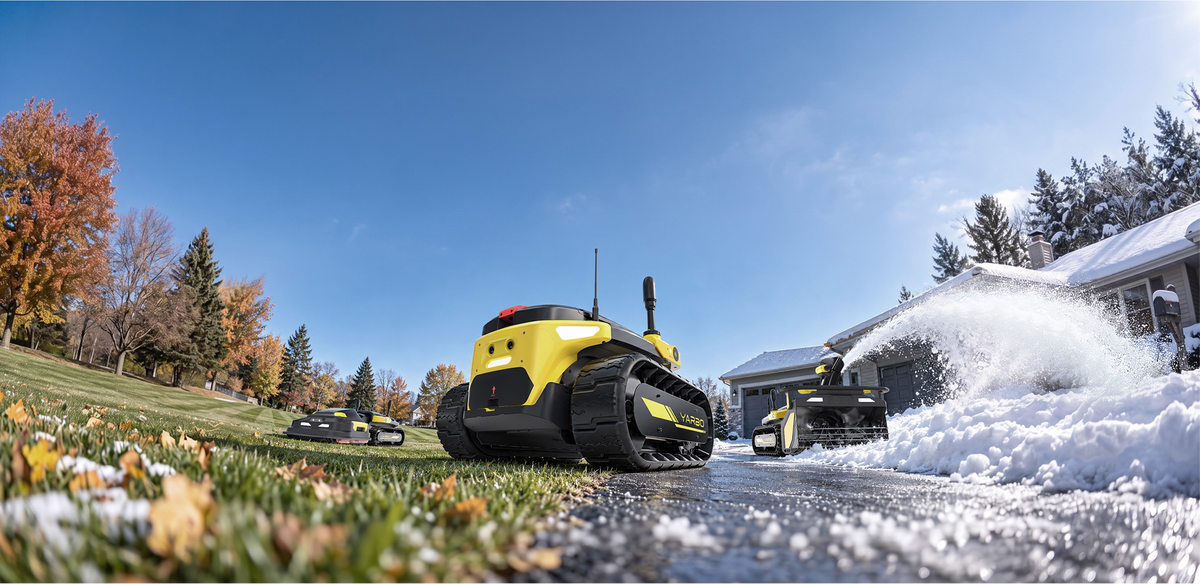
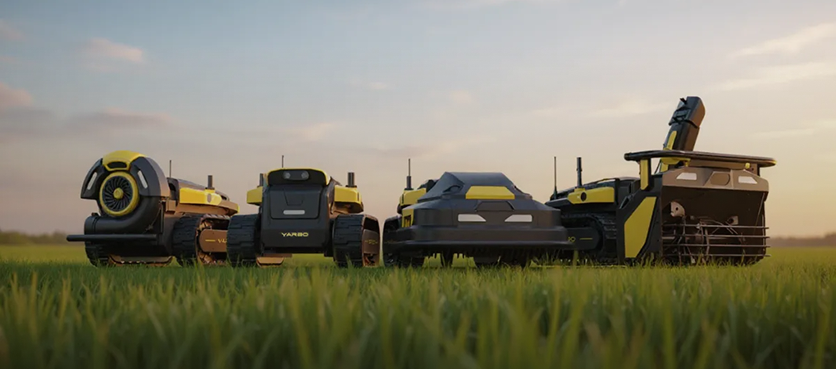
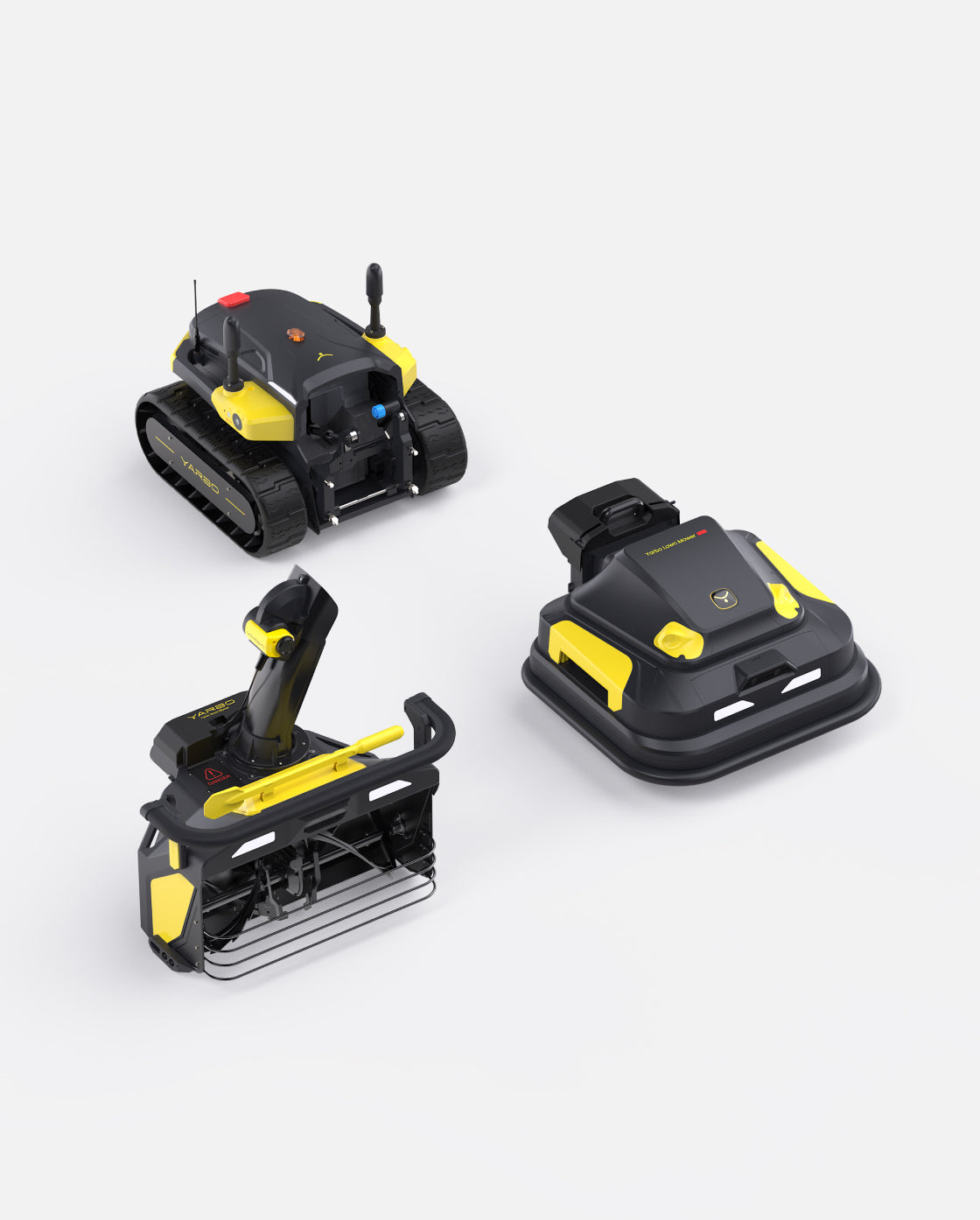
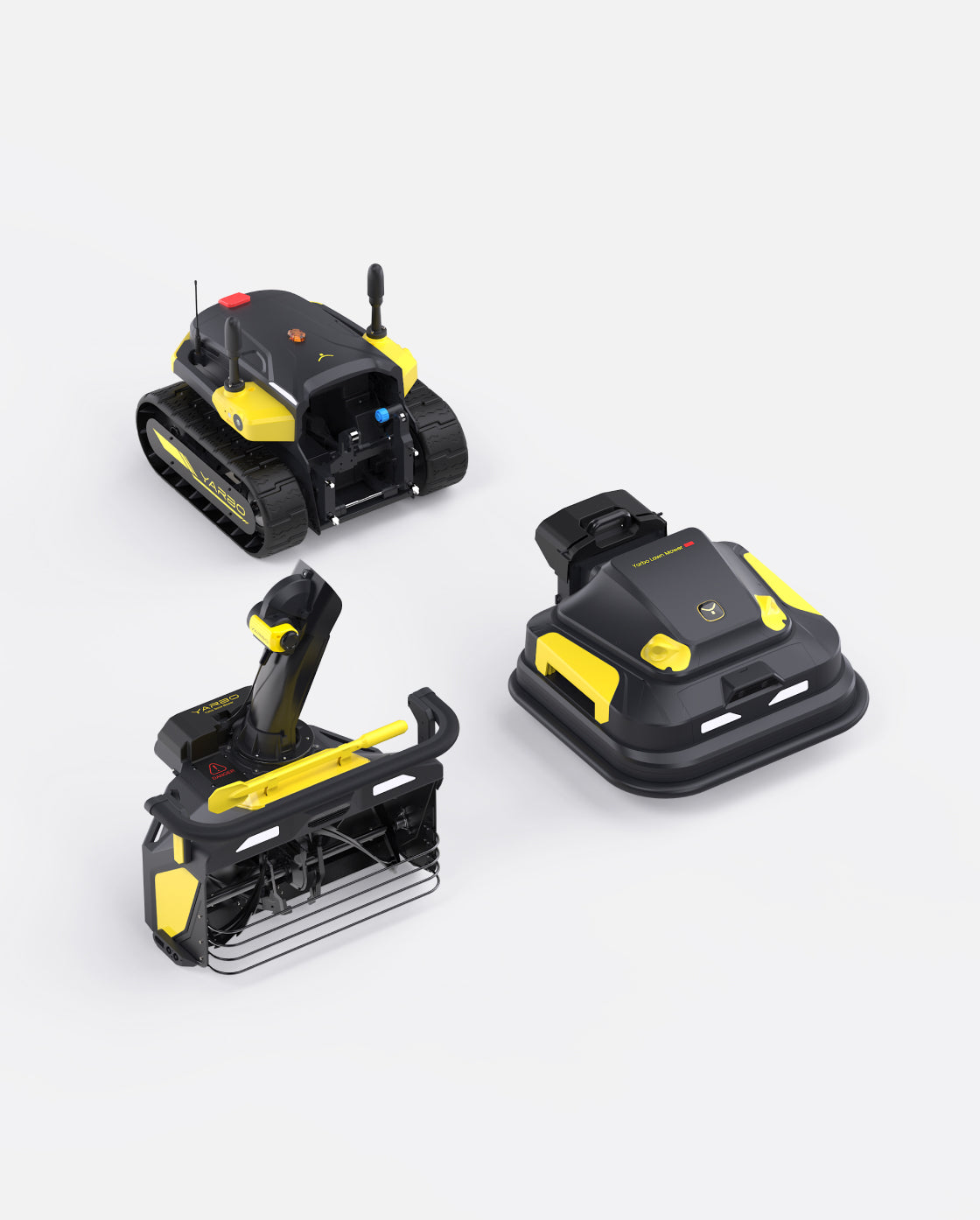
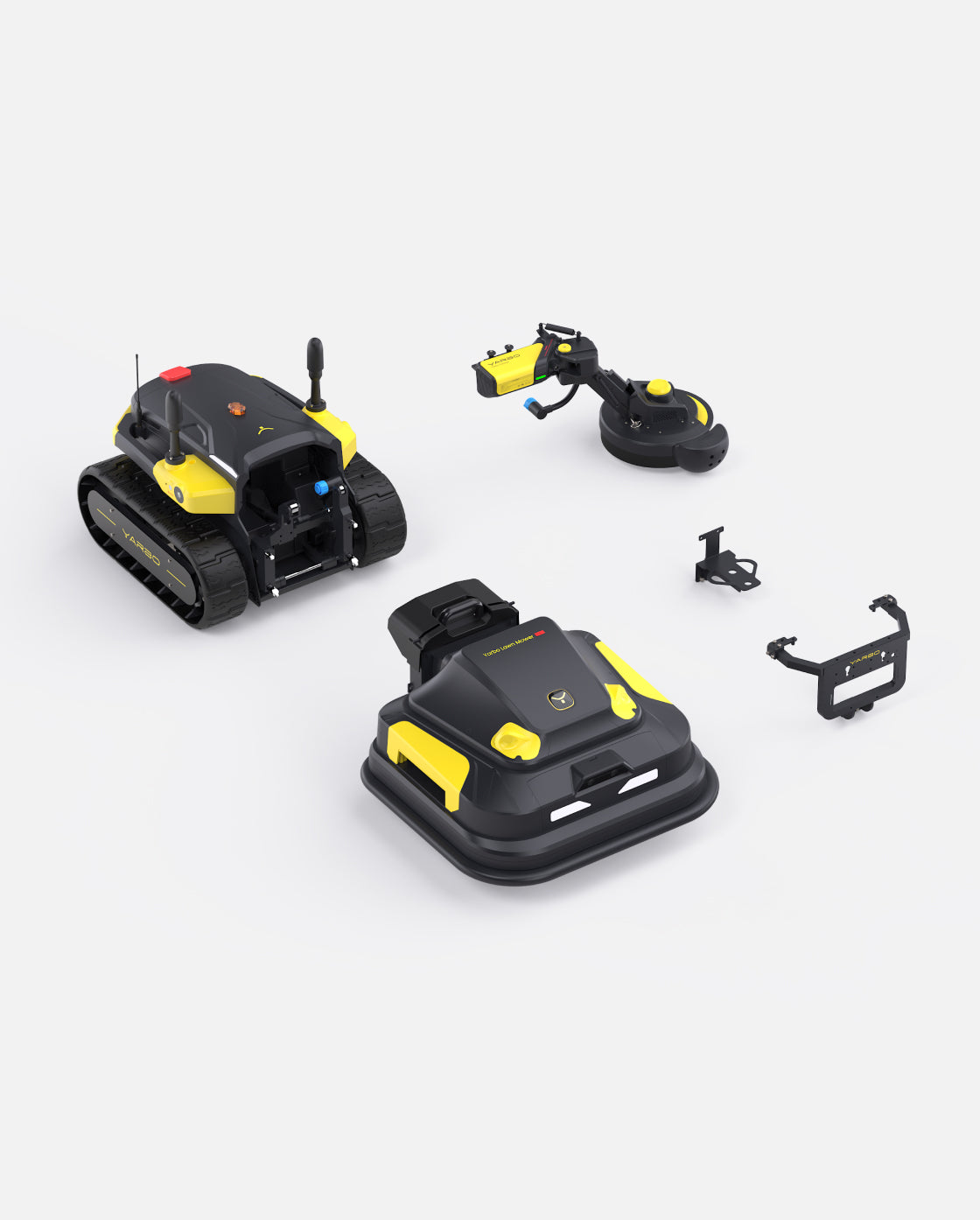


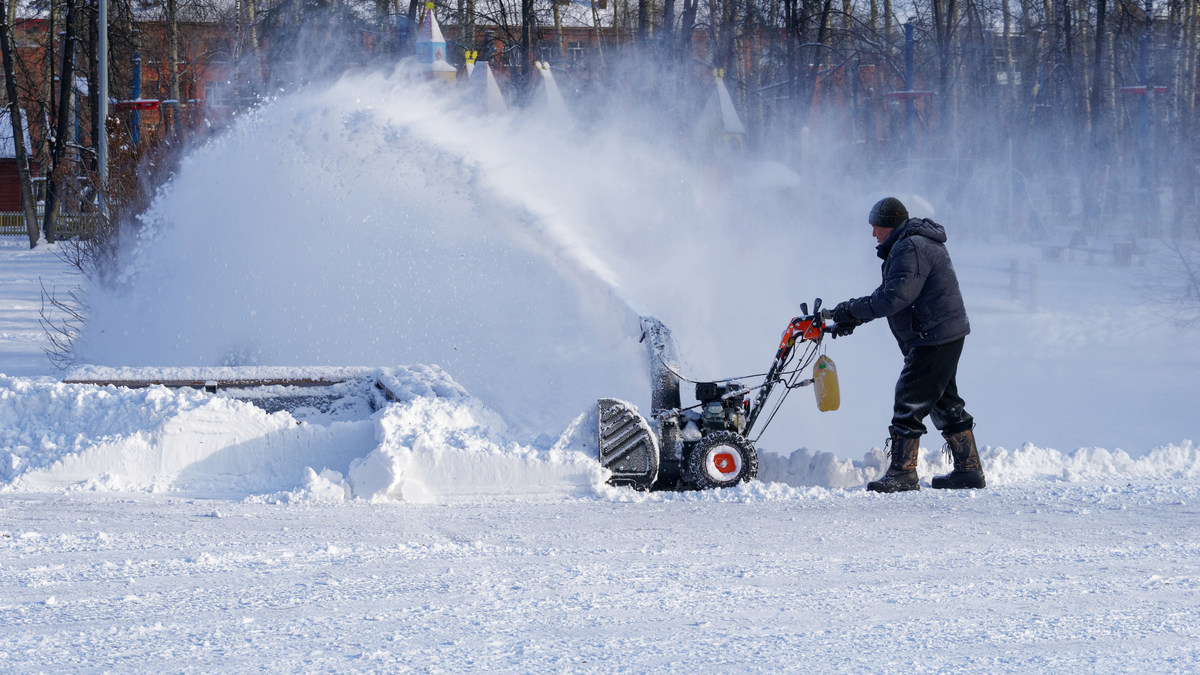
Table Of Contents
An electric snow blower is an increasingly popular choice for homeowners who want a quieter, cleaner, and easier way to clear snow.
While gas-powered models have long been a go-to choice for power and endurance, modern battery-powered and corded electric snow blowers offer a quieter option with no exhaust emissions during operation and less engine-related maintenance. Performance, however, varies considerably by model.
In this guide, we'll compare electric vs. gas snow blowers so you can choose the right machine for your snow removal needs this winter. We look at four options: corded electric, battery-powered, gas, and autonomous (robotic) snow blowers, comparing their runtime, maintenance, and the properties each one suits.
What Is a Snow Blower?
A snow blower (also called a snow thrower) is a machine designed to clear snow from walkways, driveways, sidewalks, and other outdoor areas. It collects snow through an auger and, depending on the design, an impeller, then discharges it through a chute.
There are three main types of snow blowers:
-
Single-stage: Generally suited to lighter snowfall and smaller paved areas.
-
Two-stage: Uses an auger and separate impeller to handle deeper and heavier snow.
-
Three-stage: Adds an accelerator to help process dense snow more quickly, particularly on larger properties.
Gas snow blowers are available in all three types. Battery-powered models come in single- and two-stage versions, while corded electric models are typically single-stage.
The power source affects fueling, maintenance, and runtime, while the clearing mechanism and overall machine design play a major role in performance.
How Does a Gas or Electric Snow Blower Work?
Gas Snow Blower
A gas snow blower uses a combustion engine to power the snow-clearing mechanism. Most modern residential models use four-cycle engines that run on gasoline and require separate engine oil.
Depending on the model, gas snow blowers can be suitable for:
-
Deep snow
-
Heavy, wet snow
-
Wide driveways or challenging terrain
However, they require:
-
Regular engine maintenance
-
Fuel refills and oil maintenance
-
Starting the engine, either with a pull cord or an electric starter where equipped
High-capacity gas snow blowers perform well in demanding conditions, but they are generally louder and require more engine maintenance than electric models.
Electric Snow Blower
Electric snow blowers come in two main formats: corded and battery-powered. Both use electric motors instead of gasoline engines, reducing fuel-related maintenance.
Walk-behind electric models can be suitable for:
-
Small to mid-sized properties
-
Light to moderate snowfall, depending on the model
-
Homeowners who prefer quieter equipment
Larger two-stage battery machines can also handle substantial snowfall.
1. Corded Electric Snow Blower
A corded model can run continuously while connected to power, but the cord limits its range and maneuverability.
Consumer Reports notes that corded models can be used with an appropriate extension cord up to about 100 feet from the house. These machines are generally single-stage, clear paths around 21 inches wide or less, and are best suited to snow under 6 inches on short, level driveways, decks, and walkways.
They can also serve as a second tool for a deck or patio where moving a larger snow blower would be difficult.
Use only manufacturer-approved outdoor extension cords and electrical connections suitable for snowy or wet conditions.
2. Battery-Powered Snow Blower
Battery models start without gasoline or engine priming, but their runtime is limited by battery capacity and operating conditions. Larger jobs may require a spare battery or a recharge break.
Single-stage battery models generally work best in lighter snowfall, often under about 6 inches.
Two-stage battery models offer greater snow-processing capacity. Consumer Reports notes that many are most effective at snow depths of 12 inches or less, although some have higher intake capacities.
In its tests, the best two-stage battery machines clear snow effectively, though the highest-performing gas models generally clear faster.
3. Autonomous (Robotic) Snow Blower
An autonomous snow blower is a battery-electric machine that clears mapped areas without requiring someone to walk behind and steer it throughout the task.
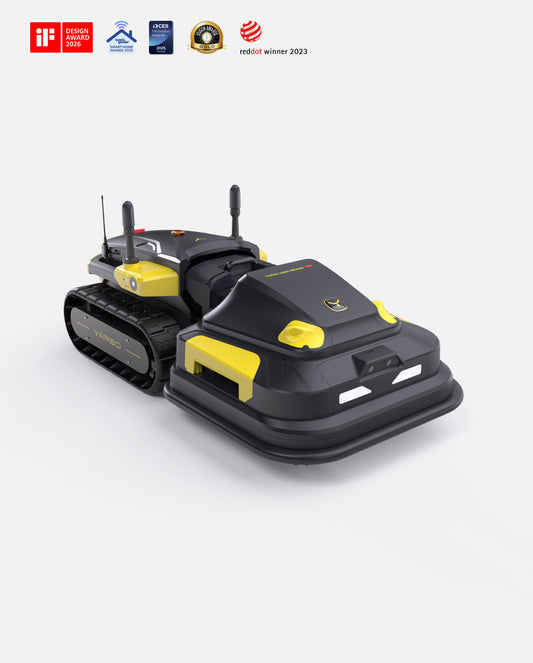
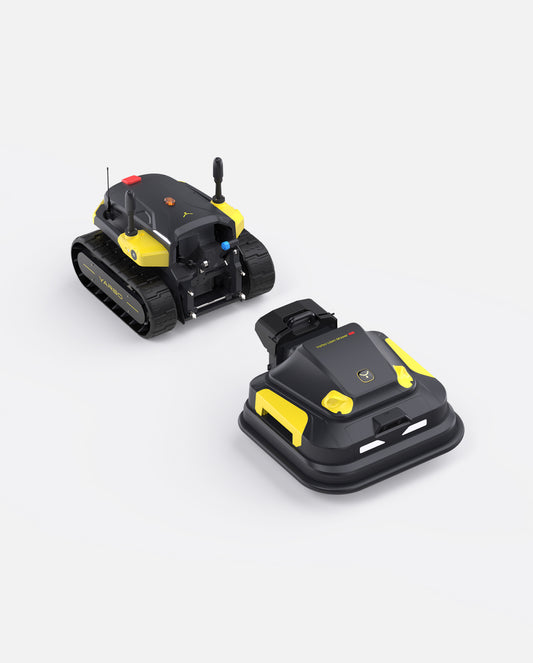
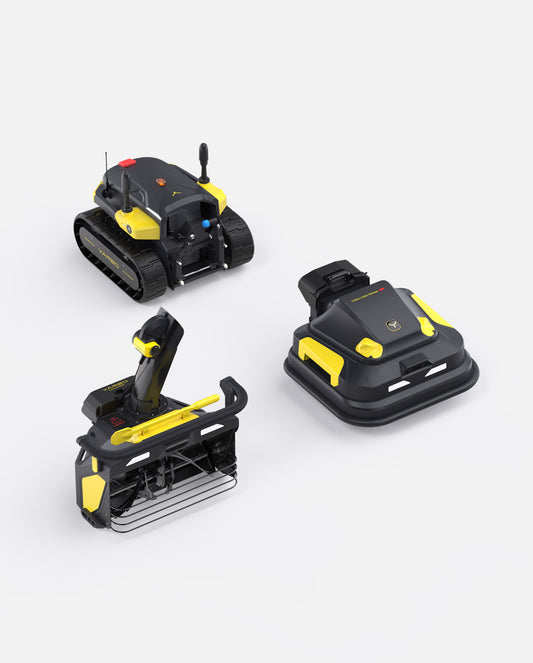
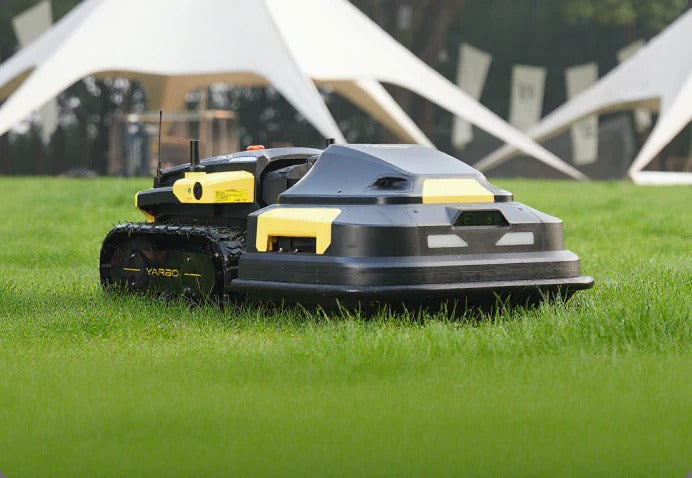
The Yarbo robotic snow blower pairs a battery-powered Yarbo Core with Snow Blower Module Gen 2, a two-stage design with a 12-inch intake height, 24-inch clearing width, and throwing distance of up to 40 feet.
Once suitable zones are mapped in the Yarbo App, it can begin clearing based on weather conditions or follow a schedule.
Under the published charging workflow, Yarbo returns to its dock at approximately 20% battery, recharges to approximately 80% in around 1.5 hours, and resumes the configured task. Actual charging time and clearing coverage depend on operating conditions.
Positioning setup depends on the selected configuration. The Y40 includes a Data Center for local RTK positioning, while the Y40P supports NetRTK where service and network coverage are available.
Autonomous operation reduces continuous manual steering, but initial setup, routine maintenance, and occasional intervention are still required. Compacted snowbanks left by municipal plows, for example, may need additional attention.
Gas vs. Electric Snow Blower Comparison
1. Power and Performance Comparison
High-capacity gas snow blowers generally have an advantage when clearing large amounts of deep, heavy snow in a single session.
In Consumer Reports' testing, top-performing gas models throw snow farther and clear it faster than the best two-stage battery models. However, performance varies by machine, so power source alone doesn't determine the result.
The table below compares all four options on the factors that matter most in everyday use.
| Feature | Corded Electric | Battery-Powered | Gas | Autonomous (Yarbo) |
|---|---|---|---|---|
| Typical snow conditions | Light snow, generally under 6 inches | Light snow for single-stage; deeper snow for suitable two-stage models | Varies from light snowfall to deep, heavy snow | Two-stage system with a 12-inch intake height; actual clearing depends on snow conditions |
| Work cycle | Runs while plugged in; range limited by the cord | Battery-dependent; larger jobs may require recharging or spare batteries | Can continue after refueling, with normal operating breaks | Up to 6,000 ft² (Y40) or 7,000 ft² (Y40P) per charge in 1 inch of snow; docks, recharges, and resumes |
| Maintenance | No gas engine; inspect cord and applicable moving parts | Battery care and routine mechanical checks | Oil, spark plug, fuel system, belts, shear pins, and other model-specific maintenance | Routine inspections, battery care, snow-clearing mechanism checks, and track maintenance |
| Site fit | Short, level paved driveways, decks, and walkways | Small to larger residential properties, depending on model | Long or wide driveways; suitable two-stage models can work on gravel and slopes | Mapped driveways and walkways on suitable asphalt, concrete, or gravel surfaces; published snow-removal slope rating up to 36% (20°) |
| Who operates it? | You guide it | You guide it | You guide it | Performs configured tasks autonomously, with setup and occasional intervention |
Sources: Consumer Reports Snow Blower Buying Guide (March 2026) and Yarbo Snow Blower Specifications. Capabilities vary by model and operating conditions.
2. Clearing Width and Depth
For large driveways and heavy snowfall, gas machines have traditionally been a popular choice.
However, two-stage electric snow blowers can also offer substantial clearing capacity.
Yarbo's Snow Blower Module Gen 2 has a 12-inch intake height and a 24-inch clearing width, with a maximum published throwing distance of 40 feet.
| Model Type | Typical Clearing Width | Snow Depth Guidance |
|---|---|---|
| Corded electric | Up to about 21 inches | Generally best under 6 inches |
| Battery electric (single-stage) | Up to about 21 inches | Generally best around 6 inches or less; model-dependent |
| Battery electric (two-stage) | Commonly up to 24 inches | Often most effective at 12 inches or less |
| Gas (single-stage) | Up to about 22 inches | Commonly suited to snow up to 9 inches |
| Gas (two-stage) | Some models up to 30 inches | Suitable models can handle snow up to about 16 inches |
| Gas (three-stage) | Some models 30 inches or more | Designed for deep accumulation, with some models suited to around 18 inches |
| Yarbo Snow Blower Module Gen 2 | 24 inches | 12-inch intake height; actual clearing depends on snow density and conditions |
The ranges above are general buying guidelines, not universal mechanical limits. Intake height should not be interpreted as a guaranteed one-pass clearing depth.
With published coverage of up to 6,000–7,000 ft² per charge in 1 inch of snow and automatic recharging, Yarbo can work through larger residential driveways across multiple charge cycles.
Deeper or denser snow can reduce coverage per charge, increasing the number of charging stops needed to finish the task.
3. Noise Levels: Which Is Quieter?
Electric snow blowers are generally quieter than comparable gas-powered machines because they don't have combustion engines.
That can make them more convenient in neighborhoods where noise is a concern, although electric equipment still produces noise from motors, augers, impellers, and snow discharge.
Some municipalities restrict equipment operation during certain hours. Check local noise ordinances rather than assuming any snow blower can be used at any time.
4. Maintenance Needs for Gas or Electric Snow Blowers
Electric snow blowers eliminate gasoline-engine maintenance, but they still need routine care. Mechanical components can wear, and batteries require proper charging and storage.
Yarbo operates through the app or a configured schedule without engine priming or choking. Its motor-driven chute and deflector controls also reduce the need for mechanical adjustment cables.
| Task | Gas Snow Blower | Corded / Battery Electric | Autonomous (Yarbo) |
|---|---|---|---|
| Engine oil changes | Usually required | Not required | Not required |
| Spark plug replacement | Required as specified by the manufacturer | Not required | Not required |
| Fuel stabilizer or fuel-system care | May be required | Not required | Not required |
| Engine tune-ups | Periodic maintenance | Not required | Not required |
| Belt and mechanical checks | Model-dependent | Model-dependent | Inspect applicable mechanical components |
| Battery care | Starter battery, if equipped | Required for battery models | Required |
| Track care | Tracked models only | Tracked models only | Required |
| Auger and chute inspection | As needed | As needed | As needed |
Yarbo can return to its docking station for recharging and resume a configured task afterward, allowing larger clearing jobs to continue across multiple charging cycles.
5. Starting System and Ease of Use
Gas snow blowers may use a pull cord to start, although many modern models also offer electric starting.
Electric models generally offer:
-
Push-button or similarly simple starting
-
No engine priming or choking
-
No gasoline refilling
Many smaller electric machines are also lightweight and easy to maneuver. Larger two-stage battery machines, however, can be substantial in size and weight.
For starting convenience and reduced engine maintenance, electric snow blowers have a clear advantage. For overall ease of use, consider the machine's weight, steering, clearing capacity, and the work required to operate it.
Autonomous models such as Yarbo further reduce the need for continuous manual steering, although their initial configuration is more involved than simply starting a walk-behind machine.
6. Environmental Impact of Gas or Electric Snow Blowers
Gas-powered snow blowers produce exhaust emissions during operation, including:
-
Carbon monoxide
-
Particulate matter
-
Unburned hydrocarbons
Electric models produce no direct exhaust emissions while operating, helping reduce exposure to combustion-engine fumes.
However, their overall environmental impact also depends on electricity generation, battery manufacturing, equipment lifespan, and end-of-life disposal.
The California Air Resources Board (CARB) provides additional information about emissions from small off-road engines and the transition toward zero-emission equipment.
7. Cost Comparison: Purchase and Operating Costs
Snow blower prices vary widely depending on type, clearing capacity, and features.
Basic corded and battery models tend to cost less than large two-stage or three-stage equipment. Heavy-duty gas machines and premium battery models can cost considerably more.
For comparison, the published U.S. list prices for the Yarbo Y40 Core with Snow Blower Module Gen 2 and the Y40P version are $6,199 and $7,799, respectively, as of November 2026. Promotional prices may differ.
| Cost Factor | Gas | Corded / Battery Electric | Autonomous (Yarbo) |
|---|---|---|---|
| Purchase cost | Varies from basic models to premium heavy-duty machines | Generally lower for compact models; premium two-stage machines cost more | Higher upfront investment |
| Running cost | Gasoline, oil, and applicable maintenance supplies | Electricity; replacement batteries when needed | Electricity, routine maintenance, and applicable connectivity costs |
| Upkeep | Engine and mechanical servicing | Mechanical checks and battery care where applicable | Routine checks, track care, and snow-clearing mechanism maintenance |
| Your time per storm | Active operation throughout clearing | Active operation throughout clearing | Setup, monitoring, maintenance, and occasional intervention |
Which option costs less over time depends on snowfall frequency, equipment lifespan, maintenance needs, and local fuel and electricity prices.
For Yarbo, the ability to use the same Core with compatible seasonal modules may also matter when evaluating long-term value.
8. Storage and Portability
Many smaller electric units:
-
Weigh less than comparable heavy-duty gas machines
-
Fold down compactly for storage
-
Require no gasoline storage or fuel-system winterization
-
Need batteries stored according to the manufacturer's temperature and charging instructions
Gas machines are often bulkier, particularly larger two-stage and three-stage models. They also need appropriate fuel-system care during the off-season.
Large two-stage battery machines and robotic snow blowers may require substantial storage space as well.
Before buying, check the complete machine dimensions rather than relying solely on clearing width.
9. Ideal Use Cases: Which Is Right for You?
| Use Case | What to Consider |
|---|---|
| Small patios and decks | Compact corded or battery electric |
| Townhomes and short paved driveways | Single-stage or compact two-stage electric |
| Large rural driveways | High-capacity gas or suitable two-stage battery equipment |
| Gravel driveways | Two-stage equipment with appropriate intake clearance; Yarbo may be suitable with correct setup |
| Frequent heavy snowfall | High-capacity two-stage or three-stage gas; suitable two-stage battery equipment |
| Frequent storms with limited time for manual clearing | Autonomous robotic snow blower |
| Homeowners seeking simpler startup and maintenance | Electric models |
| Homeowners prioritizing reduced direct exhaust emissions | Electric models |
The right choice depends on the property, snowfall, budget, and how much hands-on work you're comfortable with.
Best for Heavy Wet Snow: Gas or Electric Snow Blower?
If you regularly deal with wet, slushy, or compacted snow, a high-capacity two-stage or three-stage machine is worth considering.
Powerful gas models often perform well in demanding conditions, but even they can experience chute blockages when snow becomes particularly wet or sticky.

Two-stage battery models generally handle heavier accumulation better than compact single-stage machines.
For heavy, wet snow, Yarbo recommends appropriate blower settings and, where suitable, the optional Snow Plow Blade. The blade attaches to a compatible Snow Blower Module and pushes snow aside instead of relying entirely on the discharge chute.
For long or sloped driveways that regularly receive heavy, wet snowfall, compare the actual clearing capacity, traction, operating limits, and maintenance requirements of the machines you're considering.
A tracked machine may offer better traction on some surfaces, but tracks alone do not guarantee safe operation on icy slopes.
Verdict: Electric or Gas Snow Blower?
Both types have their place.
Choose electric snow blowers if you value:
-
Quieter operation and no direct exhaust emissions
-
Less engine-related maintenance
-
Convenient starting
-
Compact options for smaller properties
Consider gas snow blowers if you need:
-
High-capacity performance for frequent heavy snowfall
-
The flexibility to refuel during long clearing sessions
-
Equipment designed for deep snow or large driveways
Or consider an autonomous option.

If you'd rather not spend every storm operating a snow blower yourself, Yarbo offers a modular yard robot that clears suitable mapped driveways and walkways without continuous manual steering.
The Y40 Core with Snow Blower Module Gen 2 and Y40P version share the same snow-clearing module, with different drive systems and published coverage per charge.
The Y40 may be suitable when its coverage and drive capabilities meet your property's needs. The Y40P offers brushless hub motors and higher published coverage per charge for homeowners considering larger clearing areas.
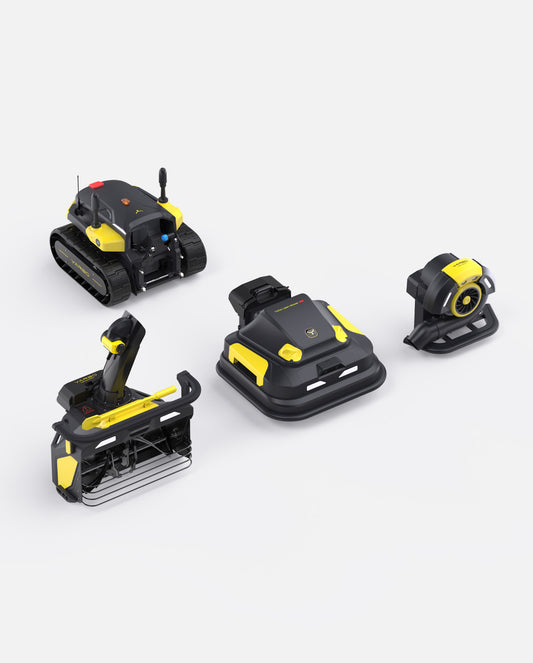
Yarbo also supports compatible Lawn Mower Pro, Blower, and Trimmer modules for other seasonal yard care tasks. Modules are sold separately, and availability varies by configuration.
Conclusion
An electric snow blower is a strong choice for homeowners who want quieter operation, reduced engine maintenance, and convenient snow removal.
Compact electric models are well suited to smaller paved driveways and walkways, while more capable two-stage battery machines can handle heavier snowfall.
Gas snow blowers remain a practical option for demanding, large-scale, or deep-snow clearing. Battery-powered and autonomous machines, including Yarbo's robotic snow blower, provide additional choices for homeowners who want to reduce reliance on gasoline.
Ultimately, the right snow blower is the one that matches your typical snowfall, property layout, budget, and preferred level of hands-on work.
Explore Yarbo's Robotic Snow Blower Configurations to learn how autonomous snow removal could fit your property.
FAQs
1. Is an Electric Snow Blower Powerful Enough for Heavy Snow?
Some are. Two-stage battery models can handle heavier snowfall and are generally most effective at depths of around 12 inches or less, according to Consumer Reports, although individual models vary.
Yarbo's Snow Blower Module Gen 2 has a 12-inch intake height and operates at temperatures down to -13°F under its published specifications. Its optional compatible Plow Blade offers another approach for suitable heavy, wet snow.
2. Can I Use a Gas Snow Blower in Residential Areas?
Generally, yes, but check local regulations. Some communities restrict equipment use during certain hours because of noise, and additional rules may apply to certain types of outdoor power equipment.
3. How Long Does a Battery Snow Blower Last?
Runtime depends on battery capacity, snow depth, snow density, terrain, and operating settings. Check the manufacturer's rating and consider a spare battery for larger jobs if the model supports one.
Yarbo publishes coverage of up to 6,000 ft² for Y40 and 7,000 ft² for Y40P per charge in 1 inch of snow. It can return to its dock for charging and resume configured clearing tasks afterward.
4. Are Gas Snow Blowers Being Banned?
There is no nationwide U.S. ban on gas-powered snow blowers.
Some states and municipalities regulate emissions or equipment use. In California, CARB has adopted emission standards for new small off-road engines, but the rules include specific provisions for engines used exclusively in wintertime equipment, such as snow throwers.
The statewide rules also do not prohibit the continued use of existing CARB-compliant equipment. Check current state and local requirements for your specific machine before purchasing.
5. What's the Lifespan of an Electric Snow Blower?
It depends on build quality, usage frequency, maintenance, and battery condition.
Follow the manufacturer's recommendations for cleaning, battery charging, off-season storage, and replacement parts. Proper care can help extend the machine's useful life.
6. Do I Need a Two-Stage Snow Blower?
If you regularly receive deep or heavy snowfall, have a long driveway, or need to clear suitable gravel surfaces, a two-stage snow blower is worth considering.
For occasional light snow on a small paved driveway, a single-stage model may be sufficient.
Sources
Table Of Contents
Subscribe
- Afghanistan+93
- Albania+355
- Algeria+213
- Andorra+376
- Angola+244
- Antigua and Barbuda+1268
- Argentina+54
- Armenia+374
- Aruba+297
- Australia+61
- Austria+43
- Azerbaijan+994
- Bahamas+1242
- Bahrain+973
- Bangladesh+880
- Barbados+1246
- Belarus+375
- Belgium+32
- Belize+501
- Benin+229
- Bhutan+975
- Bolivia+591
- Bosnia and Herzegovina+387
- Botswana+267
- Brazil+55
- British Indian Ocean Territory+246
- Brunei+673
- Bulgaria+359
- Burkina Faso+226
- Burundi+257
- Cambodia+855
- Cameroon+237
- Canada+1
- Cape Verde+238
- Caribbean Netherlands+599
- Central African Republic+236
- Chad+235
- Chile+56
- China+86
- Colombia+57
- Comoros+269
- Congo+243
- Congo+242
- Costa Rica+506
- Côte d’Ivoire+225
- Croatia+385
- Cuba+53
- Curaçao+599
- Cyprus+357
- Czech Republic+420
- Denmark+45
- Djibouti+253
- Dominica+1767
- Dominican Republic+1
- Ecuador+593
- Egypt+20
- El Salvador+503
- Equatorial Guinea+240
- Eritrea+291
- Estonia+372
- Ethiopia+251
- Fiji+679
- Finland+358
- France+33
- French Guiana+594
- French Polynesia+689
- Gabon+241
- Gambia+220
- Georgia+995
- Germany+49
- Ghana+233
- Greece+30
- Grenada+1473
- Guadeloupe+590
- Guam+1671
- Guatemala+502
- Guinea+224
- Guinea-Bissau+245
- Guyana+592
- Haiti+509
- Honduras+504
- Hong Kong+852
- Hungary+36
- Iceland+354
- India+91
- Indonesia+62
- Iran+98
- Iraq+964
- Ireland+353
- Israel+972
- Italy+39
- Jamaica+1876
- Japan+81
- Jordan+962
- Kazakhstan+7
- Kenya+254
- Kiribati+686
- Kosovo+383
- Kuwait+965
- Kyrgyzstan+996
- Laos+856
- Latvia+371
- Lebanon+961
- Lesotho+266
- Liberia+231
- Libya+218
- Liechtenstein+423
- Lithuania+370
- Luxembourg+352
- Macau+853
- Macedonia+389
- Madagascar+261
- Malawi+265
- Malaysia+60
- Maldives+960
- Mali+223
- Malta+356
- Marshall Islands+692
- Martinique+596
- Mauritania+222
- Mauritius+230
- Mexico+52
- Micronesia+691
- Moldova+373
- Monaco+377
- Mongolia+976
- Montenegro+382
- Morocco+212
- Mozambique+258
- Myanmar+95
- Namibia+264
- Nauru+674
- Nepal+977
- Netherlands+31
- New Caledonia+687
- New Zealand+64
- Nicaragua+505
- Niger+227
- Nigeria+234
- North Korea+850
- Norway+47
- Oman+968
- Pakistan+92
- Palau+680
- Palestine+970
- Panama+507
- Papua New Guinea+675
- Paraguay+595
- Peru+51
- Philippines+63
- Poland+48
- Portugal+351
- Puerto Rico+1
- Qatar+974
- Réunion+262
- Romania+40
- Russia+7
- Rwanda+250
- Saint Kitts and Nevis+1869
- Saint Lucia+1758
- Saint Vincent and the Grenadines+1784
- Samoa+685
- San Marino+378
- São Tomé and Príncipe+239
- Saudi Arabia+966
- Senegal+221
- Serbia+381
- Seychelles+248
- Sierra Leone+232
- Singapore+65
- Slovakia+421
- Slovenia+386
- Solomon Islands+677
- Somalia+252
- South Africa+27
- South Korea+82
- South Sudan+211
- Spain+34
- Sri Lanka+94
- Sudan+249
- Suriname+597
- Swaziland+268
- Sweden+46
- Switzerland+41
- Syria+963
- Taiwan+886
- Tajikistan+992
- Tanzania+255
- Thailand+66
- Timor-Leste+670
- Togo+228
- Tonga+676
- Trinidad and Tobago+1868
- Tunisia+216
- Turkey+90
- Turkmenistan+993
- Tuvalu+688
- Uganda+256
- Ukraine+380
- United Arab Emirates+971
- United Kingdom+44
- United States+1
- Uruguay+598
- Uzbekistan+998
- Vanuatu+678
- Vatican City+39
- Venezuela+58
- Vietnam+84
- Yemen+967
- Zambia+260
- Zimbabwe+263
You have successfully subscribed!!
Check your welcome email for exclusive discounts.
Email Check Needed
We are unable to verify your email address.
Please check if the email
is correct.