Skip to content
Cart
0



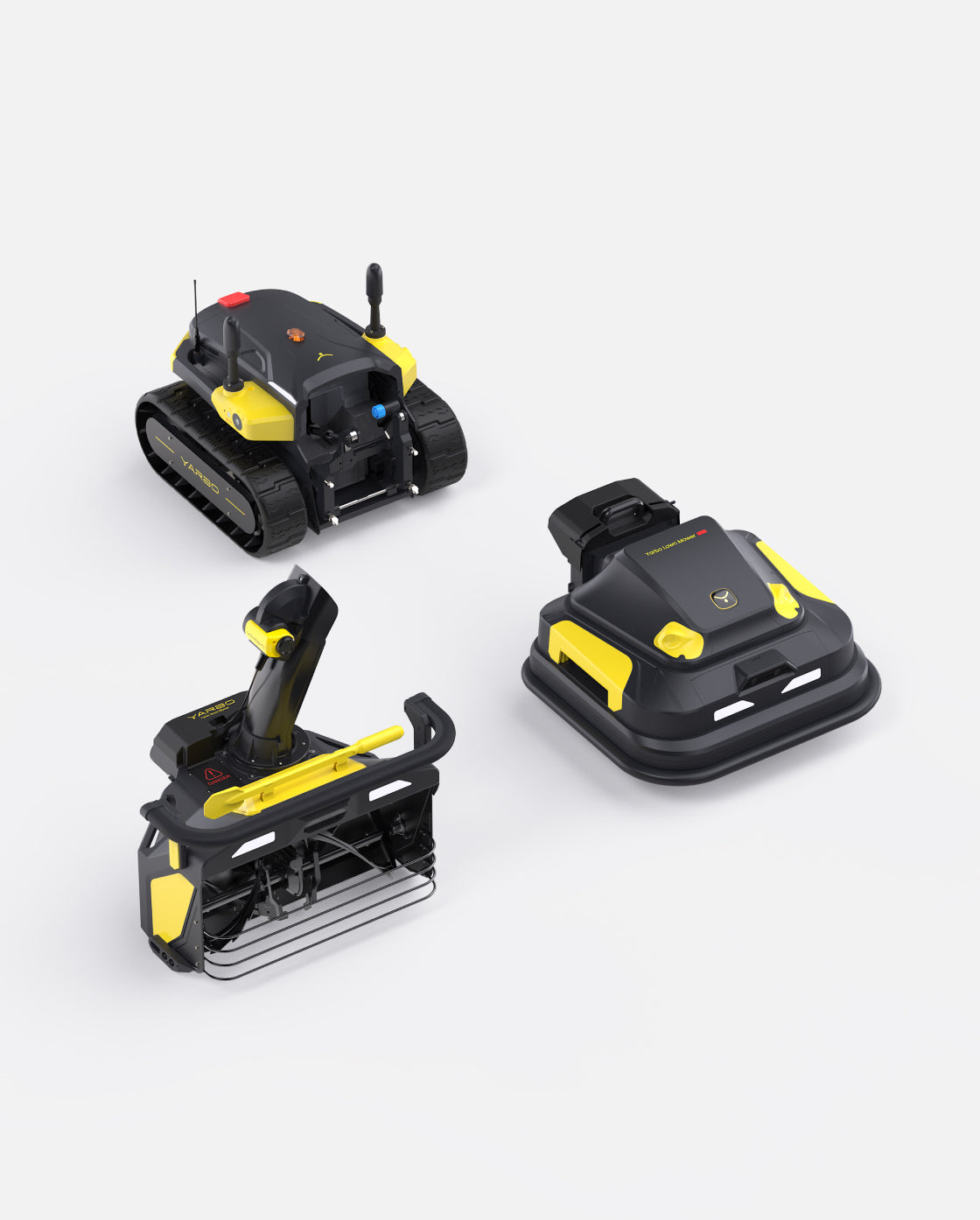
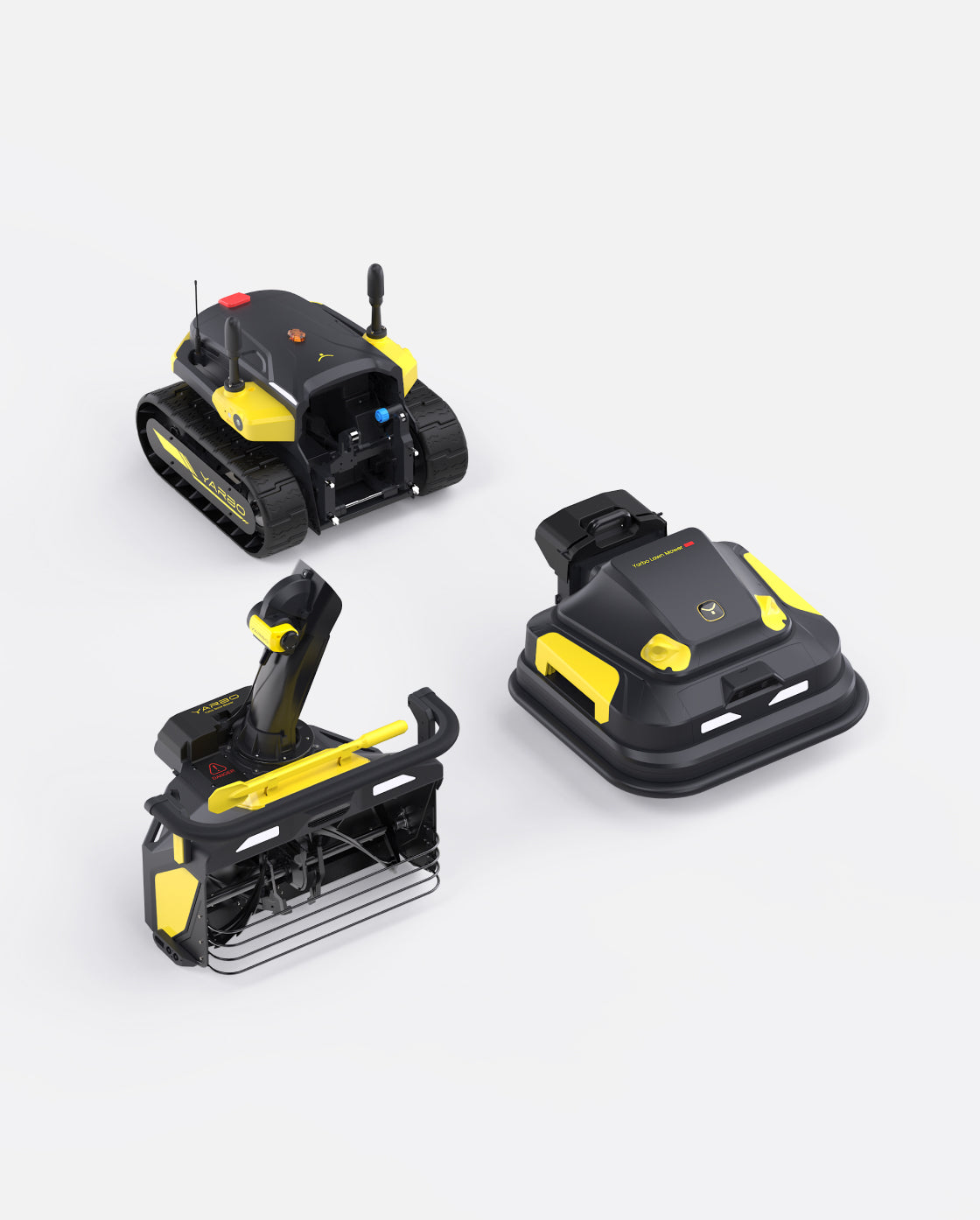
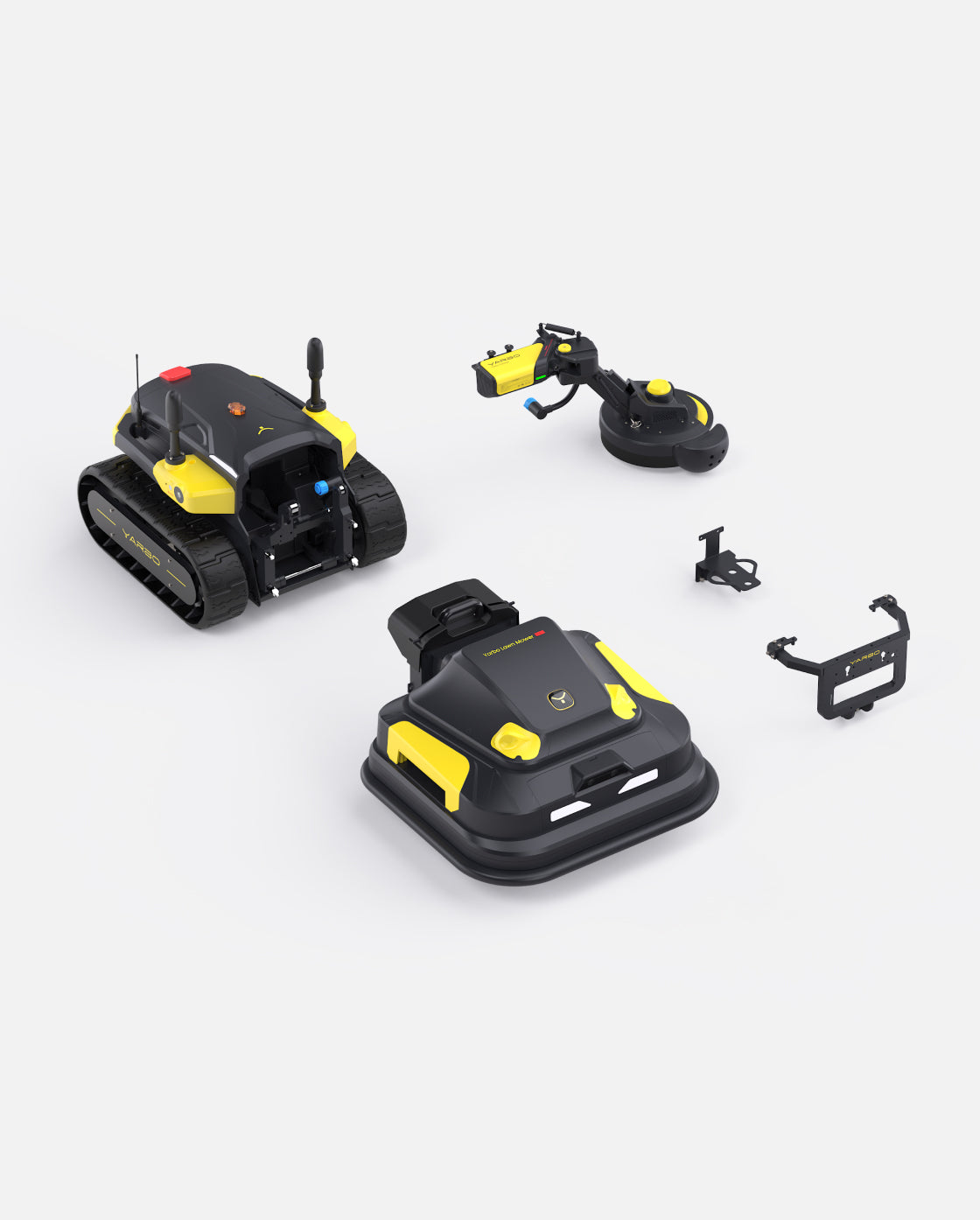
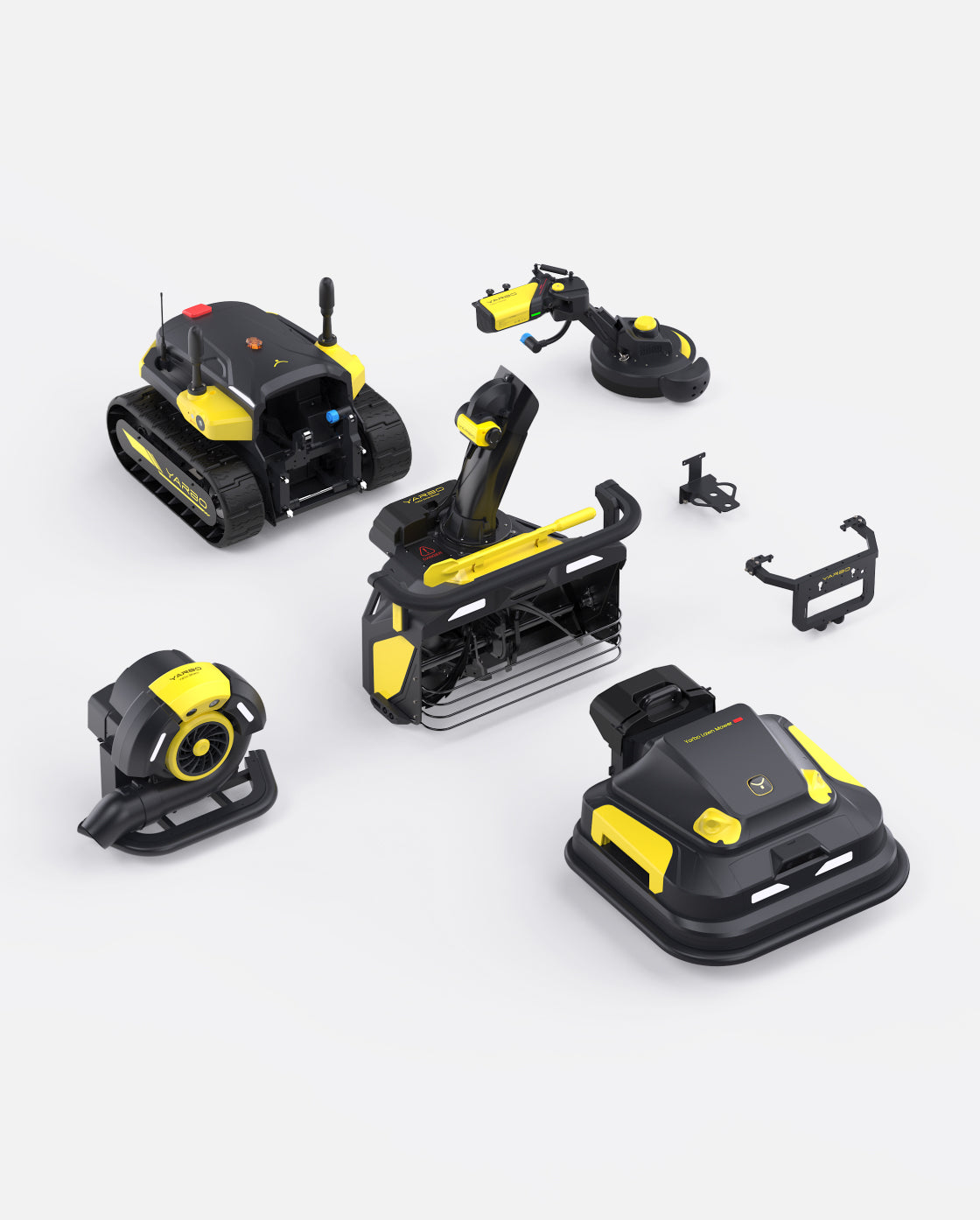


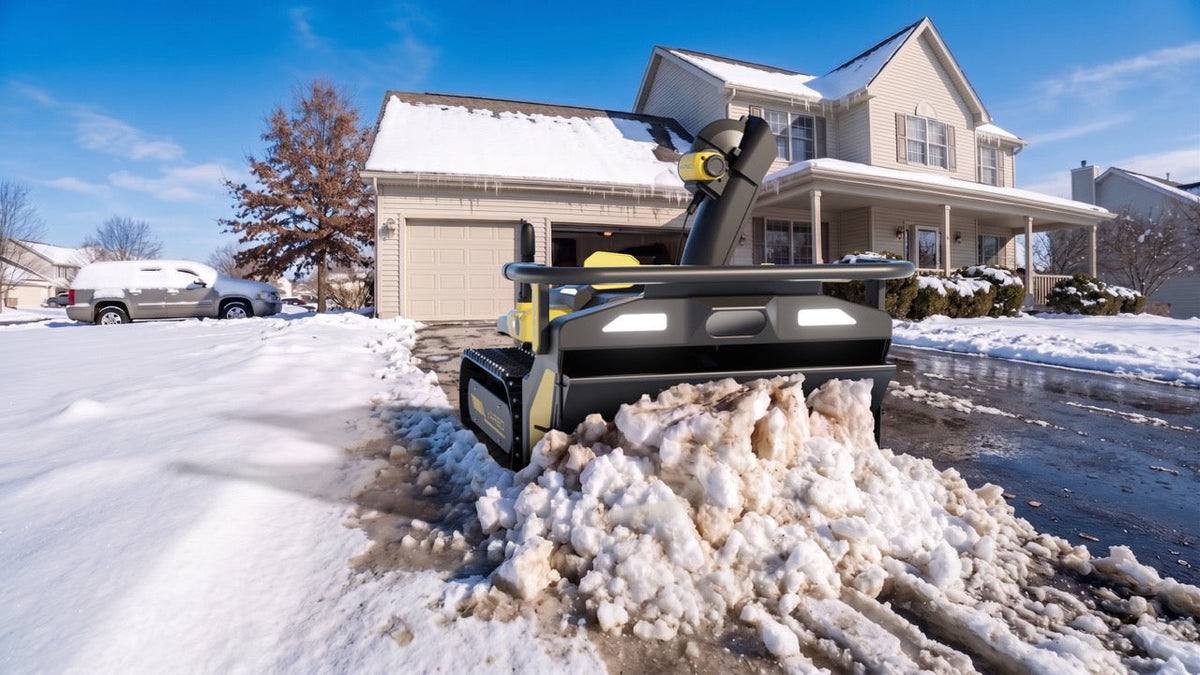
Table Of Contents
After a heavy snowfall, the toughest part of clearing your driveway isn't always the snow in front of you. It's the growing snowbanks along the edges, the heavy slush near the garage, or the ridge of compacted snow a municipal plow leaves across your driveway entrance.
These are the situations where choosing a snow plow vs. snow blower makes a real difference.
A plow pushes snow aside, while a blower collects it and throws it away from the clearing path. The better choice depends on your driveway layout, typical snowfall, and available space for snow storage.
Snow Plow vs. Snow Blower: How They Work
A snow plow uses a blade mounted on a truck, ATV, or other powered vehicle to push snow forward or to the side. It's well suited to open surfaces where there's room to accumulate snow along the edges.
A snow blower collects snow through a rotating auger. On two-stage models, the auger feeds snow into an impeller, which propels it through an adjustable discharge chute.
On a driveway with plenty of open space, either method may work well. After several storms, however, snowbanks can begin eating into the usable width of your driveway. A blower lets you throw snow farther from the immediate clearing path, provided there's a safe place for it to land.
Which One Clears Snow Faster?
Picture a long, straight driveway with open lawn on both sides. A truck-mounted plow can cover the driving area in relatively few passes, particularly when the snow is fresh and there's ample room to push it away.
Now consider that same driveway after three or four storms.
Snowbanks have grown taller. The plow may need to push snow farther to maintain the original driveway width, and the piles near the entrance become increasingly difficult to move.
A two-stage blower can direct snow beyond the driveway edges, reducing the need to keep pushing existing snowbanks farther back. It generally clears a narrower path per pass, though, and deep or dense accumulation can slow progress.
For a long, open driveway, a vehicle-mounted plow is often the faster option. But once snowbanks start crowding the edges, a blower can help preserve the usable clearing area.
Wet Snow, Deep Drifts, and Packed Snow
A few inches of wet snow can be harder to clear than a much deeper layer of powder. When temperatures hover around freezing, snow becomes heavier and stickier, increasing the load on a blower and the likelihood of chute clogs.
A plow avoids that particular problem because it pushes snow rather than feeding it through an auger and chute. Still, pushing a large volume of wet snow takes traction. A compact plow attachment won't necessarily move the same load as a full-size truck plow.
The packed ridge at the end of your driveway presents another challenge.
Known as a windrow, this ridge is often left behind when municipal plows clear the street. It may contain dense snow, ice, and compacted material that's much harder to move than fresh accumulation.
A capable two-stage blower may work through manageable sections with slower, smaller passes. Hard-frozen or heavily compacted material may need to be broken up first. Plows face their own limits when the ridge becomes too heavy to push.
If heavy, wet snow is common where you live, pay attention to intake capacity, traction, and the manufacturer's recommended operating conditions—not just clearing width.
What About Gravel, Slopes, and Uneven Driveways?
The surface beneath the snow can determine how well your equipment performs.
Paved Driveways
Asphalt and concrete generally work well with both clearing methods.
A plow blade set too low can catch on raised joints, cracked pavement, or uneven sections. Snow blowers have similar clearance considerations: scraper bars and skid shoes determine how closely the intake follows the ground.
Proper adjustment matters. Scraping down to bare pavement isn't always worth the risk of damaging the equipment or driveway.
Gravel Driveways
On loose gravel, a plow can displace stones along with the snow. Adjustable blade shoes may help, depending on the equipment.
Two-stage blowers with adjustable skid shoes can maintain clearance above the surface, reducing the chance of picking up gravel. Single-stage machines that operate close to the ground are generally less suitable.
Don't assume raising an intake makes every gravel driveway safe for snow blowing. Loose stones can still enter the machine or become projectiles.
Sloped Driveways
Steep driveways introduce a different problem: traction.
A vehicle-mounted plow relies on its tires and available pushing force. Walk-behind blowers depend on their wheels or tracks, drive system, and operator control.
Tracked equipment can provide useful traction, but ice can still cause slipping.
Check the manufacturer's published slope rating and any restrictions for specific attachments. The maximum grade a machine can climb is not a guarantee that it can clear snow safely on an icy incline.
Where Can You Put the Snow?
If you have open lawn beside your driveway, pushing snow into designated storage areas may be straightforward. A narrow driveway bordered by retaining walls or neighboring properties offers much less flexibility.
A blower gives you adjustable discharge direction, but you still need to account for wind, parked vehicles, windows, landscaping, and nearby walkways.
Check local snow-placement rules as well. Some municipalities prohibit pushing or blowing snow from private property onto public streets or sidewalks.
Whatever equipment you use, plan where the snow will go before clearing begins.
How Much Time Will You Spend Operating the Equipment?
A plow attached to a truck takes much of the physical effort out of snow removal. You're still driving the vehicle, adjusting the blade, and managing each pass.
A self-propelled snow blower reduces pushing, but you remain behind the machine to steer, turn, and adjust its clearing direction.
That may be perfectly manageable if you only clear snow a few times each winter. Frequent snowfall changes the calculation. A job you handle occasionally becomes a recurring commitment when snow falls several times a week.
An autonomous snow blower allows you to map clearing areas and configure routes in advance. Instead of manually guiding every pass, the machine follows those routes and carries out scheduled tasks.
You'll still need to set up the system, follow its operating and supervision requirements, and handle occasional problems. Routine clearing, however, no longer depends on continuous manual steering.
How Yarbo Handles Recurring Snowfall
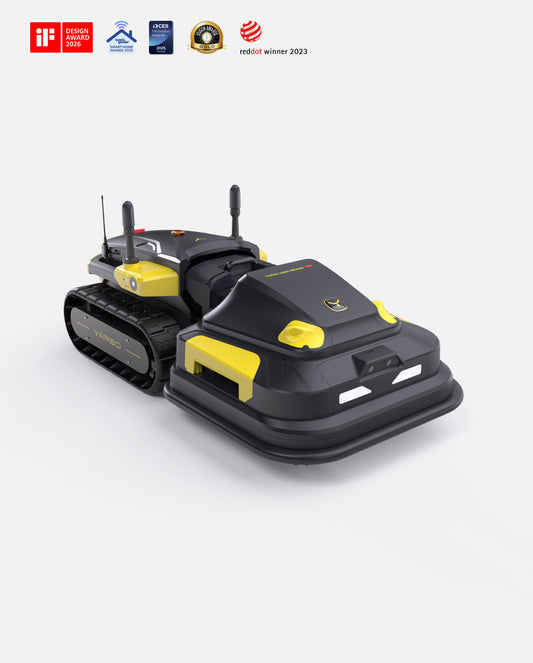
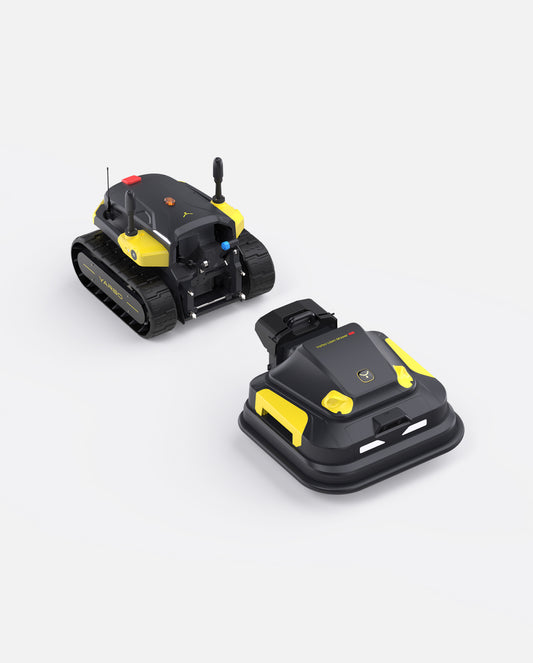
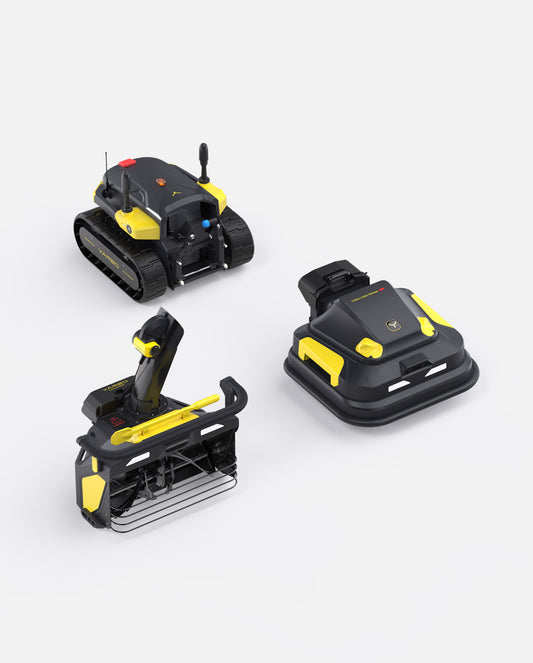
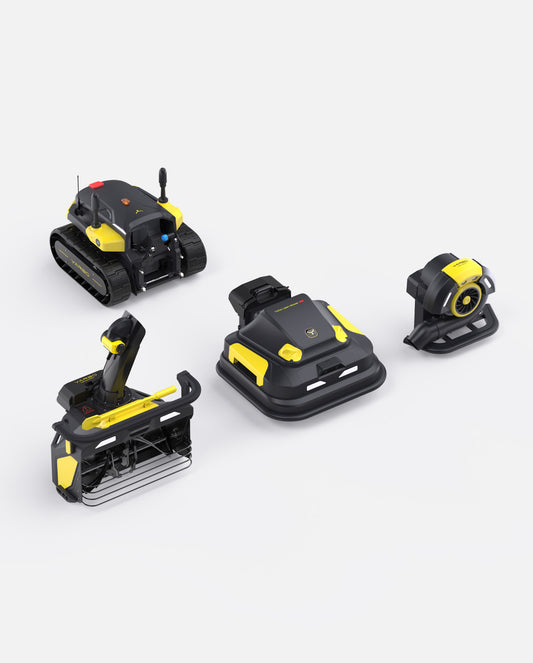
Yarbo combines a tracked robotic Core with a two-stage Snow Blower Module, bringing autonomous navigation to residential snow removal.

Through the Yarbo App, you can map your driveway and walkways, define clearing areas, and configure routes and schedules. Weather-triggered clearing is also supported, while automatic docking, recharging, and task resumption help the system manage recurring snowfall under supported operating conditions.
Rather than waiting until the end of a storm to tackle the full accumulation, you can configure repeated clearing sessions within the system's operating limits.
Yarbo Snow Blower Specifications
Both the Y40 and Y40P configurations with Snow Blower Module Gen 2 share the following snow-clearing specifications:
| Feature | Specification |
| Clearing system | Two-stage auger and impeller |
| Clearing width | 24 inches |
| Snow intake height | 12 inches |
| Maximum throwing distance | Up to 40 feet |
| Published snow-removal slope rating | Up to 36% (approximately 20°) |
| Navigation | Autonomous navigation with mapped work areas |
| Charging | Automatic docking and recharging |
Source: Yarbo Robotic Snow Blower.
Specifications refer to the Snow Blower Module Gen 2 configurations and are subject to applicable operating conditions.
The 36% slope rating is the published climbing capability for these snow-removal configurations, not a guarantee of safe operation on every snow-covered or icy slope. Actual traction depends on surface conditions, snow depth, and equipment setup.
Similarly, the 40-foot throwing distance is a published maximum. Actual discharge distance varies with snow density and machine settings.
What About Heavy, Wet Snow?
Yarbo also offers an optional Snow Plow Blade for use with its compatible Snow Blower Module.
Consider a winter afternoon when temperatures rise and fresh snow turns into heavy slush. Blowing it may become difficult as sticky snow builds up around the discharge chute. On a suitable, relatively flat paved surface, the Plow Blade attachment provides another way to move that accumulation.
The blade mounts to the compatible Snow Blower Module rather than directly to the Core as a standalone attachment.
It's designed for pushing suitable wet or packed snow, but it isn't a replacement for a full-size truck plow. Available traction, accumulation depth, terrain, and space for displaced snow still determine what it can handle.
For homeowners who experience both dry powder and wet snow throughout the season, having the option to change clearing methods can be useful.
Explore Yarbo's snow removal products and compatible attachments to find the right configuration for your property.
Snow Plow vs. Snow Blower: Quick Driveway Comparison
| Your Driveway or Snow Conditions | Consider | Key Consideration |
| Long, open driveway with room for snowbanks | Vehicle-mounted plow | Wide passes and sufficient snow storage space |
| Narrow driveway with limited space along the edges | Two-stage snow blower | Throwing distance and safe snow placement |
| Frequent wet, heavy snow | Plow or suitably equipped two-stage blower | Traction, snow density, and chute clogging |
| Loose gravel or uneven pavement | Equipment with suitable clearance adjustments | Stone pickup and surface compatibility |
| Steep or icy driveway | Equipment rated for the conditions | Traction and specific operating limits |
| Frequent snowfall with less hands-on operation preferred | Autonomous snow blower | Mapping, automated clearing, and occasional intervention |
Choosing the Right Setup for Your Driveway
Start with the conditions that make snow removal difficult on your property.
A vehicle-mounted plow makes sense for a long, open driveway where you have room to move and store snow. If your driveway is narrow or snowbanks regularly block access, the discharge control of a two-stage blower may be more useful.
For homeowners dealing with repeated snowfall, the decision may also come down to how much time they want to spend operating equipment themselves.
Yarbo combines mapped autonomous clearing with a compatible Snow Plow Blade for suitable conditions, offering an alternative to manually clearing every storm. It isn't designed to replace every truck-mounted plow, but it can make recurring residential snow removal less hands-on.
Explore Yarbo's Robotic Snow Blower Configurations to find a setup that matches your driveway and winter conditions.
Table Of Contents
Subscribe
- Afghanistan+93
- Albania+355
- Algeria+213
- Andorra+376
- Angola+244
- Antigua and Barbuda+1268
- Argentina+54
- Armenia+374
- Aruba+297
- Australia+61
- Austria+43
- Azerbaijan+994
- Bahamas+1242
- Bahrain+973
- Bangladesh+880
- Barbados+1246
- Belarus+375
- Belgium+32
- Belize+501
- Benin+229
- Bhutan+975
- Bolivia+591
- Bosnia and Herzegovina+387
- Botswana+267
- Brazil+55
- British Indian Ocean Territory+246
- Brunei+673
- Bulgaria+359
- Burkina Faso+226
- Burundi+257
- Cambodia+855
- Cameroon+237
- Canada+1
- Cape Verde+238
- Caribbean Netherlands+599
- Central African Republic+236
- Chad+235
- Chile+56
- China+86
- Colombia+57
- Comoros+269
- Congo+243
- Congo+242
- Costa Rica+506
- Côte d’Ivoire+225
- Croatia+385
- Cuba+53
- Curaçao+599
- Cyprus+357
- Czech Republic+420
- Denmark+45
- Djibouti+253
- Dominica+1767
- Dominican Republic+1
- Ecuador+593
- Egypt+20
- El Salvador+503
- Equatorial Guinea+240
- Eritrea+291
- Estonia+372
- Ethiopia+251
- Fiji+679
- Finland+358
- France+33
- French Guiana+594
- French Polynesia+689
- Gabon+241
- Gambia+220
- Georgia+995
- Germany+49
- Ghana+233
- Greece+30
- Grenada+1473
- Guadeloupe+590
- Guam+1671
- Guatemala+502
- Guinea+224
- Guinea-Bissau+245
- Guyana+592
- Haiti+509
- Honduras+504
- Hong Kong+852
- Hungary+36
- Iceland+354
- India+91
- Indonesia+62
- Iran+98
- Iraq+964
- Ireland+353
- Israel+972
- Italy+39
- Jamaica+1876
- Japan+81
- Jordan+962
- Kazakhstan+7
- Kenya+254
- Kiribati+686
- Kosovo+383
- Kuwait+965
- Kyrgyzstan+996
- Laos+856
- Latvia+371
- Lebanon+961
- Lesotho+266
- Liberia+231
- Libya+218
- Liechtenstein+423
- Lithuania+370
- Luxembourg+352
- Macau+853
- Macedonia+389
- Madagascar+261
- Malawi+265
- Malaysia+60
- Maldives+960
- Mali+223
- Malta+356
- Marshall Islands+692
- Martinique+596
- Mauritania+222
- Mauritius+230
- Mexico+52
- Micronesia+691
- Moldova+373
- Monaco+377
- Mongolia+976
- Montenegro+382
- Morocco+212
- Mozambique+258
- Myanmar+95
- Namibia+264
- Nauru+674
- Nepal+977
- Netherlands+31
- New Caledonia+687
- New Zealand+64
- Nicaragua+505
- Niger+227
- Nigeria+234
- North Korea+850
- Norway+47
- Oman+968
- Pakistan+92
- Palau+680
- Palestine+970
- Panama+507
- Papua New Guinea+675
- Paraguay+595
- Peru+51
- Philippines+63
- Poland+48
- Portugal+351
- Puerto Rico+1
- Qatar+974
- Réunion+262
- Romania+40
- Russia+7
- Rwanda+250
- Saint Kitts and Nevis+1869
- Saint Lucia+1758
- Saint Vincent and the Grenadines+1784
- Samoa+685
- San Marino+378
- São Tomé and Príncipe+239
- Saudi Arabia+966
- Senegal+221
- Serbia+381
- Seychelles+248
- Sierra Leone+232
- Singapore+65
- Slovakia+421
- Slovenia+386
- Solomon Islands+677
- Somalia+252
- South Africa+27
- South Korea+82
- South Sudan+211
- Spain+34
- Sri Lanka+94
- Sudan+249
- Suriname+597
- Swaziland+268
- Sweden+46
- Switzerland+41
- Syria+963
- Taiwan+886
- Tajikistan+992
- Tanzania+255
- Thailand+66
- Timor-Leste+670
- Togo+228
- Tonga+676
- Trinidad and Tobago+1868
- Tunisia+216
- Turkey+90
- Turkmenistan+993
- Tuvalu+688
- Uganda+256
- Ukraine+380
- United Arab Emirates+971
- United Kingdom+44
- United States+1
- Uruguay+598
- Uzbekistan+998
- Vanuatu+678
- Vatican City+39
- Venezuela+58
- Vietnam+84
- Yemen+967
- Zambia+260
- Zimbabwe+263
You have successfully subscribed!!
Check your welcome email for exclusive discounts.
Email Check Needed
We are unable to verify your email address.
Please check if the email
is correct.