Skip to content
Cart
0









Table Of Contents
Every fall, lawn owners face the same question: should you raise your mowing height, lower it, or just leave it alone? There's no single answer — but understanding why the adjustment matters can help you get through the season without setting your lawn back before winter.

Cool-season vs. warm-season: two different strategies
The right move depends entirely on your grass type.
Cool-season grasses — Kentucky bluegrass, tall fescue, perennial ryegrass — thrive in fall temperatures. This is their active growing period, and leaving them slightly taller heading into cooler months encourages deeper root development and helps the lawn store energy for winter. Keeping your cut toward the higher end of your range through fall gives these grasses a stronger foundation for spring.
Warm-season grasses like Bermuda, Zoysia, and St. Augustine follow the opposite pattern. These varieties go dormant as temperatures drop, and gradually lowering the cut before dormancy sets in can help minimize thatch buildup and keep the lawn looking neat through the off-season.
The one-third rule — especially relevant in fall
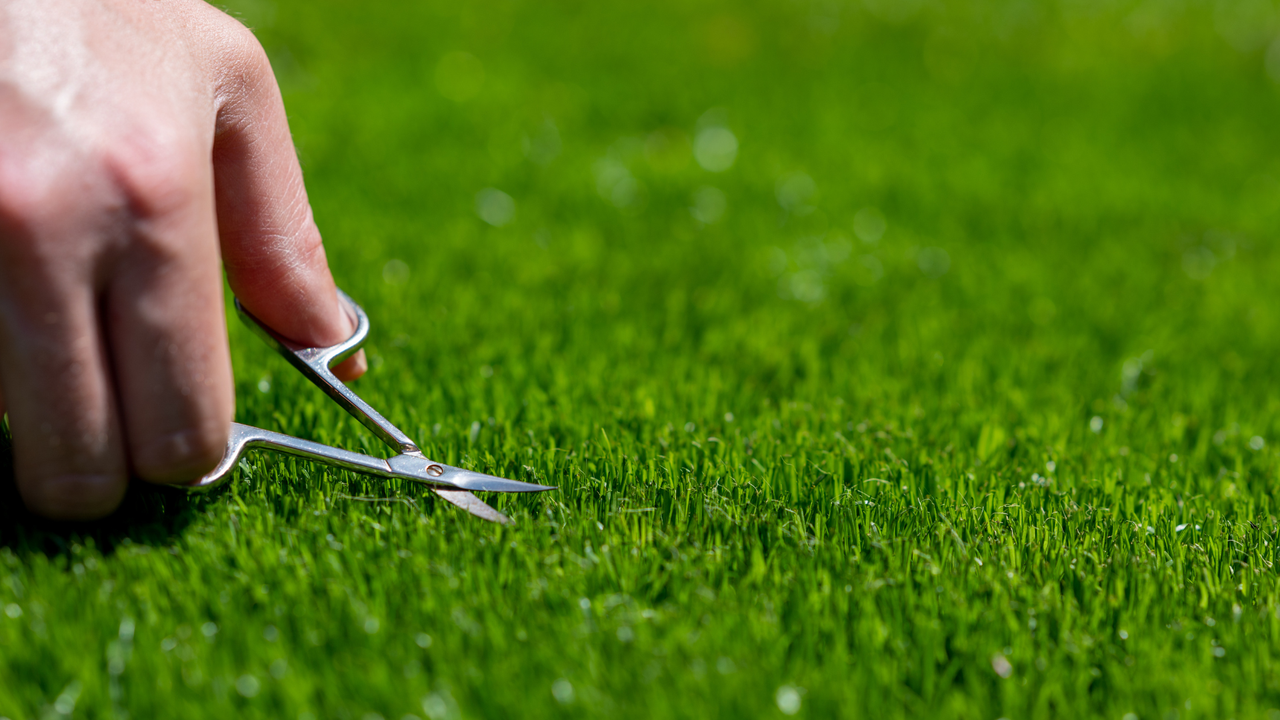
Regardless of which direction you're heading, the one-third rule is commonly used as a guideline: avoid removing more than one-third of the grass blade in a single cut. When growth is slowing and the lawn's recovery ability is reduced, a single aggressive cut can stress the turf in a way that doesn't resolve until the following spring.
This is where mowing frequency and height interact. If you're raising height for cool-season grass, give the lawn time to grow into the new target before the next cut. If you're lowering for warm-season grass, move in small increments — one step at a time over several sessions.

There's more than one right answer
It's worth saying plainly: a consistent, well-maintained height can outperform a perfectly timed seasonal adjustment done imprecisely. Some experienced lawn owners keep a steady cut year-round and get excellent results — particularly with well-draining soil and grass varieties that handle tighter cuts. The priority is avoiding stress, not hitting a specific number.
What fall changes is the margin for error. A scalping mistake in July recovers in a couple of weeks. The same mistake in October can linger through to the following spring.
Where Yarbo handles this differently
With a traditional mower, fall lawn care often plays out like this: sessions get less frequent, the lawn gets a bit long between cuts, and you end up taking off too much at once to catch up. That's exactly the pattern the one-third rule warns against — and it's difficult to avoid when mowing is something you schedule around the weekend.

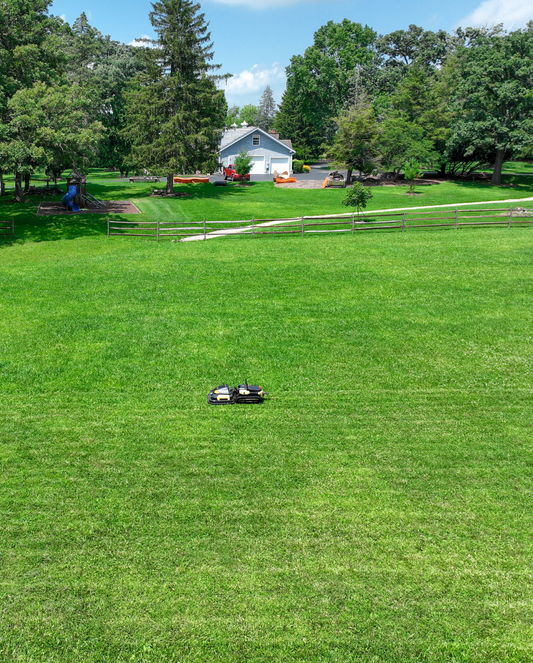
Yarbo's robot lawn mower runs on its own schedule, cutting little and often. Because it mows in smaller, more frequent increments rather than relying on longer intervals between sessions, each mowing pass typically removes only a small portion of the blade. The one-third rule is, in effect, built into how the machine operates.
Adjusting for fall takes seconds in the Yarbo app. The Yarbo Lawn Mower Pro has a cutting height range of 0.8 to 4.0 inches, adjustable via the app — so dialing in a gradual seasonal transition means setting a new target and letting the mower work toward it over the next several sessions. No single dramatic cut, no scalping risk.
For yards with different zones — a shaded corner that benefits from a higher cut, or a sun-exposed section that handles shorter grass — Yarbo's zone mapping lets you set different height targets across areas of the same property. Fall is a good time to revisit those zone settings, since lower sun angles affect shade coverage significantly.
The short version
Raise slightly for cool-season grasses as temperatures drop. Lower gradually for warm-season varieties before dormancy. Avoid large, sudden changes — especially when growth is slowing. And if you're running a Yarbo, most of this happens naturally: small incremental cuts, app-controlled height adjustments, and zone-by-zone settings that let you manage the whole yard on your terms.
Table Of Contents
Subscribe
- Afghanistan+93
- Albania+355
- Algeria+213
- Andorra+376
- Angola+244
- Antigua and Barbuda+1268
- Argentina+54
- Armenia+374
- Aruba+297
- Australia+61
- Austria+43
- Azerbaijan+994
- Bahamas+1242
- Bahrain+973
- Bangladesh+880
- Barbados+1246
- Belarus+375
- Belgium+32
- Belize+501
- Benin+229
- Bhutan+975
- Bolivia+591
- Bosnia and Herzegovina+387
- Botswana+267
- Brazil+55
- British Indian Ocean Territory+246
- Brunei+673
- Bulgaria+359
- Burkina Faso+226
- Burundi+257
- Cambodia+855
- Cameroon+237
- Canada+1
- Cape Verde+238
- Caribbean Netherlands+599
- Central African Republic+236
- Chad+235
- Chile+56
- China+86
- Colombia+57
- Comoros+269
- Congo+243
- Congo+242
- Costa Rica+506
- Côte d’Ivoire+225
- Croatia+385
- Cuba+53
- Curaçao+599
- Cyprus+357
- Czech Republic+420
- Denmark+45
- Djibouti+253
- Dominica+1767
- Dominican Republic+1
- Ecuador+593
- Egypt+20
- El Salvador+503
- Equatorial Guinea+240
- Eritrea+291
- Estonia+372
- Ethiopia+251
- Fiji+679
- Finland+358
- France+33
- French Guiana+594
- French Polynesia+689
- Gabon+241
- Gambia+220
- Georgia+995
- Germany+49
- Ghana+233
- Greece+30
- Grenada+1473
- Guadeloupe+590
- Guam+1671
- Guatemala+502
- Guinea+224
- Guinea-Bissau+245
- Guyana+592
- Haiti+509
- Honduras+504
- Hong Kong+852
- Hungary+36
- Iceland+354
- India+91
- Indonesia+62
- Iran+98
- Iraq+964
- Ireland+353
- Israel+972
- Italy+39
- Jamaica+1876
- Japan+81
- Jordan+962
- Kazakhstan+7
- Kenya+254
- Kiribati+686
- Kosovo+383
- Kuwait+965
- Kyrgyzstan+996
- Laos+856
- Latvia+371
- Lebanon+961
- Lesotho+266
- Liberia+231
- Libya+218
- Liechtenstein+423
- Lithuania+370
- Luxembourg+352
- Macau+853
- Macedonia+389
- Madagascar+261
- Malawi+265
- Malaysia+60
- Maldives+960
- Mali+223
- Malta+356
- Marshall Islands+692
- Martinique+596
- Mauritania+222
- Mauritius+230
- Mexico+52
- Micronesia+691
- Moldova+373
- Monaco+377
- Mongolia+976
- Montenegro+382
- Morocco+212
- Mozambique+258
- Myanmar+95
- Namibia+264
- Nauru+674
- Nepal+977
- Netherlands+31
- New Caledonia+687
- New Zealand+64
- Nicaragua+505
- Niger+227
- Nigeria+234
- North Korea+850
- Norway+47
- Oman+968
- Pakistan+92
- Palau+680
- Palestine+970
- Panama+507
- Papua New Guinea+675
- Paraguay+595
- Peru+51
- Philippines+63
- Poland+48
- Portugal+351
- Puerto Rico+1
- Qatar+974
- Réunion+262
- Romania+40
- Russia+7
- Rwanda+250
- Saint Kitts and Nevis+1869
- Saint Lucia+1758
- Saint Vincent and the Grenadines+1784
- Samoa+685
- San Marino+378
- São Tomé and Príncipe+239
- Saudi Arabia+966
- Senegal+221
- Serbia+381
- Seychelles+248
- Sierra Leone+232
- Singapore+65
- Slovakia+421
- Slovenia+386
- Solomon Islands+677
- Somalia+252
- South Africa+27
- South Korea+82
- South Sudan+211
- Spain+34
- Sri Lanka+94
- Sudan+249
- Suriname+597
- Swaziland+268
- Sweden+46
- Switzerland+41
- Syria+963
- Taiwan+886
- Tajikistan+992
- Tanzania+255
- Thailand+66
- Timor-Leste+670
- Togo+228
- Tonga+676
- Trinidad and Tobago+1868
- Tunisia+216
- Turkey+90
- Turkmenistan+993
- Tuvalu+688
- Uganda+256
- Ukraine+380
- United Arab Emirates+971
- United Kingdom+44
- United States+1
- Uruguay+598
- Uzbekistan+998
- Vanuatu+678
- Vatican City+39
- Venezuela+58
- Vietnam+84
- Yemen+967
- Zambia+260
- Zimbabwe+263
You have successfully subscribed!!
Check your welcome email for exclusive discounts.
Email Check Needed
We are unable to verify your email address.
Please check if the email
is correct.