Cart
0


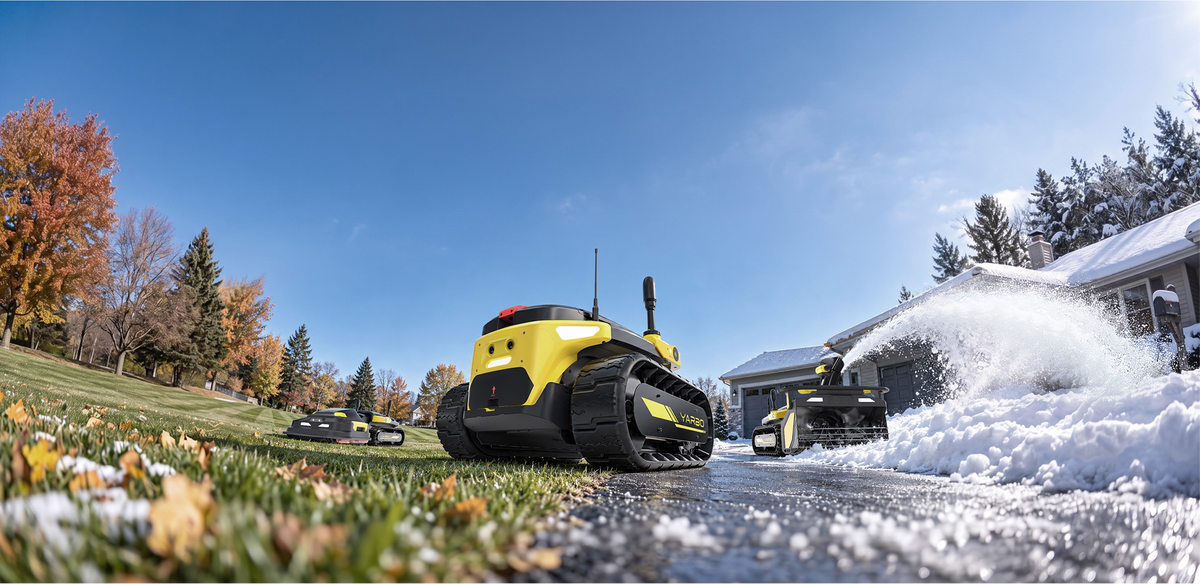


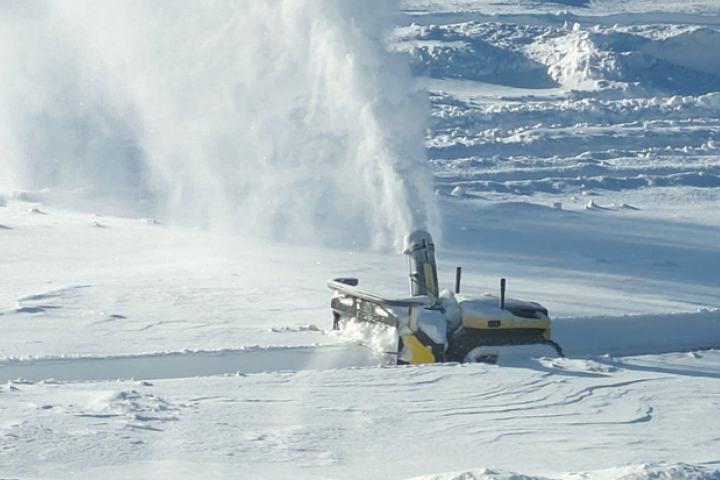
Table Of Contents
A snow blower that handles six inches of fresh powder without trouble may struggle with the same depth of wet, heavy snow. Add a long driveway, repeated storms, or a compacted snowbank left by a municipal plow, and choosing the right equipment becomes even more important.
If you're looking for the best snow blower for heavy snow, clearing depth is a useful starting point, but it doesn't tell the whole story. Snow density, how often you clear, and how much time you're willing to spend operating the machine can matter just as much.
This guide breaks down what to look for in a heavy-duty snow blower, how different snow conditions affect performance, and where an autonomous two-stage system like Yarbo fits into the picture.
What Makes a Snow Blower Suitable for Heavy Snow?
Heavy snow puts greater demands on the machine's intake, discharge system, and traction. A wider clearing path may help on an open driveway, but it won't do much good if the blower struggles to process dense snow or keeps losing grip.
When comparing machines, pay attention to these four factors.
| Factor | What to Consider | Why It Matters |
|---|---|---|
| Snow depth | Intake height, clearing capacity, and typical storm accumulation | Determines how much snow the machine can take in during a pass |
| Snow density | Dry powder, wet snow, slush, or compacted accumulation | Denser snow requires more effort to collect and discharge |
| Clearing frequency | Occasional post-storm clearing or repeated passes during snowfall | Clearing earlier can reduce the amount of snow the machine handles at once |
| Manual effort | Walk-behind operation, self-propelled drive, or autonomous clearing | Determines how much time and physical involvement each storm requires |
A capable two-stage blower is generally a sensible choice for frequent heavy snowfall. Its auger gathers snow while a separate impeller drives it through the discharge chute.
However, two-stage machines vary considerably in size, power, traction, and operating method. The right configuration depends on your property and the conditions you actually face.
Snow Depth: How Much Can a Snow Blower Clear in One Pass?
Most snow blower specifications include two measurements: clearing width and intake height.
Clearing width tells you how wide a path the machine can clear. Intake height describes the vertical opening through which snow enters the machine.
A taller intake gives the machine room to collect deeper accumulation, but it doesn't guarantee that every snowfall within that height can be cleared in a single pass.
Consider two driveways with ten inches of snow. One is covered in loose, dry powder. The other has dense, wind-packed accumulation with an icy crust. Although the measured depth is identical, the second driveway presents a much harder job.
This is why intake height should be considered alongside snow density, discharge performance, and the machine's operating limits.
Can Yarbo Clear 12 Inches of Snow in One Pass?
Yarbo's Snow Blower Module Gen 2 has a 12-inch intake height and a 24-inch clearing width. Under suitable conditions, it can handle snow approaching that intake height in a single pass, but 12 inches is not a guaranteed one-pass clearing depth for every snow type.

The module uses a two-stage auger and impeller system. The auger gathers snow from the clearing path, while the impeller discharges it through an adjustable chute.
Whether the machine can effectively process a full 12-inch layer depends on several conditions:
-
Snow density: Loose powder generally moves through the intake more easily than wet or compacted snow.
-
Snow consistency: A uniform layer is different from a wind-packed drift or a pile containing frozen chunks.
-
Ground conditions: Traction, surface irregularities, and obstacles can affect clearing performance.
-
Operating settings: Travel speed, auger settings, and clearing patterns influence how much snow the machine processes.
Yarbo's product documentation also describes clearing deep snow in layers. For particularly dense accumulation, multiple passes or earlier clearing may be preferable to trying to remove the full depth at once.
You can review the current specifications on the Yarbo Snow Blower product page.
Snow Density: Dry, Wet, and Compacted Snow Behave Differently
Snow depth is easy to measure. Density is harder to judge, but it often has a greater effect on how a blower performs.
Dry, Powdery Snow
Fresh powder is generally easier to collect and discharge because it contains less water and doesn't stick together as readily.
A capable two-stage blower can move through relatively deep powder, although windblown drifts and changing terrain may still require additional passes.
Heavy, Wet Snow
Wet snow is more demanding.
As temperatures approach freezing, snow can become dense and sticky. It may accumulate around the auger housing or inside the discharge chute, reducing clearing efficiency and increasing the risk of blockages.
A two-stage blower's separate impeller helps move collected snow through the chute, but even a heavy-duty machine can clog under difficult conditions.
For Yarbo, the official Wet, Heavy, Sticky Snow Guide recommends clearing early and, when appropriate, using Turbo Auger Speed with the lowest driving speed.
If wet snow becomes too difficult to discharge, Yarbo's optional Snow Plow Blade provides another option for pushing suitable accumulation on supported surfaces.
Compacted Snow and Frozen Snowbanks
Snow that's been driven over, walked on, or repeatedly pushed into a pile becomes harder to break apart.
The dense ridge left at the end of a driveway by a municipal snowplow is a common example. These piles may contain compressed snow, frozen chunks, and material that has partially melted and refrozen.
A two-stage blower may work through manageable compacted snow in smaller passes. Hard-frozen sections can require manual breakup before the machine can clear them.
Solid ice is a different matter. A snow blower should not be treated as an ice-breaking machine.
Clearing Frequency: Why Timing Matters During Heavy Snowfall
Suppose a storm is expected to bring a foot of snow over several hours.
You could wait until the storm ends and clear the full accumulation. Or, where conditions and equipment allow, you could begin clearing earlier and repeat the process as snowfall continues.
The second approach reduces the amount of snow the machine needs to process during each clearing session. It can also help prevent snow from becoming deeply compacted under vehicle traffic.
This is particularly useful in regions where storms last for extended periods or where several snowfalls arrive close together.
How Yarbo Approaches Repeated Snow Clearing
Yarbo supports scheduled and weather-triggered snow removal.
Once you've configured suitable working areas and clearing routes in the Yarbo App, the system can perform recurring clearing tasks without continuous manual steering.
It also supports automatic docking, charging, and task resumption. When additional charging is needed, Yarbo can return to its dock and continue the configured work afterward.
This approach is different from relying solely on a machine's maximum intake capacity after a storm has finished.
Rather than waiting for accumulation to reach its deepest point, you can configure Yarbo to begin clearing earlier and work through snowfall in manageable layers.
Actual performance still depends on snow conditions, battery capacity, operating settings, and the suitability of the mapped area.
Manual Effort: How Much Work Do You Want to Do Yourself?
Heavy snow doesn't just place more demand on the equipment. It also increases the time and effort required from the person operating it.
A conventional walk-behind snow blower requires you to guide the machine, adjust the chute, and manage turns throughout the job.
Self-propelled models reduce the effort needed to move the equipment, but you still need to steer and operate it.
For an occasional storm, that may be perfectly manageable.
For homeowners who regularly clear long driveways, multiple walkways, or large properties, the time spent operating equipment becomes a more significant consideration.
An autonomous snow blower changes that part of the process.
With Yarbo, you configure the work areas and routes in advance rather than manually steering every pass. The robot handles suitable recurring clearing tasks while you remain responsible for proper setup, supervision requirements, maintenance, and intervention when needed.
Autonomous operation doesn't mean every snow condition can be handled without assistance. Wet snow blockages, hard-packed accumulation, hidden obstacles, and unsuitable terrain may still require attention.
How Yarbo Compares With Conventional Heavy-Duty Snow Blowers
A heavy-duty gas-powered snow blower and an autonomous electric system such as Yarbo can both use a two-stage clearing mechanism.
The differences lie in how they're powered, how they're operated, and how they manage repeated clearing.
| Consideration | Conventional Two-Stage Snow Blower | Yarbo Snow Blower Gen 2 |
|---|---|---|
| Clearing mechanism | Auger and separate impeller | Auger and separate impeller |
| Power source | Gas or battery, depending on model | Battery-powered robotic Core |
| Clearing width | Varies by model | 24 inches |
| Intake height | Varies by model | 12 inches |
| Operation | Typically requires continuous operator guidance | Mapped autonomous clearing with supervision |
| Repeated clearing | Operator initiates and guides each session | Scheduled or weather-triggered clearing |
| Charging or refueling | Depends on the power system | Automatic docking and charging |
| Heavy, wet snow | Performance depends on machine capacity and conditions | Blower settings and optional compatible Plow Blade |
| Maintenance | Mechanical maintenance; gas models also require engine care | Battery, tracks, auger, impeller, sensors, and other routine maintenance |
Yarbo's main distinction isn't that it has a larger intake than every conventional snow blower. Many heavy-duty machines have greater intake heights or wider clearing paths.
Its advantage is combining a two-stage snow-clearing system with autonomous navigation and recurring task management.
That makes it worth considering if your priority is reducing the time spent manually operating snow-removal equipment throughout winter.
Yarbo Y40 vs. Y40P: Which Configuration Fits Your Property?
Both the Y40 and Y40P use Snow Blower Module Gen 2, so their published clearing width, intake height, and maximum throwing distance are the same.
The differences are primarily in the Core's drive system and coverage per charge.
| Specification | Yarbo Y40 | Yarbo Y40P |
|---|---|---|
| Snow Blower Module | Gen 2 | Gen 2 |
| Clearing width | 24 inches | 24 inches |
| Intake height | 12 inches | 12 inches |
| Maximum throwing distance | Up to 40 feet | Up to 40 feet |
| Drive system | Brushed drive motors | Brushless hub motors |
| Published coverage per charge | Up to 6,000 ft² | Up to 7,000 ft² |
| Reference snow depth for coverage | 1 inch | 1 inch |
| Published snow-removal slope rating | Up to 36% (approximately 20°) | Up to 36% (approximately 20°) |
Source: Yarbo Robotic Snow Blower Collection. Coverage figures refer to the manufacturer's stated 1-inch snow condition, not deep or wet snow.

When to Consider Y40
The Y40 offers the same Snow Blower Gen 2 clearing mechanism and published snow intake dimensions as the Y40P.
For properties where its drive performance and coverage per charge are sufficient, it can be a practical starting point for autonomous snow removal.
When to Consider Y40P
The Y40P adds brushless hub motors and higher published coverage per charge.
For longer driveways or larger mapped areas, that additional coverage may help reduce charging interruptions under comparable operating conditions.
However, neither model's published coverage figure should be used to calculate an exact runtime in heavy snow. Deeper and denser accumulation increases the workload, and actual coverage can be substantially different from the 1-inch reference condition.
Both configurations can return to charge and resume configured work when needed.
When Will You Still Need to Intervene?
Even a capable autonomous snow blower has operating limits.
Before choosing equipment for heavy snowfall, consider the situations that may still require manual work.
| Condition | What to Expect |
|---|---|
| Deep, loose snow | May be manageable within intake and operating limits; additional passes can be necessary |
| Heavy, wet snow | Reduced discharge efficiency or chute blockages are possible |
| Compacted snowbanks | Smaller passes or manual breakup may be required |
| Solid ice | Requires a different removal method |
| Steep or icy terrain | Traction and safe operating limits may prevent clearing |
| Hidden debris or obstacles | May require inspection and physical removal |
If the auger or chute becomes blocked, stop the machine and follow the manufacturer's complete shutdown procedure before approaching it. Never reach into the snow-clearing mechanism with your hands.
For Yarbo-specific instructions, see Clogged Chute or Auger? Don't Use Your Hands!.
The goal is to choose a machine that can handle your typical conditions, not to assume that any snow blower will clear every kind of winter accumulation.
Frequently Asked Questions
Can Yarbo Clear 12 Inches of Snow in One Pass?
Yarbo Snow Blower Module Gen 2 has a published 12-inch intake height. It can process deep snow within its operating limits, but the maximum intake height is not a guarantee that every 12-inch accumulation can be cleared completely in one pass.
Dry, loose snow is generally easier to discharge than heavy, wet, or compacted snow. Depending on conditions, multiple passes or earlier clearing may be necessary.
Is a Two-Stage Snow Blower Better for Heavy, Wet Snow?
A suitably sized two-stage machine is generally better equipped for heavy snow than a small single-stage blower because a separate impeller helps discharge collected snow.
However, wet snow can still cause chute blockages. Clearing speed, snow density, and the machine's specific capabilities all affect performance.
Can Yarbo Clear Compacted Snow and Ice?
Yarbo's two-stage Snow Blower Module can handle some packed snow, depending on how dense or frozen the accumulation has become.
It is not intended to break solid ice. Hard-frozen material may require manual removal or breakup before the remaining loose snow can be cleared.
How Long Does Yarbo's Battery Last in Heavy Snow?
There is no single runtime that applies to every heavy-snow condition.
Yarbo publishes coverage of up to 6,000 ft² per charge for Y40 and 7,000 ft² for Y40P, measured in 1 inch of snow. Deep or wet snow can reduce coverage per charge.
If the task requires additional battery capacity, Yarbo can automatically recharge and resume configured clearing work.
Is Yarbo Suitable for Steep Driveways?
The Y40 and Y40P snow-removal configurations have a published slope rating of up to 36% (approximately 20°).
Actual performance depends on traction, snow and ice conditions, and the specific operating setup. The published rating should not be treated as a guarantee that the system can safely clear every slope within that limit.
Choosing a Snow Blower for Heavy Snow
Start with the conditions you face most often.
If you regularly receive deep, wet snowfall, prioritize a capable two-stage clearing system, suitable traction, and enough capacity for your driveway. Don't judge a machine solely by its maximum intake height.
If storms are frequent, think about how often you want to clear snow. Removing accumulation earlier can be more manageable than waiting until it becomes deep or compacted.
And if the time spent operating your snow blower is your biggest concern, autonomous clearing deserves consideration.
Yarbo combines a two-stage Snow Blower Module with scheduled clearing, weather-triggered operation, and automatic charging. It won't eliminate every difficult snow-removal task, but it offers a different way to manage recurring snowfall without continuously steering equipment through every storm.
Explore Yarbo's Robotic Snow Blower Configurations to compare the Y40 and Y40P and find a setup suited to your property and winter conditions.
Table Of Contents
Subscribe
- Afghanistan+93
- Albania+355
- Algeria+213
- Andorra+376
- Angola+244
- Antigua and Barbuda+1268
- Argentina+54
- Armenia+374
- Aruba+297
- Australia+61
- Austria+43
- Azerbaijan+994
- Bahamas+1242
- Bahrain+973
- Bangladesh+880
- Barbados+1246
- Belarus+375
- Belgium+32
- Belize+501
- Benin+229
- Bhutan+975
- Bolivia+591
- Bosnia and Herzegovina+387
- Botswana+267
- Brazil+55
- British Indian Ocean Territory+246
- Brunei+673
- Bulgaria+359
- Burkina Faso+226
- Burundi+257
- Cambodia+855
- Cameroon+237
- Canada+1
- Cape Verde+238
- Caribbean Netherlands+599
- Central African Republic+236
- Chad+235
- Chile+56
- China+86
- Colombia+57
- Comoros+269
- Congo+243
- Congo+242
- Costa Rica+506
- Côte d’Ivoire+225
- Croatia+385
- Cuba+53
- Curaçao+599
- Cyprus+357
- Czech Republic+420
- Denmark+45
- Djibouti+253
- Dominica+1767
- Dominican Republic+1
- Ecuador+593
- Egypt+20
- El Salvador+503
- Equatorial Guinea+240
- Eritrea+291
- Estonia+372
- Ethiopia+251
- Fiji+679
- Finland+358
- France+33
- French Guiana+594
- French Polynesia+689
- Gabon+241
- Gambia+220
- Georgia+995
- Germany+49
- Ghana+233
- Greece+30
- Grenada+1473
- Guadeloupe+590
- Guam+1671
- Guatemala+502
- Guinea+224
- Guinea-Bissau+245
- Guyana+592
- Haiti+509
- Honduras+504
- Hong Kong+852
- Hungary+36
- Iceland+354
- India+91
- Indonesia+62
- Iran+98
- Iraq+964
- Ireland+353
- Israel+972
- Italy+39
- Jamaica+1876
- Japan+81
- Jordan+962
- Kazakhstan+7
- Kenya+254
- Kiribati+686
- Kosovo+383
- Kuwait+965
- Kyrgyzstan+996
- Laos+856
- Latvia+371
- Lebanon+961
- Lesotho+266
- Liberia+231
- Libya+218
- Liechtenstein+423
- Lithuania+370
- Luxembourg+352
- Macau+853
- Macedonia+389
- Madagascar+261
- Malawi+265
- Malaysia+60
- Maldives+960
- Mali+223
- Malta+356
- Marshall Islands+692
- Martinique+596
- Mauritania+222
- Mauritius+230
- Mexico+52
- Micronesia+691
- Moldova+373
- Monaco+377
- Mongolia+976
- Montenegro+382
- Morocco+212
- Mozambique+258
- Myanmar+95
- Namibia+264
- Nauru+674
- Nepal+977
- Netherlands+31
- New Caledonia+687
- New Zealand+64
- Nicaragua+505
- Niger+227
- Nigeria+234
- North Korea+850
- Norway+47
- Oman+968
- Pakistan+92
- Palau+680
- Palestine+970
- Panama+507
- Papua New Guinea+675
- Paraguay+595
- Peru+51
- Philippines+63
- Poland+48
- Portugal+351
- Puerto Rico+1
- Qatar+974
- Réunion+262
- Romania+40
- Russia+7
- Rwanda+250
- Saint Kitts and Nevis+1869
- Saint Lucia+1758
- Saint Vincent and the Grenadines+1784
- Samoa+685
- San Marino+378
- São Tomé and Príncipe+239
- Saudi Arabia+966
- Senegal+221
- Serbia+381
- Seychelles+248
- Sierra Leone+232
- Singapore+65
- Slovakia+421
- Slovenia+386
- Solomon Islands+677
- Somalia+252
- South Africa+27
- South Korea+82
- South Sudan+211
- Spain+34
- Sri Lanka+94
- Sudan+249
- Suriname+597
- Swaziland+268
- Sweden+46
- Switzerland+41
- Syria+963
- Taiwan+886
- Tajikistan+992
- Tanzania+255
- Thailand+66
- Timor-Leste+670
- Togo+228
- Tonga+676
- Trinidad and Tobago+1868
- Tunisia+216
- Turkey+90
- Turkmenistan+993
- Tuvalu+688
- Uganda+256
- Ukraine+380
- United Arab Emirates+971
- United Kingdom+44
- United States+1
- Uruguay+598
- Uzbekistan+998
- Vanuatu+678
- Vatican City+39
- Venezuela+58
- Vietnam+84
- Yemen+967
- Zambia+260
- Zimbabwe+263
You have successfully subscribed!!
Check your welcome email for exclusive discounts.
Email Check Needed
We are unable to verify your email address.
Please check if the email
is correct.