.png?w=1280&h=720)
If you own a large lawn, choosing the best ride on lawn mower can save you hours of work, deliver a cleaner cut, and make lawn care far more enjoyable. These machines are built for speed, power, and efficiency—allowing you to cover more ground in less time.
But with advancements in technology, robot lawn mowers are becoming a serious contender, offering automation and precision that traditional ride-on mowers can’t match.
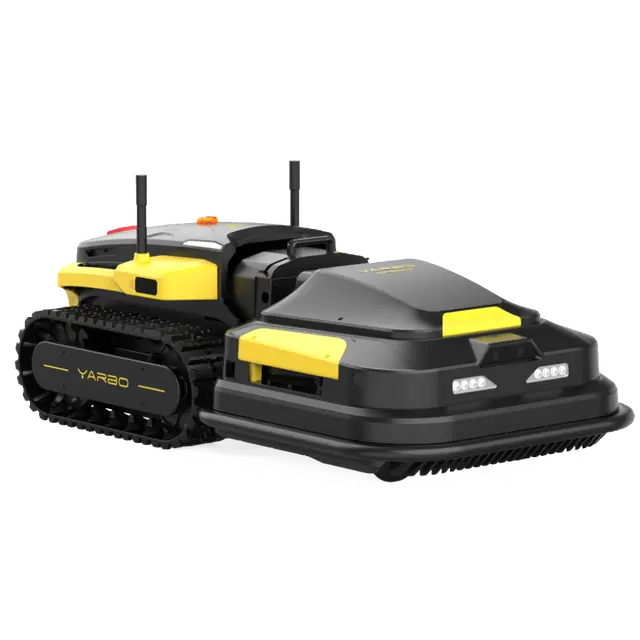
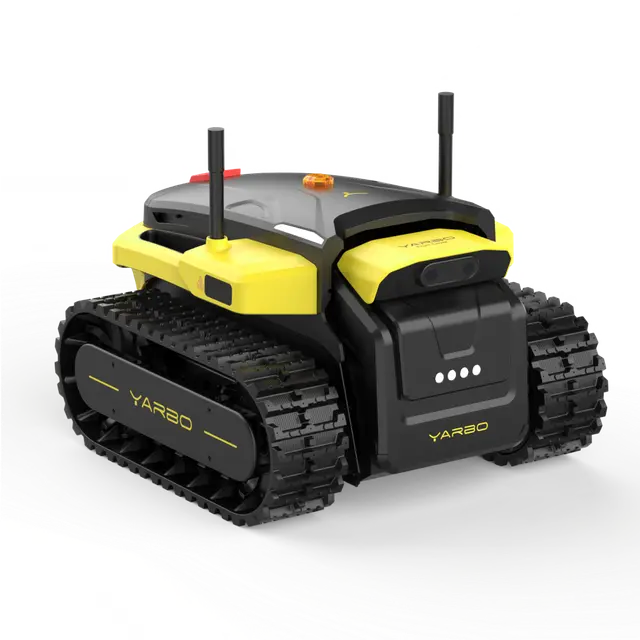
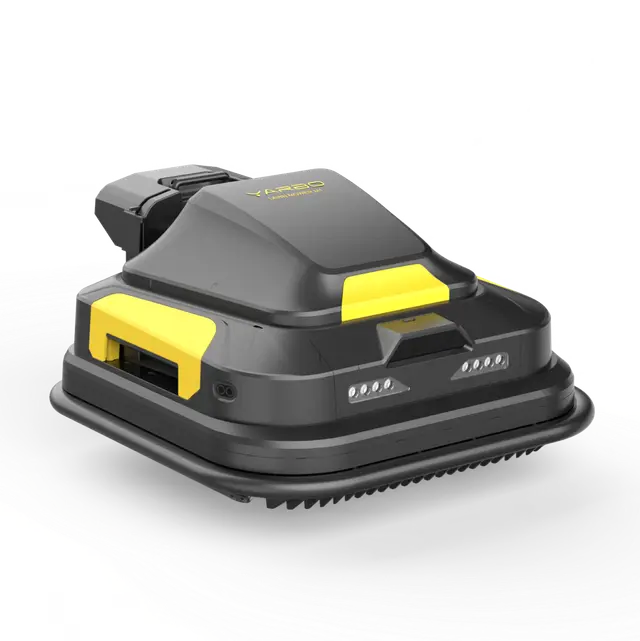
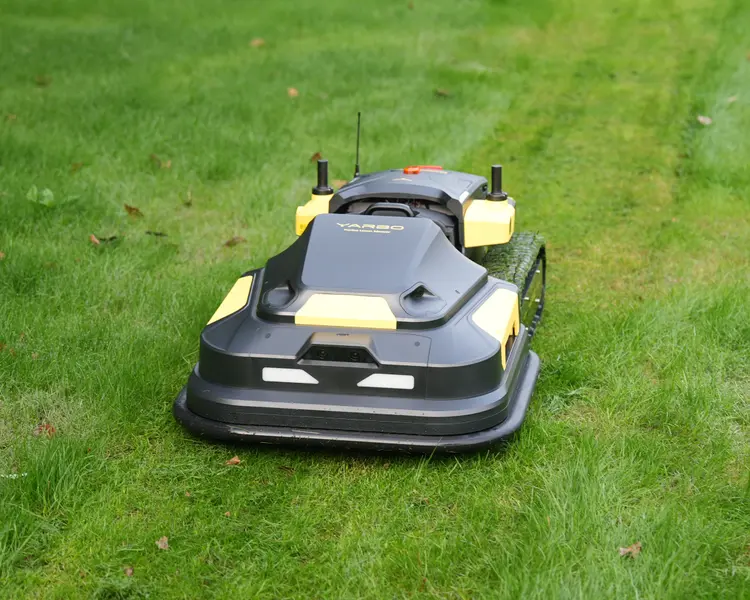
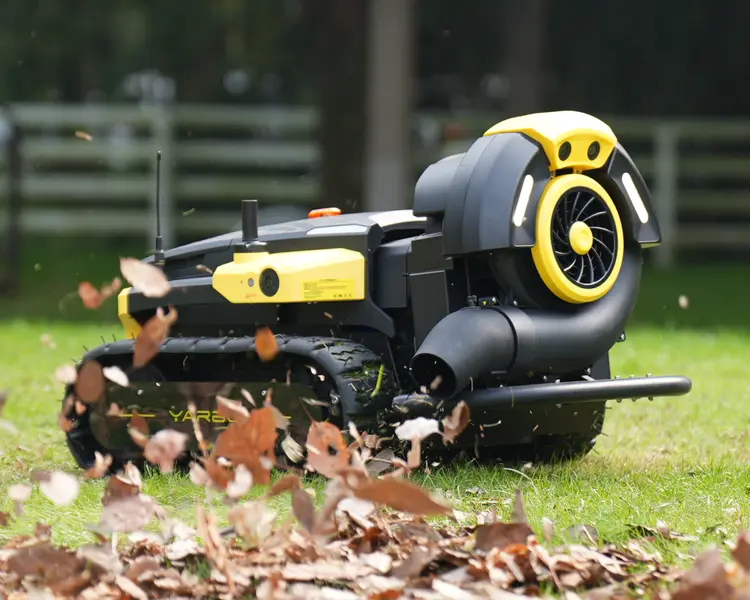
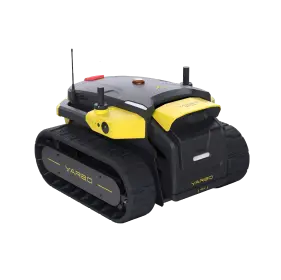
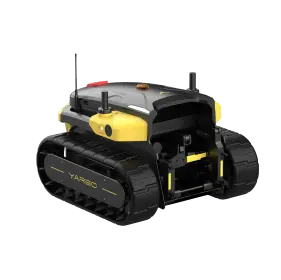
In this guide, we’ll explore the top ride-on lawn mower models, show you how to use a ride on lawn mower for the best results, and compare them directly to high-tech alternatives like Yarbo, the heavy-duty robot mower designed for high-end properties, aiming to deliver Your Big Yard. Your Free Time.
Table of Contents
What Is a Ride-On Lawn Mower?
Ride on lawn mowers is essentially a compact tractor with a cutting deck beneath or in front of it. You sit on it, steer it, and control the cutting height and speed. Designed for speed and power, ride-on mowers can handle rough terrain, tall grass, and large areas much faster than push mowers.
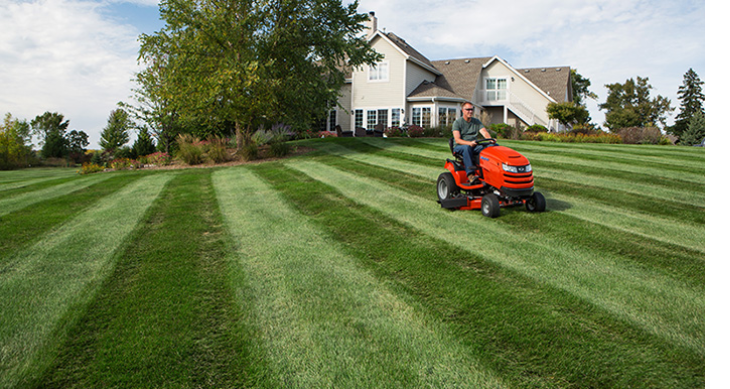
They’re ideal for people who enjoy the act of mowing or want fast, bulk cutting on open lawns. However, knowing how to use a ride on lawn mowers safely and efficiently requires practice—particularly on sloped or obstacle-rich lawns.
How to Use a Ride On Mower Effectively?
Using a ride-on mower is straightforward but requires some know-how:
-
Check fuel and oil levels before starting.
-
Set your cutting height according to grass type and season.
-
Engage the blades only once in position.
-
Mow in straight lines or follow a systematic pattern to avoid missing patches.
-
Clean the deck after each session to prevent buildup.
Following these steps ensures a clean, professional finish without overworking your machine.
Key Features of the Best Ride On Lawn Mowers
When shopping for a high-quality ride-on mower, consider:
-
Engine power – Higher horsepower for faster mowing.
-
Cutting deck width – Wider decks cover more ground per pass.
-
Transmission type – Hydrostatic for smoother control.
-
Comfort features – Adjustable seat, steering wheel, cup holder (yes, it matters).
-
Attachments – Baggers, snow blades, aerators for year-round utility.
Pros and Cons of Best Ride On Lawn Mower
|
Pros
|
Cons
|
|
High speed and coverage.
|
Requires fuel and regular maintenance.
|
|
Handles tough grass and slopes.
|
Larger storage space needed.
|
|
Multi-season versatility with attachments.
|
Louder operation and emissions.
|
What Is a Robot Lawn Mower?
A robot lawn mower is the autonomous cousin of traditional mowers. Once programmed, it roams your yard, cutting grass in small increments daily to keep it at a consistent height.
How Robot Lawn Mowers Work?
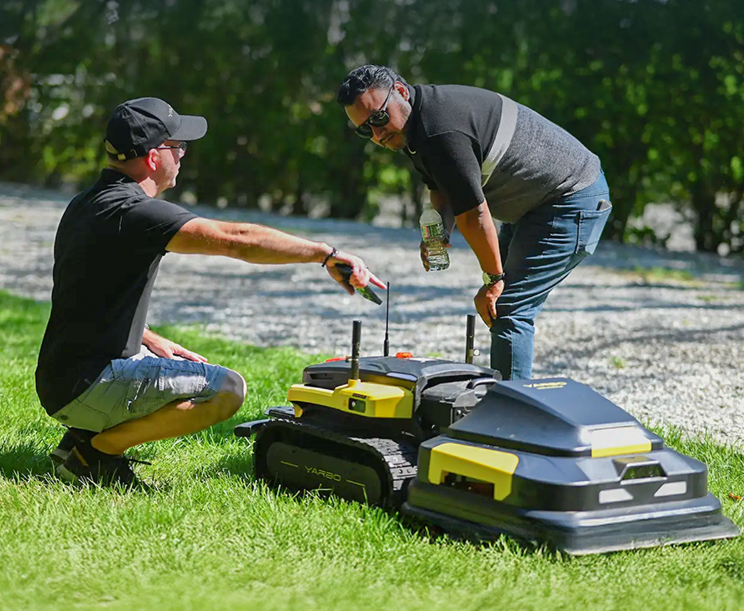
Most robot mowers rely on perimeter wires or multi-positioning navigation using RTK, vision, IMU, and odometer for centimeter-level precision and smart path planning. Equipped with sensors, they detect obstacles and adjust their path. Some high-end models integrate with smartphone apps, allowing you to schedule mowing times remotely.
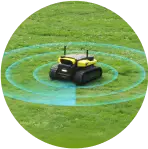
Yarbo's robot lawn mower comes with advanced obstacle avoidance equipped with 6 cameras, 4 ultrasonic radars, a three part front bumper, and AI algorithms to intelligently identify and avoid people, pets, trees, flowerbeds, and even stray toys without stopping or colliding.
Key Features of Top Best Robot Lawn Mower
-
GPS or RTK navigation for precise coverage.
-
Weather sensors to avoid mowing in rain.
-
Recharge-and-resume functionality.
-
Quiet operation (great for early mornings).
-
Anti-theft features like PIN codes and alarms.
-
Quiet operation at just ~60 dB, about the level of a conversation, making them great for early mornings or even night-time operation without disturbing neighbors.
Pros and Cons of Robot Lawn Mowers
|
Pros
|
Cons
|
|
Fully autonomous—frees up your time.
|
Initial setup can be time-consuming.
|
|
Quiet and -friendly.
|
Struggles with very tall or wet grass.
|
|
Always keeps grass looking freshly cut.
|
Less effective on steep slopes unless premium model.
|
Ride On Mower vs Robot Mower: Feature Comparison Table
| Feature | Ride-On Mower | Robot Lawn Mower |
| Coverage Speed | Very fast | Slow but consistent |
| Operator Effort | High | None |
| Terrain Handling | Excellent | Limited (unless high-end) |
| Noise Level | Loud | Very quiet |
| Maintenance | Regular servicing | Minimal upkeep |
| Cost Over Time | Higher fuel costs | Lower running cost |
Cost Analysis: Short-Term vs Long-Term Investment
A high-end robot mower like Yarbo can cost more initially, but will save on running costs, fuel, and time. With Yarbo: No fuel costs—it’s electric and quiet (~60 dB). No seasonal contractors—it handles mowing, snow clearing, and leaf blowing in one. It pays for itself in about 2–3 years if you currently spend $200/month on lawn and snow services (~$2,400/year), effectively providing free service thereafter
A high-end ride-on mower may cost less upfront, but factor in fuel, servicing, and seasonal storage, and the total cost over five years grows fast.
With Yarbo:
-
No fuel costs — electric and quiet (~60 dB).
-
No seasonal contractors — mowing, snow clearing, and leaf blowing in one, replaces at least three major machines (mower, snowblower, leaf blower), which if purchased separately at commercial-grade quality, could easily approach a similar or higher sum
-
Pays for itself in about 2–3 years if you currently spend $200/month on lawn and snow services (~$2,400/year).
-
Maintenance costs for Yarbo are relatively low – it’s electric (no gas or oil changes), and the main recurring expense will be battery replacement after a number of years and perhaps blade replacements or minor parts
| Cost Factor | Ride-On Mower (5 Years) | Yarbo (5 Years) |
| Purchase Price | $4,500 | $6,999 |
| Fuel & Maintenance | $4,000 | $500 |
| Contractor Savings | $0 | -$12,000 (saved) |
| Total 5-Year Cost | $8,500 | - $4,500 (net savings) |
Maintenance Requirements for Each Option
-
Ride-On Mower: Oil changes, blade sharpening, tire checks, belt replacements.
-
Robot Mower: Blade replacement every few months, occasional cleaning, software updates.
Environmental Impact and Sustainability
Ride on lawn mowers typically run on gasoline, producing emissions. Robot mowers run on rechargeable batteries, making them more eco-friendly—especially if charged via solar power.
Which Option Fits Your Lifestyle?
If you enjoy being outdoors and like direct control, the ride-on mower is generally considered your best bet. However if you value convenience and automation, a robot mower will suit you better.
For lawns over 2 acres, a ride-on mower are generally more practical. Best ride on lawn mowers are known for their power, but Yarbo is engineered to outperform in conditions that would push a ride on to its limits.
Whether it’s steep slopes (up to 35°/70% grade), wet or muddy ground, or intricate landscaping, Yarbo handles it all without breaking a sweat — or your back.

Yarbo: Your Big Yard. Your Free Time. Designed for the toughest mowing jobs on high-end properties, Yarbo replaces hours of manual work with precise, automated care.
While ride-ons require the operator to navigate every obstacle, Yarbo’s 6 cameras, 4 ultrasonic radars, AI obstacle detection, and bumper sensors make it an expert at avoiding trees, flowerbeds, pets, and even stray toys.
You don’t have to take our word for it — see Yarbo in action:
“I thought no robot mower could handle my uneven 2-acre property, but Yarbo proved me wrong — it’s a game changer.” – @The Lawn Care Nut
Yarbo replaces hours of manual work with precise, automated care. It offers unprecedented convenience and safety by eliminating the need to push a heavy mower or snowblower, or climb hilly yards.
This is especially valuable for older homeowners or those with health issues, preventing physical strain and health risks like cardiac events from snow shoveling". It delivers true automation: you regain your time while it handles yard duties in the background, navigating around obstacles on its own.
Conclusion
Ultimately, your decision comes down to how much time you want to spend mowing versus how much you want technology to handle it. For homeowners with large, complex yards, Yarbo positions itself as a long-term yard care solution that is more economical than the status quo, providing freedom, peace of mind, independence, and efficiency
Both the best ride on lawn mower and the robot lawn mower have clear advantages. For sheer speed and power, ride-on mowers win for very large, rugged lawns. But for convenience, eco-friendliness, and consistent results, robot mowers are hard to beat. Ultimately, your decision comes down to how much time you want to spend mowing versus how much you want technology to handle it.
Choosing between a ride on and Yarbo? The best way is to see Yarbo work.
Book a Live Demo Near You via our Showcase Program — “seeing is believing.”
Try Yarbo with a 30-Day Risk-Free Trial. If it’s not for you, return it. This commitment, coupled with Yarbo's industry-leading 5-Year Pledge warranty (including 3-Year Accidental Protection and Door-to-Door Shipping Protection), ensures your investment is well-protected.
FAQs
-
Can I use a robot mower for rough terrain?
Only certain high-end models with advanced navigation and slope handling can manage uneven terrain. Yarbo, with its patented all-terrain tracks and ability to handle slopes up to 35° (70% grade) and climb over 2-inch curbs/bumps, is specifically designed for such challenging landscapes. -
How long does it take to mow with a ride-on mower?
A 1-acre lawn can be done in under an hour with a good ride-on mower. -
Do robot mowers work at night?
Yes, they are quiet enough to run at night without disturbing neighbors. Yarbo operates at just ~60 dB, allowing for flexible scheduling any time of day or night. -
What’s the average lifespan of a ride-on mower?
With proper maintenance, best ride on lawn mower can last 8–10 years. -
Do robot mowers need winter storage?
Yes, they should be stored indoors during off-season. -
How does Yarbo handle very complex lawns with many trees or obstacles?
Yarbo uses RTK-GPS, binocular cameras, and IMU for centimeter-level precision navigation, which allows it to maintain reliable coverage even on complex, tree-dotted lawns where traditional GPS-guided mowers might struggle with signal loss. Its advanced AI obstacle detection system (6 cameras, 4 ultrasonic radars) ensures it intelligently identifies and avoids obstacles like garden decorations, pets, trees, and furniture without stopping or colliding.
-7.png?w=1001&h=621)
 Private group · 33.0K members