Quick Answer:
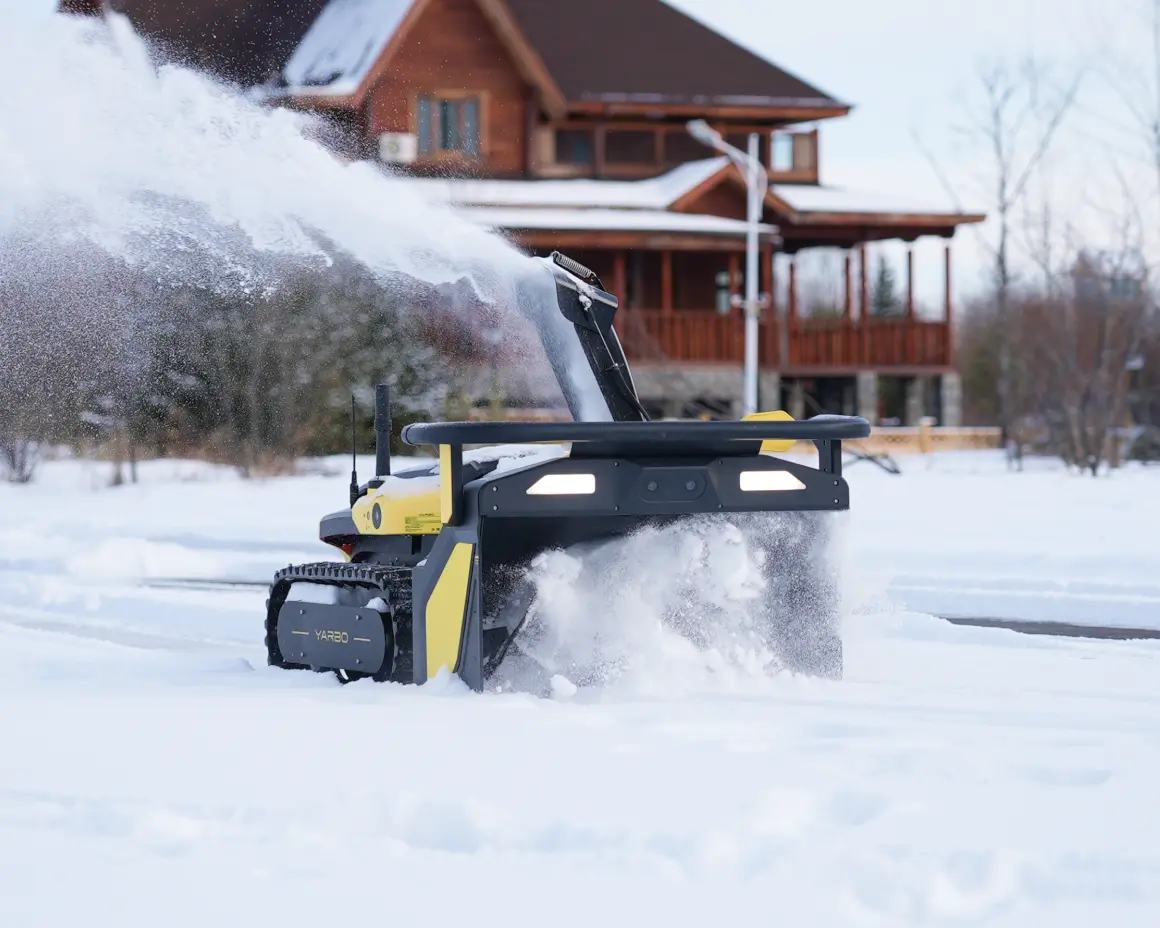
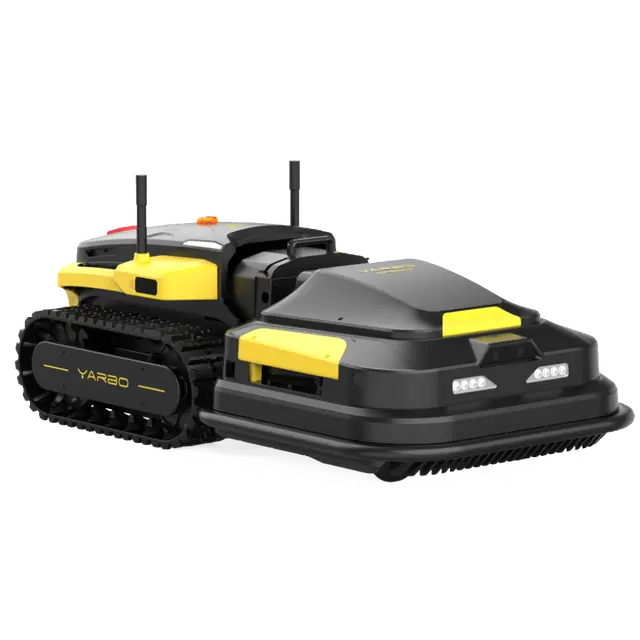
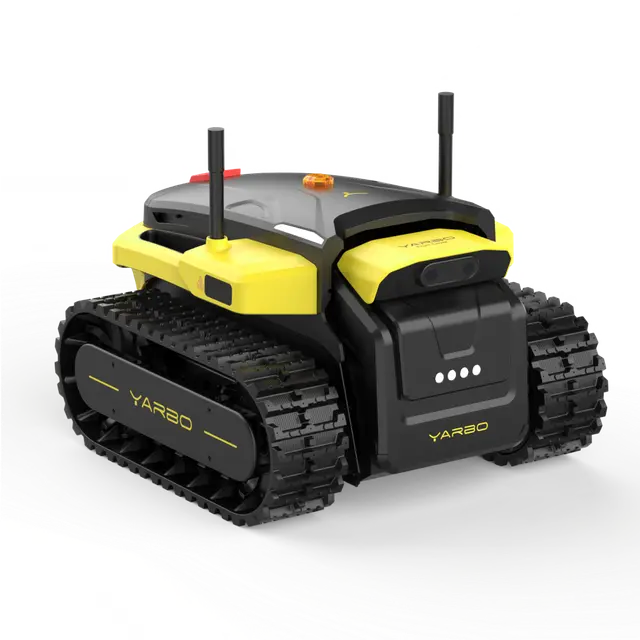
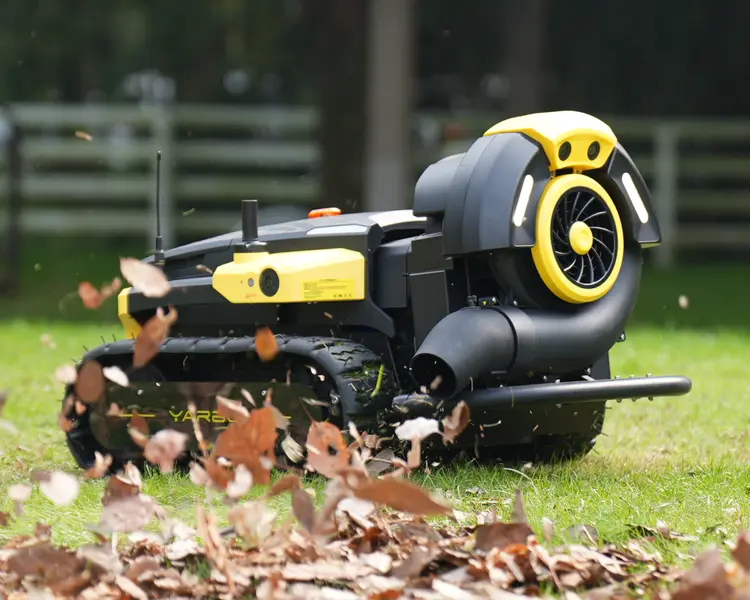
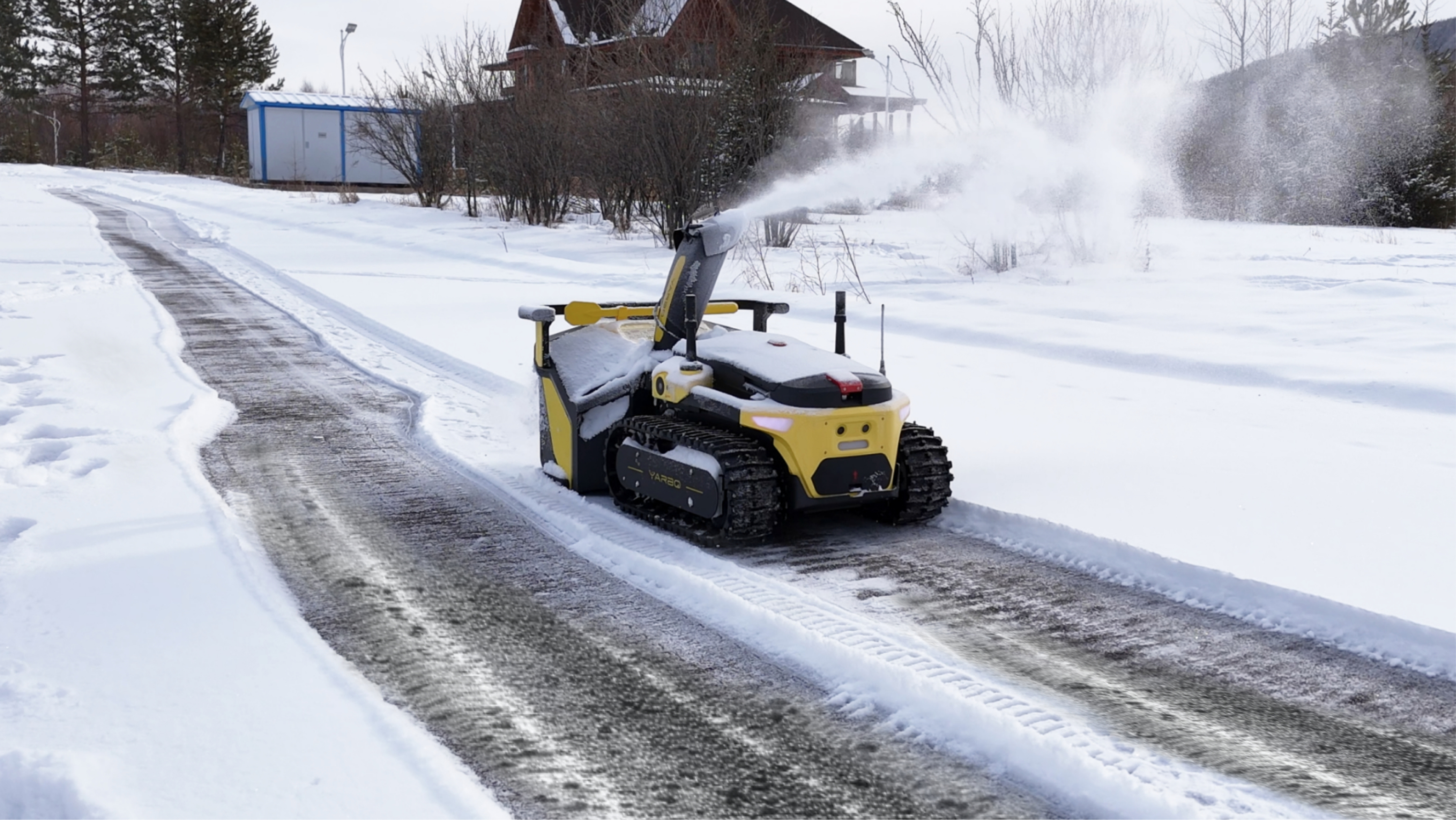
The most effective way to tackle end-of-driveway plow piles and compacted snowbanks is by utilizing a two-stage, autonomous snow blower robot that combines high intake capacity with precision navigation, like Yarbo.
Driveway snow blowing is a challenging chore especially when municipal plows leave behind towering berms of compacted snow at the end of your driveway.
Those hard, icy piles aren’t just unsightly: they block exit and entry, take enormous effort to clear, and can make traditional snow removal methods nearly ineffective. But for homeowners looking for a smarter, automated solution, Yarbo’s autonomous snow blower robot is transforming how we approach driveway snow clearing.
In this article, we’ll explore why these plow piles are so hard to handle, and how Yarbo offers a powerful, hands-free solution to clear them safely and efficiently.
Table of Contents:
What Makes Driveway Snow Blowing So Challenging?
The Difficulty of Plow Piles and Compacted Snow
When city or county snowplows do their job, they often leave behind snow berms – huge mounds of dense, compacted snow, sometimes mixed with gravel or debris. These piles often freeze into hard banks that are difficult to break up and remove. Traditional blowers or shovels can struggle to make a dent:
-
High density: Plowed snow is compacted by heavy machinery, making it denser and harder to break.
-
Mixed materials: Gravel, road salt, and dirt can be embedded in the pile, dulling blades or damaging equipment.
-
Frequent re-accumulation: During storm season, new snow keeps piling on top, meaning repeated efforts for traditional clearing.
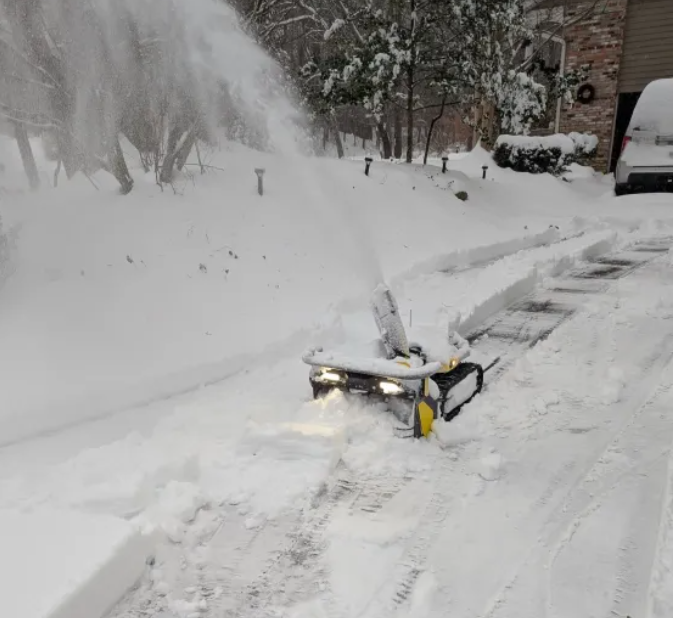
These challenges make driveway snow clearing more than just a seasonal nuisance — it’s a regular headache that drains time, energy, and sometimes patience.
Why Driveway Snow Blowing Isn’t Enough Anymore
Using a standard snow blower helps, but:
-
Gas-powered or push snow blowers require manual operation, which can be exhausting and dangerous in heavy storms.
-
Traditional blowers often lack smart obstacle navigation, risking damage to cars, fences, or landscaping.
-
They don’t automatically recharge or clear during off-hours — meaning snow can quickly build up overnight.
-
In very cold or icy conditions, standard blowers may clog, stall, or struggle to grip.
Best Strategies for Driveway Snow Blowing
Traditional Solutions: Why Manual Shoveling and Standard Blowers Fail
Using manual shoveling or standard gas/push snow blowers often falls short when tackling compacted plow piles:
-
Manual labor: Shoveling is labor intensive, physically demanding, and not scalable for frequent heavy snowfalls.
-
Lack of automation: Traditional blowers require manual operation and don’t automatically recharge or clear during off-hours, meaning snow can quickly build up overnight.
-
Clogging risk: In very cold or icy conditions, standard blowers may clog, stall, or struggle to grip.
The Autonomous Solution: Leveraging Compact Robot Snow Blowers
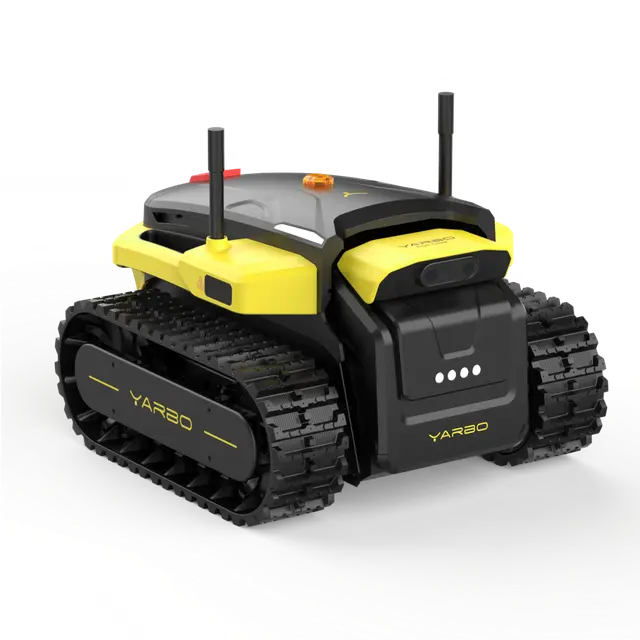
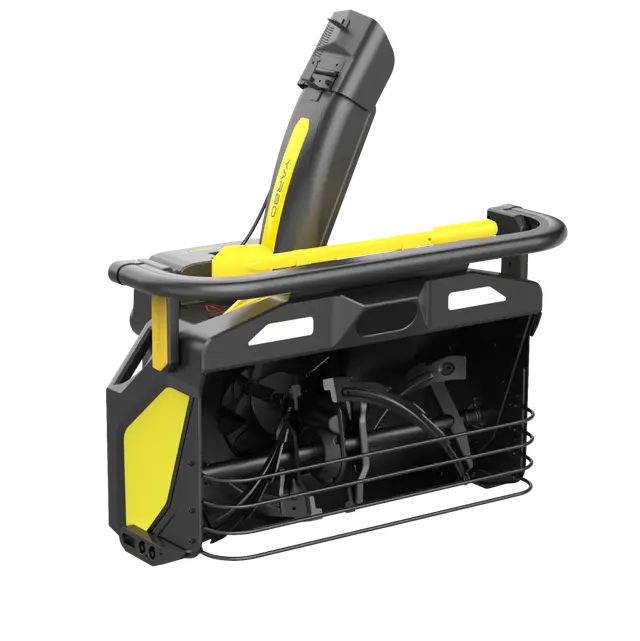
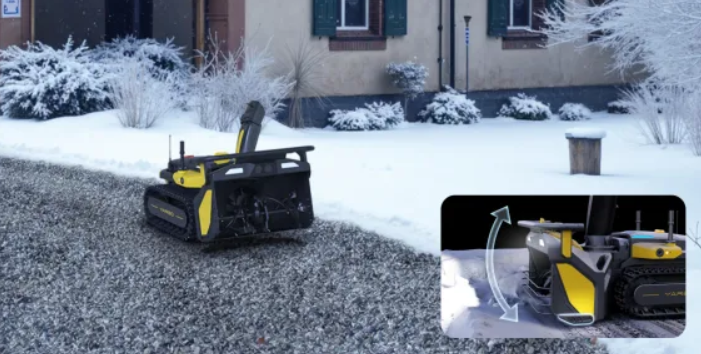
The best strategies involve using automated solutions designed for high density and continuous operation, like Yarbo’s modular snow blower robot.
-
Fully autonomous operation: Enables hands-free snow clearing.
-
Continuous readiness: The robot returns to its dock, recharges, and resumes clearing—even in the middle of a storm.
-
Two-stage design: Built to handle various snow types: dry, wet, and packed snow.
-
Intelligent routing: Utilizes route planning and obstacle detection to systematically approach dense berms.
Types of Snow Blowers for Driveways
If you're considering options besides Yarbo, you’ll find:
-
Push snow blowers: Good for lighter snow, but manual effort required.
-
Rider/blower machines: More power but still require a person to operate.
-
Robotic snow blowers (like Yarbo): Best for automation, repeated clearing, and dealing with stubborn plow piles.
Among these, Yarbo stands out for autonomous performance, adaptability, and modularity.
How to Tackle Compacted Snow Without Damaging Your Driveway?
When dealing with very compacted snow, you need more than brute force — you need precision + power + smart throwing.
Heated Driveway Systems – Do They Work?
Some homeowners install heated driveway systems (electric or hydronic), which melt snow from below. While effective, they’re:
-
Very expensive to install and run.
-
Less practical for retrofitting existing driveways.
-
Not accessible for everyone.
So while they're a solution, they’re not always cost-effective for everyone.
Using Safe Ice Melt Products
Combining Yarbo’s clearing power with safe ice melt products can be effective:
-
Use non-corrosive ice melts to avoid damaging concrete or lawn.
-
Apply them before a major snowfall to reduce bonding of snow to the surface.
-
After Yarbo clears, reapply as a preventive layer so new snow doesn’t compact as much.
This hybrid strategy helps soften compacted snowbanks, making them easier to manage for any snow removal tool especially a smart robot.
Smart Driveway Snow Blowing Tools and Techniques
Why Robot Snow Blowers Are Gaining Popularity
Robotic snow blowers like Yarbo are gaining traction because they solve persistent pain points:
-
Labor-free: No need to shovel or push.
-
24/7 readiness: Automatically handles snow before it piles too high. Yarbo clears up to 6,000 sq ft per charge (1 in of snow) according to its specs.
-
Precision: Adjustable chute to throw snow exactly where you want (6–40 ft range)
-
Safety & reliability: Obstacle detection (binocular camera + bumper) to avoid collisions.
-
All-weather durability: Yarbo operates in a wide temperature range (down to –25 °C) and is weather-resistant.
Yard-Friendly Snow Removal Tips
-
Map your driveway: Use Yarbo’s app to define precise zones. Focus on the end-of-driveway area where plow berms form.
-
Schedule early: Set Yarbo to run before expected snowfall (using its weather integration) so snow doesn’t pile up.
-
Use “no-go” zones: Mark areas near cars, curbs, or obstacles so Yarbo avoids them. (Important — some users note obstacle avoidance for snow mode needs careful setup.)
-
Routine maintenance: Clean the chute regularly, especially after heavy or wet snow, to prevent clogging.
How Yarbo Specifically Tackles End-of-Driveway Plow Piles?
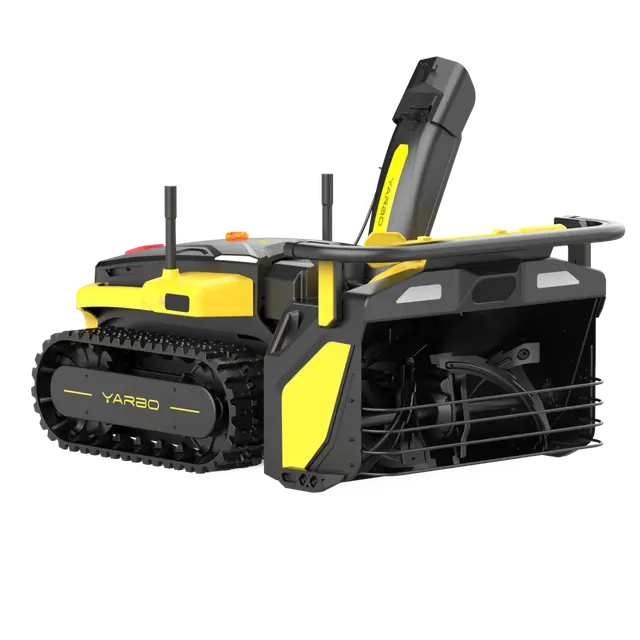
Yarbo’s design includes specific technical features that make it uniquely suited to handle hardened end-of-driveway banks:
-
Set the "end of the lane area" as the key cleaning point in the App
-
Set high-frequency cleaning, such as every 30 minutes
-
smart vision manual remote control snow removal to ensure safe operation at the edge
-
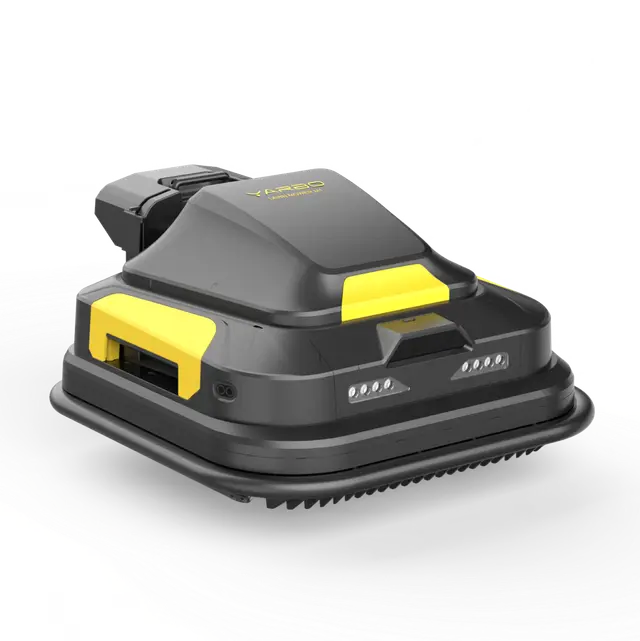
In the case of wet snow, the push shovel module can be used in advance
| Feature | Specification | Benefit for Compacted Snow |
| Intake Capacity | 12-inch intake height | Allows ingestion of deep, heavily compacted snow. |
| Clearing Width | 24-inch clearing width | Clears significant amounts in fewer passes. |
| Throw Distance | Up to 40 feet (6 ft minimum) | Launches snow well away from the driveway, reducing re-accumulation risk. |
| Slope Capability | Up to 36% slope operation | Ensures strong traction and capability on icy or uneven driveways. |
| Durability | Operates down to -25℃ (-13°F) | Guarantees reliability even in the harshest winter conditions. |
Bottom line: Yarbo is powerful and very capable but, like any high-tech device, requires careful setup, proper user planning, and some maintenance to be fully effective — especially in edge-case scenarios like very wet snow or extreme cold.
Conclusion - Final Tips to Master Driveway Snow Clearing
If you're tired of fighting plow piles and chunky, compacted snow every winter, Yarbo offers a future-focused answer: autonomous driveway snow blowing with precision, adaptability, and minimal physical effort which for handling wet snow has a snow plowing blade that should be used. Here’s how to make the most of it:
-
Map your end-of-driveway zone carefully: Use the Yarbo app to set boundaries, throw targets, and no-go areas.
-
Schedule intelligently: Run Yarbo before storms to prevent huge berms from forming.
-
Maintain the chute and tracks: Clean the auger and chute regularly, especially after wet snow episodes.
-
Consider supplementary ice melt: Use safe de-icers to soften base layers, making it easier for Yarbo to clear.
-
Monitor feedback: Pay attention to battery health, track behavior, and app alerts to catch issues early.
In short: Yarbo can dramatically reduce the burden of driveway snow clearing, turning what was once a back-breaking chore into an automated, efficient process — even when dealing with the worst plow piles.
FAQs about Yarbo Driveway Snow Blowing
-
Can Yarbo handle plow piles or very high berms?
Yes — Yarbo’s 12-inch intake height lets it ingest deep, compacted snow. Its robust auger and wide clearing path help it dig into hard berms. -
How far can Yarbo throw snow?
Up to 40 feet, with full control: the chute can rotate up to 190° and adjust the deflector angle. -
Will I need to constantly recharge Yarbo during heavy snowstorms?
Yarbo auto-docks and recharges, then resumes its clearing cycle. On a full charge, it can cover ~6,000 sq ft of light snow (1 inch) per charge. -
Is Yarbo reliable in very low temperatures?
Yes — it’s designed to operate down to around –25 °C (–13°F) per internal specifications. -
Will it damage my driveway or other surfaces?
Yarbo works on paved, concrete, and even gravel (per its specs). However, careful mapping is recommended so it doesn’t repeatedly hit fragile edges. -
What about obstacle detection — will it avoid cars, bins, or fences?
Yarbo uses binocular vision + bumper detection for obstacles. Some users report that obstacle avoidance in snow mode is less aggressive, so setting “no-go” zones is advised.
-7.png?w=1001&h=621)
 Private group · 33.0K members