The global robot mower market is entering a transformative era in 2025, driven by consumer demand for automated lawn care solutions, technological innovations, and sustainability trends. Homeowners, landscaping businesses, and even municipalities are increasingly turning to robot mower reviews as a way to find cost-effective, eco-friendly, and time-saving alternatives to traditional lawn care methods.
Once considered niche, robot mowers are now disrupting the lawn care industry, with reviews highlighting their convenience, quiet operation, and precision. As demand accelerates, the market is expected to expand significantly, offering both challenges and opportunities for brands and consumers alike.
Table of Contents:
Global Market Overview and Key Statistics
Market Size and Forecast for 2025
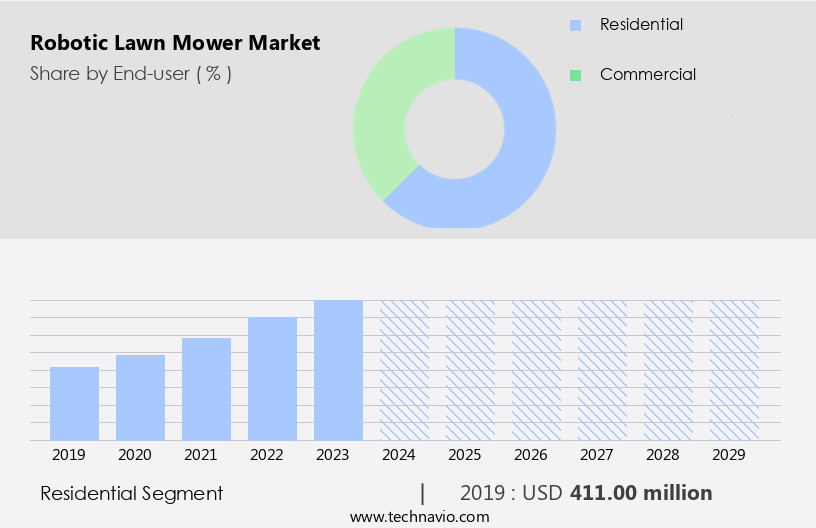
The global robot mower market is on a strong upward trajectory, with revenues expected to surpass $2.5 billion by 2025. Between 2020 and 2025, the market has maintained a CAGR of around 12%, indicating consistent and sustainable growth. Analysts attribute this expansion to three primary drivers:
-
Consumer lifestyle shifts – People are busier than ever, and homeowners value convenience and time-saving tools.
-
Sustainability goals – Consumers are increasingly conscious of emissions, pushing demand for battery-powered alternatives.
-
Technological innovation – Features like smart navigation, app control, and integration with smart homes make robot mowers more appealing.
A deeper look reveals that North America and Europe account for nearly 70% of current sales, but Asia-Pacific is showing the fastest growth, driven by rising disposable incomes and rapid urbanization.
.png?w=816&h=528)
Regional Market Performance
-
North America: This region dominates the market thanks to large residential yards and busy urban lifestyles. Many homeowners are willing to invest in premium solutions that reduce manual work.
-
Europe: Adoption here is driven by eco-consciousness and tighter environmental laws. Smaller garden sizes in many European countries also make robot mowers highly practical.
-
Asia-Pacific: Though still an emerging market, it’s expected to experience double-digit growth due to increasing middle-class income and growing awareness of automated lawn care technologies.
-
Latin America & Middle East: These regions remain niche markets but hold long-term potential as awareness and affordability improve.
Why Robot Mowers Are Disrupting the Lawn Care Industry?
Benefits for Homeowners
For homeowners, robot mowers are far more than a gadget—they’re an investment in convenience and lifestyle. Some of the most significant benefits include:
.png?w=1843&h=1353)
-
Time Savings: Instead of spending hours every weekend mowing, homeowners can set their mower to run automatically.
-
Precision and Lawn Health: Robot mowers cut grass in fine clippings, which act as natural fertilizer (mulching), improving soil health and reducing the need for chemicals.
-
Quiet Operation: Unlike gas-powered machines, most robot mowers operate at less than 60 decibels, allowing for nighttime mowing without disturbing neighbors.
-
Cost Efficiency Over Time: Although initial costs are higher, savings on fuel, maintenance, and reduced need for professional lawn services make them cost-effective in the long run.
Impact on Commercial Landscaping
The lawn care industry is also being reshaped. Landscaping businesses that once relied heavily on manpower now see robot mowers as a way to reduce labor costs while maintaining high-quality results. For commercial spaces like golf courses, universities, and parks, automated fleets can handle routine mowing while human staff focus on detailed landscaping tasks. This hybrid model is redefining productivity in professional lawn care.
Consumer Behavior and Robot Mower Reviews: The Need for Proof
With thousands of models available, robot mower reviews are the single most crucial decision-making tool. Buyers are typically "research-driven" and seek real-world proof to overcome a high level of skepticism ("The Trust Deficit").
Top Factors Consumers Consider in Reviews:
-
Reliable Cutting Performance: Does the mower deliver a consistent, even cut, and can it handle challenging grass (tall, thick, wet)?
-
True All-Terrain Capability: Can it handle steep slopes (e.g., up to 35°) and navigate complex terrain (tree roots, flower beds, bumps) without getting stuck or losing signal?
-
Ease of Use & Wire-Free Setup: How simple is the initial setup, and is the navigation truly autonomous and wire-free, even in areas with poor GPS visibility?
-
Durability and Weather Resilience: Can the machine withstand different weather conditions, including rain, mud, and extreme cold (for winter functionality)?
-
Long-Term Value and Modularity: Can the device justify its premium price by consolidating multiple seasonal tools or eliminating the need for expensive contractors?
-
Support and Warranty: Brands with reliable customer service and a clear warranty (e.g., 2-year warranty) tend to earn higher trust, which is critical for high-value purchases.
Role of Online Reviews in Buying Decisions
A recent survey revealed that more than 80% of robot mower buyers read at least five reviews before purchasing. Video reviews on YouTube and testimonials on forums provide real-world performance insights. Positive reviews increase consumer confidence, while negative ones—often highlighting poor navigation or limited battery life—help consumers avoid models that don’t meet expectations.
For brands, managing reputation online has become as important as product innovation itself.
Technology Shaping Automated Lawn Care
One of the biggest breakthroughs in automated lawn care is AI-powered navigation, which is essential for large, obstacle-rich yards. Modern robot mowers use systems like PPVS (Precise Positioning Vision System) that combine RTK-GPS with computer vision to deliver centimeter-level accuracy.
The shift to hybrid navigation is crucial because relying solely on RTK-GPS is unreliable in real-world scenarios, such as when signals are blocked by dense trees, tall buildings, or weather. This hybrid approach—which couples RTK for wide-area path planning with high-resolution LiDAR and AI vision for precision in tricky, shaded areas—is the key to overcoming issues like signal loss and imprecise edge cutting (a failure reported by 75.6% of existing users). This technology allows mowers to handle complex yard layouts and steep slopes, which were nearly impossible for earlier models.
AI and Smart Navigation
One of the biggest breakthroughs in automated lawn care is AI-powered navigation. Modern robot mowers use PPVS (Precise Positioning Vision System) that combines RTK-GPS with computer vision to deliver centimeter-level accuracy. This means mowers can now handle complex yard layouts, steep slopes, and areas with limited GPS signals—scenarios that were nearly impossible for earlier models.
Integration with Smart Home Systems
Robot mowers are increasingly integrated into smart ecosystems, allowing remote control, scheduling via apps, and real-time status updates. Homeowners can connect their mower to apps, schedule mowing via voice commands, and even receive performance reports. With growing adoption of smart home hubs like Alexa and Google Home, seamless connectivity has become a major selling point.
Battery Advancements and Sustainability
Battery technology is another area where significant improvements are happening. Many models now feature lithium-ion batteries that deliver longer run times, faster charging, and improved energy efficiency. Combined with solar-assisted charging, these innovations are making robot mowers a truly sustainable choice compared to fuel-powered alternatives.
Competitive Landscape and Key Players
While established brands like Husqvarna and emerging players like Mammotion and Ecovacs have a presence, no mainstream competitor currently offers a truly modular, year-round solution designed for the scale and complexity of large North American properties.
Yarbo’s Role as a Pioneer in Modular Yard Robots
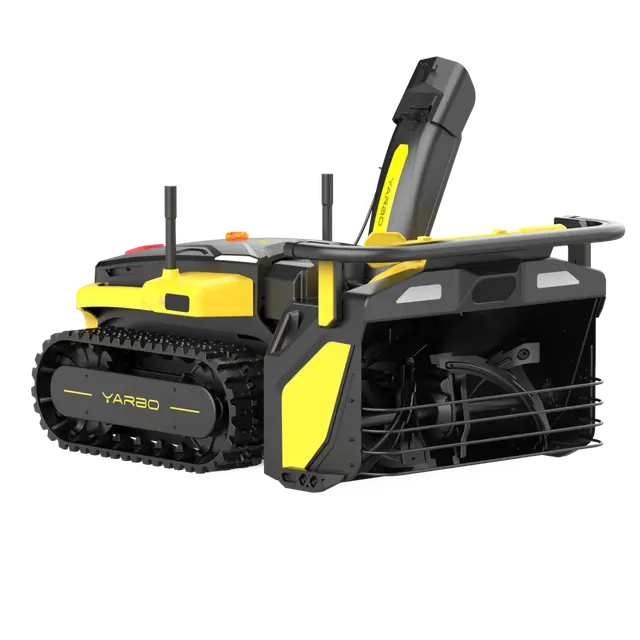
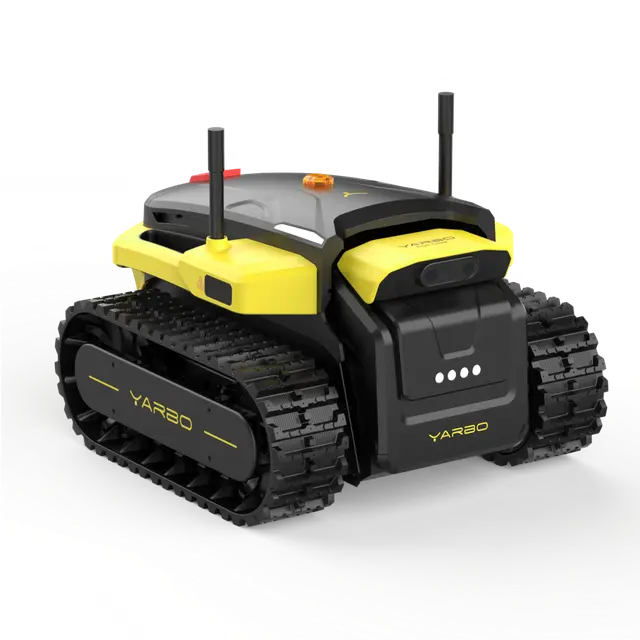
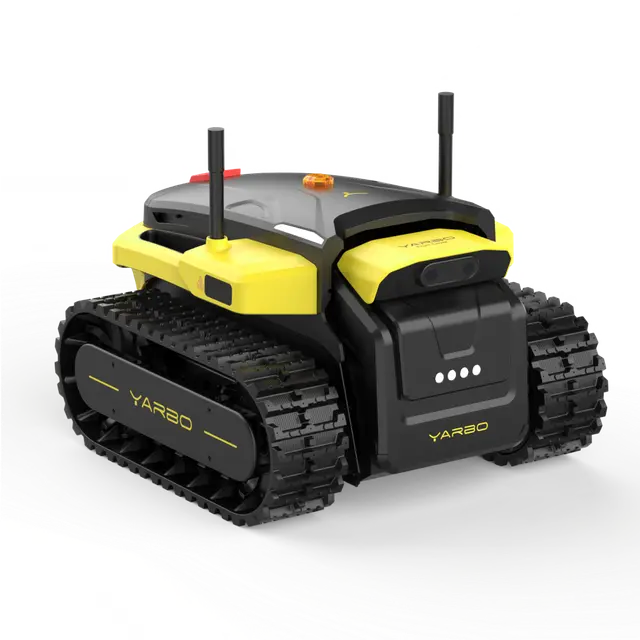
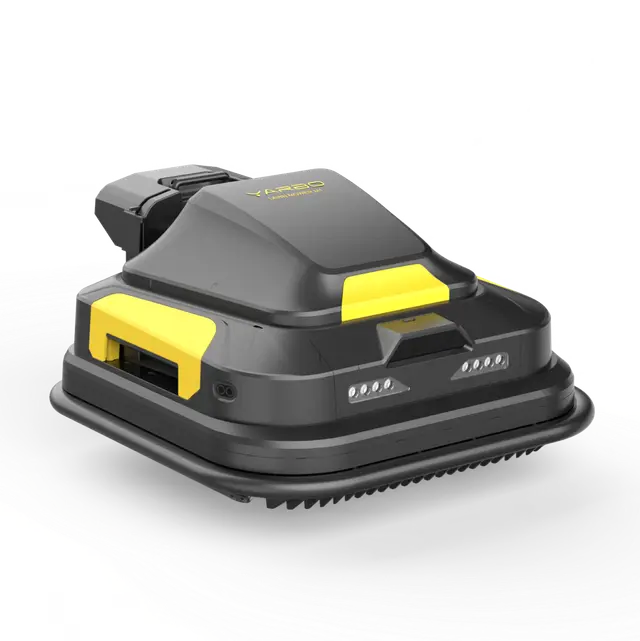
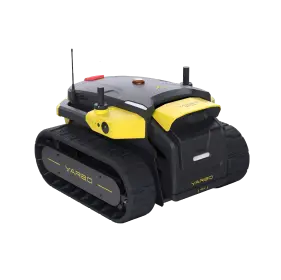
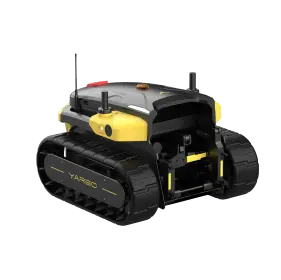
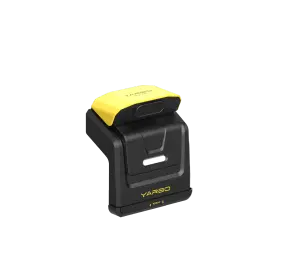
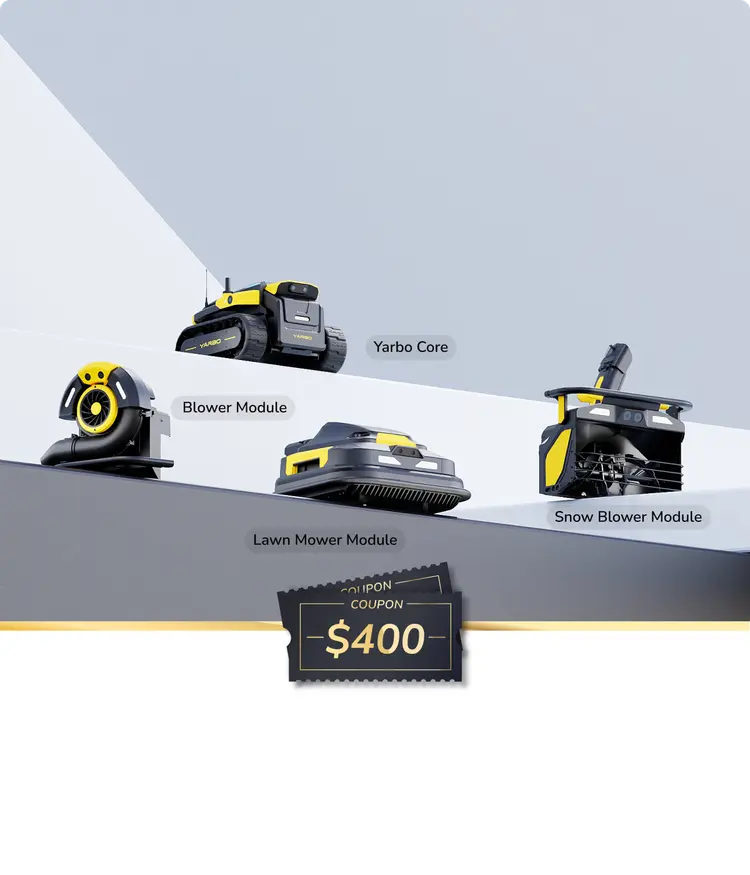
Yarbo stands out by offering a modular robotic system designed specifically for large and complex courtyards. It functions as a 3-in-1 platform that utilizes a single tracked Core unit with interchangeable attachments.
Yarbo’s Undeniable Proof Points:
-
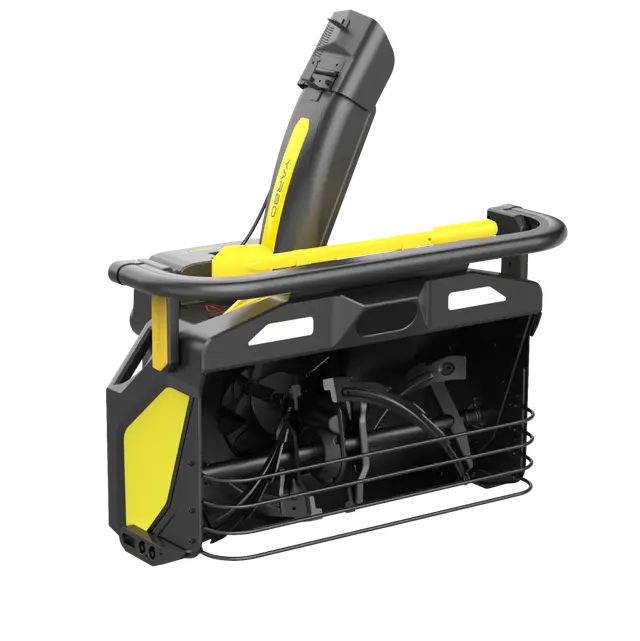
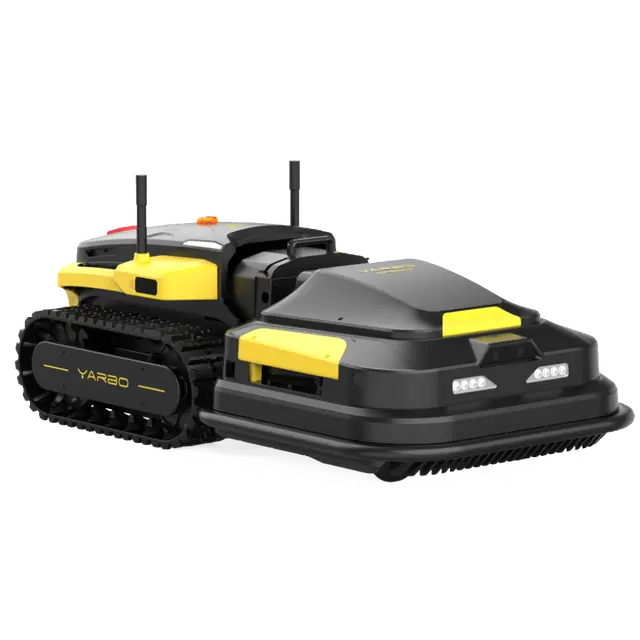
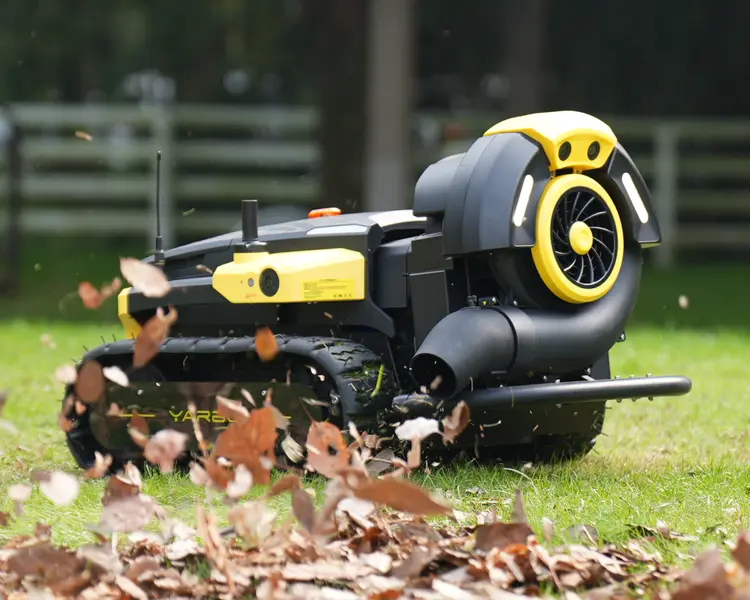
Modularity (The Closer): Yarbo is the market's leading differentiator, offering full multi-season yard care in one system—combining a powerful tracked core with modules for Lawn Mowing, Snow Blowing, and Leaf Blowing. This design saves storage space and eliminates the cost and hassle of maintaining multiple single-use seasonal tools.
-
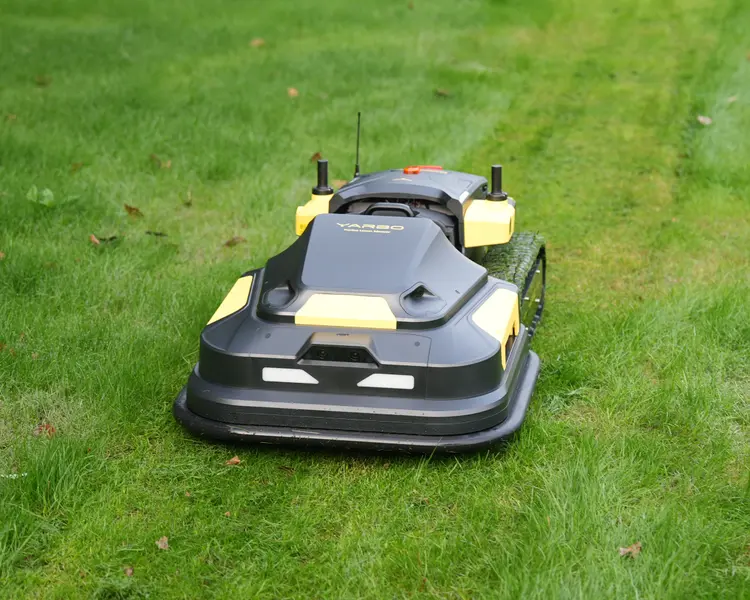
Unrivaled Coverage and Terrain Mastery: The mower module offers maximum coverage of up to 6 acres (25,000 m²) when scheduled in multiple sessions, roughly double the capacity of the nearest residential rivals. It excels on challenging terrain, handling slopes up to 35° (70% grade) thanks to its patented all-terrain tracks.
-
Wire-Free Reliability: Yarbo utilizes a sophisticated combination of RTK-GPS, IMU, and cameras for centimeter-level, wire-free perimeter setup and precise navigation, even under tree cover. It supports multiple mowing zones for flexible management of complex, segmented properties.
-
Heavy-Duty Winter Capability: The Snow Blower module is the world's first residential, autonomous snow blower. It is engineered to clear up to 12 inches of snowfall and operate reliably in extreme cold (battery rated to -13F-113F (-25 °C to -45°C), with the system capable of working in temperatures as low as -45°C when powered on). This is a game-changer for homeowners in snowy regions, offering true 24/7 autonomous operation.
Established Brands vs. Emerging Startups
Brands like Husqvarna, Worx, and Robomow have established a strong presence, but emerging players are entering with innovative features and competitive pricing.
Yarbo’s Role as a Pioneer in Modular Lawn Care Robots
Yarbo stands out by offering modular robotic systems designed for large and complex courtyards. With features like snow removal, lawn mowing, and leaf blowing all in one system, Yarbo is redefining automated lawn care for both residential and commercial users.
Opportunities in the Automated Lawn Care Market
The market is ripe for a robust, reliable, and versatile platform like Yarbo.
-
Residential Segment Growth: Homeowners seeking more free time are fueling residential adoption, especially for models that handle large properties effortlessly.
-
Expansion in Commercial Properties: Yarbo's commercial-grade efficiency, large coverage, and durability make it ideal for resorts, golf courses, and municipal areas that require continuous, high-quality maintenance.
-
Modular Value Expansion: The modular design creates long-term value and future opportunities through the release of new attachments (like trimmers, Tow hitch etc,) ensuring the initial investment is future-proofed.
Challenges and Market Barriers
Pricing and Affordability Concerns
High upfront costs remain a challenge for widespread adoption, though long-term savings are significant.
Consumer Awareness and Education
Many consumers are still unaware of robot mower capabilities, making marketing and education essential.
Future Growth Drivers in Robot Mowers
Sustainability and Eco-Friendly Features: Demand for eco-friendly robotic mowers will continue to increase as climate concerns rise.
Addressing the Price Barrier: While high upfront costs remain a challenge, the industry is expected to implement financing options (like Affirm/Klarna) to lower the purchase barrier and shift the focus from cost to long-term investment return.
Expert Insights: Industry experts predict continued growth, emphasizing the importance of technological innovation and affordability in shaping future trends. Partnerships with landscaping companies and integration with smart home ecosystems are also expected to drive expansion.
Case Studies of Adoption and Success
North America Market Adoption
Suburban homeowners are investing heavily in robot mowers, particularly in regions where lawns are larger and harder to maintain manually.
Europe’s Push for Eco-Friendly Lawn Solutions
European countries like Germany and Sweden are leading adoption due to stricter environmental policies.
Expert Insights on the Robot Mower Market
Industry experts predict continued growth, emphasizing the importance of robot mower reviews, technological innovation, and affordability in shaping future trends. Partnerships with landscaping companies and integration with smart home ecosystems are also expected to drive expansion.
Conclusion
The robot mower market in 2025 is thriving, fueled by innovation, sustainability, and shifting consumer preferences. With robot mower reviews influencing purchase decisions and automated lawn care redefining the lawn care industry, the future promises growth and opportunities. Companies like Yarbo are leading the charge with modular, eco-friendly solutions that make lawn care smarter and more efficient than ever before.
FAQs
1. Are robot mowers worth the investment?
Yes, they save time, reduce manual labor, and promote eco-friendly lawn care, making them a worthwhile investment for homeowners and businesses.
Yes, they save time, reduce manual labor, and promote eco-friendly lawn care, making them a worthwhile investment for homeowners and businesses.
2. What role do robot mower reviews play in buying decisions?
Reviews help consumers evaluate performance, reliability, and long-term satisfaction before making a purchase.
Reviews help consumers evaluate performance, reliability, and long-term satisfaction before making a purchase.
3. How is the lawn care industry changing with robot mowers?
The industry is shifting toward automation, eco-friendly practices, and subscription-based services.
The industry is shifting toward automation, eco-friendly practices, and subscription-based services.
4. Can robot mowers handle large properties?
Yes, especially models like Yarbo, which are designed for large and complex courtyards.
Yes, especially models like Yarbo, which are designed for large and complex courtyards.
5. What technological features should buyers look for?
Smart navigation, GPS mapping, app integration, and strong battery performance are essential.
Smart navigation, GPS mapping, app integration, and strong battery performance are essential.
6. Will prices for robot mowers decrease over time?
Yes, as technology advances and adoption increases, robot mower prices are expected to become more affordable.
Yes, as technology advances and adoption increases, robot mower prices are expected to become more affordable.
-7.png?w=1001&h=621)
 Private group · 33.0K members